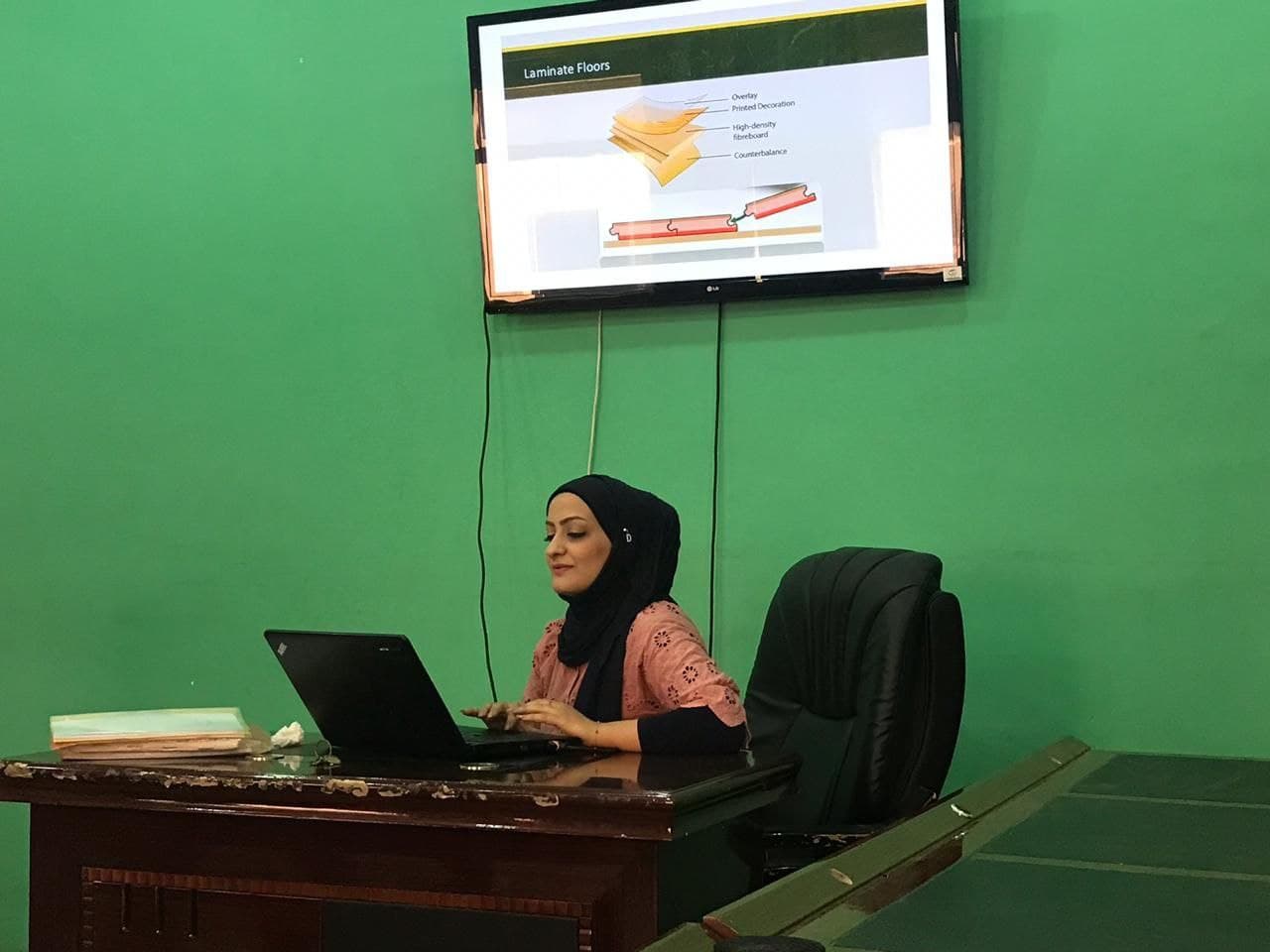



The Department of Building and Construction Technologies Engineering holds an electronic scientific symposium entitled Self Cleaning Concrete
The Building and Construction Technologies Engineering Department held an electronic scientific workshop by the teacher (Eng. Doaa Ahmed Yassin) on Friday 5-3-2021 at 8:00 pm on the FreeConferenceCall platform on the topic of (Self Cleaning Concrete) Self-Cleaning Concrete<br />Strong sunlight or ultraviolet rays decompose many organic matter in a slow natural process. Photocatalysts speed up this process, and as a catalyst, they catalyze chemical transformation without being consumed by the reaction. When used in concrete, photocatalysts break down organic matter (such as soot, dirt, and oils), biological materials (such as mold and bacteria), and pollutants (such as volatile organic compounds (VOCs) and tobacco smoke). The catalytic compounds break down into molecules that are beneficial or have a benign effect on the environment. It should be noted, however, that most inorganic pollutants and stains, including rust, are not stimulated. The primary catalytic component is titanium oxide (TiO2), which is manipulated to become a semiconductor. The energy in the light causes the formation of TiO2 to separate the charge of the electrons, which are dispersed on the surface of the TiO2 and interact with the external materials, causing the decomposition of the organic compounds.<br />It is noteworthy that this workshop is one of a group of workshops that the department periodically holds.