Scientific article by Assistant Lecturer Noor Khamis Hamad entitled (Photoreceptors of the Retina)
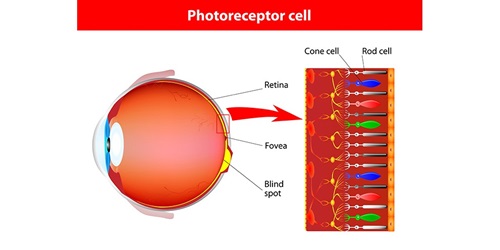
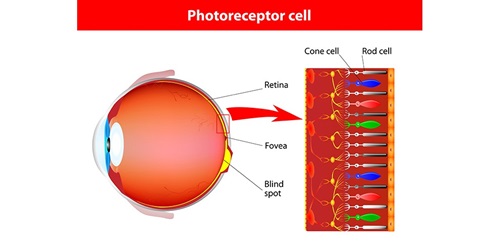
The human retina has two types of photoreceptors to gather light, they are rods and cones. Rods are responsible for vision at low light levels, while cones are responsible for vision at higher light levels.<br />Rods work at very low levels of light. We use these for night vision because only a few bits of light. The human eye has over 100 million rod cells. Cones require a lot more light and they are used to see color. We have three types of cones: blue, green, and red. The human eye only has about 6 million cones.<br />How Rods and Cones Work Together<br />Rods and cones work together to detect light intensity and color. The transition from rod to cone dominance allows people to see in a variety of illumination settings. Cones give accurate color information in bright settings. In darker environments, rods take over, allowing for continuous vision, but in a more monochromatic sense. This functional difference and cooperation between rods and cones is critical for human vision's flexibility in a variety of illumination conditions.<br />Sometimes, there can be a deficiency in the short (S), medium (M), and/or long (L) cones and it can cause color vision disorders such as color blindness. Depending on which photoreceptors are affected, color perception can be affected differently. The example below shows the normal range of human color vision compared to the color range of someone who has a deficiency in either their short, medium, or long wavelength photoreceptors.<br />Color Perception Varies from Person to Person<br />Everyone perceives color differently. Natural variations in the density and distribution of rods and cones, inherited diseases such as colorblindness, your age or medications, variances in brain chemistry, and a variety of other factors all contribute to how different people see color. <br />