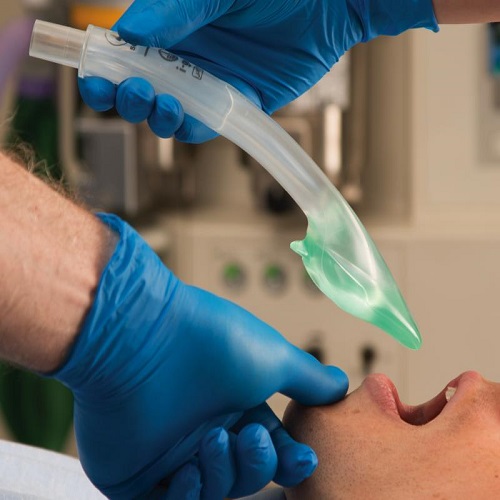
COMPARING I-GEL AND ENDOTRACHEAL TUBE (ETT) IN CESAREAN SECTIONS: SAFETY, EFFICACY, AND SUITABILITY IN PREGNANCY
<br />Introduction<br />In obstetric anesthesia, particularly for cesarean sections, securing the airway is a critical concern due to the physiological changes in pregnancy that increase aspiration risk. Traditionally, the endotracheal tube (ETT) has been the standard choice, providing a secure airway for ventilation and protection against aspiration. However, the i-gel, a supraglottic airway device, offers an alternative, less invasive option, raising questions about its efficacy and safety in cesarean sections<br />Efficacy of Airway Management.<br />ETT: The ETT provides the most secure airway in anesthesia, with a high success rate in delivering controlled ventilation, making it ideal for surgeries requiring prolonged ventilation or complex airway management. In cesarean sections, ETT's tight seal in the trachea ensures complete protection against aspiration and allows precise control of ventilation, especially under general anesthesia.<br />i-gel: The I-gel offers faster insertion with minimal trauma, making it suitable for shorter procedures or emergency situations where quick airway access is essential. Its soft, gel-like cuff conforms to the laryngeal anatomy, forming a stable seal without needing inflation, which can save time and reduce airway irritation. For cases where the procedure duration is predictable, I-gel has proven effective in maintaining ventilation with a low complication rate.<br />Safety Concerns.<br />ETT: Due to the physiological changes of pregnancy, including increased intra-abdominal pressure and a more reactive airway, securing the airway with an ETT can mitigate risks of aspiration and provide better protection. However, the process of ETT placement requires laryngoscopy, which can increase airway reactivity and is technically more challenging in pregnant women, especially in emergencies. Additionally, ETT placement may lead to higher risks of postoperative sore throat and discomfort.<br />i-gel: I-gel's non-inflatable cuff and rapid insertion reduce trauma and irritation, minimizing the risk of sore throat and airway damage post-procedure. While it does not provide as absolute a barrier as the ETT, the I-gel’s seal effectively reduces the risk of gastric contents entering the airway. However, in cases with significantly high intra-abdominal pressure, such as in later pregnancy stages, there may be an increased risk of seal failure, which could compromise ventilation and aspiration protection.<br />Insertion Speed and Ease.<br />ETT: ETT insertion requires laryngoscopy, making it more time-intensive, especially in cases of a difficult airway. The time and complexity may increase the risk in emergency cesarean sections where rapid airway control is essential.<br />i-gel: i-gel’s insertion is significantly faster and simpler, as it does not require laryngoscopy. This advantage makes it especially useful in emergency situations, such as unplanned cesarean sections, where quick, effective airway management is crucial. Studies show that I-gel can be inserted in a fraction of the time needed for ETT, helping to prevent hypoxia during urgent situations.<br />Suitability for Pregnancy and Cesarean Sections.<br />ETT: Given its secure protection and ventilation control, ETT remains the preferred choice for high-risk pregnancies, prolonged surgeries, or when general anesthesia is required. It provides consistent, reliable ventilation, which is critical for maintaining oxygenation in both mother and fetus during cesarean sections<br />i-gel: For low-risk, short-duration cesarean sections, or when general anesthesia is needed briefly, i-gel offers a less invasive alternative with similar success in maintaining stable ventilation.<br />Its non-invasive insertion reduces stress on the airway and shortens recovery time, making it a good option for elective or uncomplicated cesarean sections under general anesthesia.<br />Conclusion.<br />Both the i-gel and ETT have roles in airway management for cesarean sections, depending on the complexity and risk level of the case. ETT provides unmatched security and ventilation control, making it ideal for high-risk, prolonged procedures. Conversely i-gel offers a less invasive, efficient option that is valuable in emergency settings or for shorter, low-risk procedures. The choice between I-gel and ETT should be based on individual patient needs, procedural requirements, and the clinician’s expertise to ensure optimal safety and outcomes for both mother and child.<br />BY <br />B.M.TECH<br />OSAMAH AZIZ<br />• Reference:<br />• J. Smith, et al., “Airway management in obstetrics,” Obstetric Anesthesia and Critical Care, 2020.<br />• K. Lee, et al., “Endotracheal intubation in pregnant patients: Challenges and solutions,” Journal of Clinical Anesthesia, 2019.<br />• M. Brown, et al., “Comparative analysis of I-gel and ETT insertion times in obstetric emergencies,” Anesthesia & Analgesia, 2018.<br />• S. Patel, et al., “Efficacy of I-gel vs. ETT in routine cesarean sections,” International Journal of Anesthesia, 2021.<br />• R. Thompson, “Physiological changes in pregnancy and their impact on anesthesia,” Obstetric Anesthesia Review, 2017.<br />• H. Clark, et al., “Complications of endotracheal intubation in pregnancy,” Journal of Obstetric Anesthesia, 2016.<br />• D. Lim, et al., “Safety comparison of supraglottic devices in cesarean sections,” British Journal of Anesthesia, 2019.<br />• T. Roberts, “Rapid sequence induction in cesarean sections: Comparing I-gel and ETT,” Anesthesia Today, 2020.<br />• P. O’Sullivan, et al., “Insertion times for supraglottic airway devices vs. ETT in pregnant patients,” Clinical Anesthesia Reports, 2018.<br />• C. Evans, et al., “Efficiency of I-gel in emergency obstetric airway management,” Anesthesia & Analgesia, 2019.<br />• J. Fisher, “Airway management in high-risk pregnancy: The role of ETT,” Journal of Maternal Anesthesia, 2017.<br />• S. Green, “Suitability of I-gel for cesarean sections: Risks and benefits,” Obstetric Anesthesia Journal, 2018.<br />