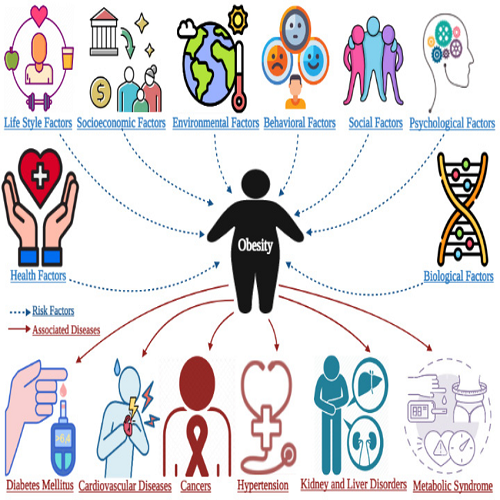
Obesity, its causes and risk factors
Obesity:- is a complex disease involving having too much body fat. Obesity isn't just a cosmetic concern. It's a medical problem that increases the risk of many other diseases and health problems. These can include heart disease, diabetes, high blood pressure, high cholesterol, liver disease, sleep apnea and certain cancers.<br />There are many reasons why some people have trouble losing weight. Often, obesity results from inherited, physiological and environmental factors, combined with diet, physical activity and exercise choices.<br />The good news is that even modest weight loss can improve or prevent the health problems associated with obesity. A healthier diet, increased physical activity and behavior changes can help you lose weight. Prescription medicines and weight-loss procedures are other options for treating obesity.<br /><br />Symptoms<br />Body mass index, known as BMI, is often used to diagnose obesity. To calculate BMI, multiply weight in pounds by 703, divide by height in inches and then divide again by height in inches. Or divide weight in kilograms by height in meters squared. There are several online calculators available that help calculate BMI.<br /><br />BMI Weight status<br />Below 18.5 Underweight<br />18.5-24.9 Healthy<br />25.0-29.9 Overweight<br />30.0 and higher Obesity<br />Asians with a BMI of 23 or higher may have an increased risk of health problems.<br />For most people, BMI provides a reasonable estimate of body fat. However, BMI doesn't directly measure body fat. Some people, such as muscular athletes, may have a BMI in the obesity category even though they don't have excess body fat.<br />د. رؤى نشأت