A scientific article by Assistant Lecturer Hanadi Tahseen Muslim titled(Analytical Chemistry in the Detection and Quantification of Environmental Pollutants)
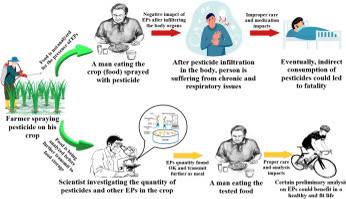
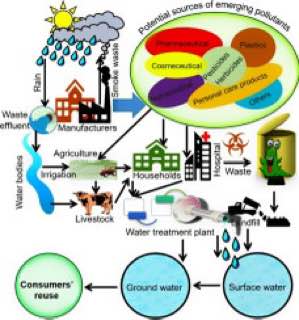
Analytical Chemistry in the Detection and Quantification of Environmental Pollutants<br /><br />Abstract<br />The detection of environmental pollutants is essential for monitoring ecosystem health and ensuring public safety. Analytical chemistry, with its range of advanced methods, plays a pivotal role in identifying, quantifying, and characterizing contaminants in environmental matrices such as air, water, and soil. This article explores the principal techniques employed in analytical chemistry for environmental pollutant detection, highlighting the applications, challenges, and advancements in this critical area of environmental science.<br /><br />Introduction<br />Environmental pollution poses significant risks to both ecosystems and human health, with contaminants being introduced from various anthropogenic sources including industrial processes, agricultural activities, and urbanization. Pollutants in the environment, such as heavy metals, pesticides, industrial chemicals, and emerging pollutants (e.g., pharmaceuticals, microplastics), can persist in the environment for extended periods, causing cumulative and often irreversible damage. Analytical chemistry provides the methodologies necessary for the detection and quantification of these pollutants, enabling both regulatory monitoring and research to understand pollution dynamics and assess mitigation efforts.<br /><br />Analytical Chemistry Techniques for Pollutant Detection<br /><br />The field of analytical chemistry is crucial for the precise measurement of environmental pollutants. Techniques used can be broadly classified into classical and modern methods, with the latter offering significant advantages in sensitivity, specificity, and throughput.<br /><br />1. Classical Analytical Methods<br /><br />Classical methods, although largely supplanted by more advanced techniques, remain important in certain contexts due to their simplicity and cost- effectiveness. Common classical techniques include:<br /><br />Titration: Employed for determining the concentration of certain pollutants such as chlorine and sulfur in water.<br /><br />• Gravimetry: Used for the quantitative determination of metals or particulate matter in environmental samples.<br /><br />These methods, however, tend to be less sensitive and time-consuming compared to modern instrumental methods, especially when analyzing trace-level contaminants.<br /><br />2. Modern Instrumental Methods<br /><br />Modern instrumental techniques have revolutionized the detection of environmental pollutants, allowing for greater sensitivity, precision, and automation. Some of the most widely used methods include:<br /><br />2.1 Chromatography <br /><br />Chromatographic techniques are invaluable for separating complex mixtures of pollutants.<br /><br />• Gas Chromatography (GC) is particularly effective for volatile organic compounds (VOCs) such as pesticides, hydrocarbons, and solvents. Coupled with detectors like mass spectrometry (GC-MS), this method enables highly sensitive identification and quantification.<br /><br />• High-Performance Liquid Chromatography (HPLC) is used for analyzing polar compounds, including herbicides, pharmaceuticals, and industrial chemicals, offering high resolution and sensitivity.<br /><br />2.2 Spectroscopy<br /><br />Spectroscopic methods provide rapid, non- destructive analysis of environmental samples.<br /><br />Atomic Absorption Spectroscopy (AAS) and Inductively Coupled Plasma Mass Spectrometry (ICP-MS) are commonly used for the detection of metals in environmental samples (e.g., lead, mercury, cadmium). These techniques are highly sensitive, allowing for detection of trace metals in water, soil, and air samples.<br /><br />UV-Visible Spectroscopy (UV-Vis) is used to quantify organic pollutants such as dyes, herbicides, and pharmaceuticals in water and wastewater<br /><br />2.3 Mass Spectrometry (MS)<br /><br />Mass spectrometry provides detailed molecular-level information about pollutants, enabling precise identification and quantification. When coupled with chromatography (GC-MS or LC-MS), this technique offers enhanced sensitivity and the ability to analyze complex environmental matrices.<br /><br />2.4 Electrochemical Methods Electrochemical sensors are increasingly utilized for real-time, in-situ monitoring of environmental pollutants. These sensors, which operate based on electrochemical reactions, are particularly effective for detecting heavy metals (e.g., lead, arsenic) and pesticides at low concentrations. Their portability and low cost make them suitable for field applications and continuous monitoring.<br /><br />3. Applications in Environmental Monitoring<br /><br />3.1 Water Quality Monitoring<br /><br />Water contamination is a critical issue for both human health and ecological balance. Analytical chemistry is essential for detecting pollutants such as heavy metals (mercury, lead), nutrients (nitrates, phosphates), and organic contaminants (pesticides, pharmaceuticals). Advanced techniques like ICP- MS and HPLC are routinely used to ensure compliance with water quality standards, while mass spectrometry provides information on the presence of emerging contaminants.<br /><br />3.2 Air Quality Assessment<br /><br />Air pollution monitoring focuses on detecting particulate matter (PM), volatile organic compounds (VOCs), and gaseous pollutants such as sulfur dioxide (SO2), nitrogen oxides (NOx), and ozone. GC-MS and AAS are key tools for identifying and quantifying these pollutants. Real-time air quality sensors, utilizing electrochemical techniques, offer continuous monitoring capabilities, enabling rapid response to pollution events.<br /><br />3.3 Soil Contamination<br /><br />Soil analysis is critical for assessing the impact of pollutants like pesticides, heavy metals, and industrial chemicals. Techniques such as X-ray fluorescence (XRF), ICP-MS, and AAS provide detailed information on pollutant concentrations, which is crucial for land management, agricultural practices, and environmental remediation.<br /><br />Challenges in Environmental Pollutant Detection<br /><br />Despite significant advancements, several challenges remain in the detection of environmental pollutants:<br /><br />• Complexity of Environmental Matrices: Environmental samples (air, water, soil) often contain a wide variety of interfering substances, complicating the analysis.<br /><br />Trace Level Detection: Many pollutants are<br /><br />present in trace concentrations, requiring highly sensitive techniques.<br /><br />Cost and Accessibility: Sophisticated instruments such as ICP-MS and GC-MS are expensive and require specialized knowledge and facilities, limiting their accessibility in some regions.<br /><br />Conclusion<br /><br />Analytical chemistry provides the foundation for environmental monitoring, offering a wide range of tools for detecting and quantifying pollutants in environmental media. The continuous evolution of analytical methods, including more sensitive and portable detection systems, promises to enhance our ability to monitor and manage environmental pollution. Future research in analytical chemistry will likely focus on developing more cost-effective, real-time sensors and improving the sensitivity and selectivity of existing methods, further advancing our ability to protect ecosystems and human health from the impacts of pollution.<br />This version is more technical and detailed, with a focus on the methodologies, challenges, and significance of analytical chemistry in environmental monitoring, making it suitable for a scientific publication. Let me know if you need further adjustments or additions!