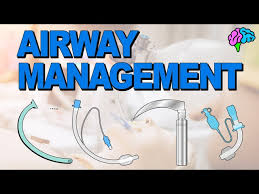
Airway Management
Rapid Sequence Intubation Prepare equipment (IV, ECG, oximeter, BVM, suction, ETT); CO2 detector; backup airway.C-spine immobilization, as needed.<br />Preoxygenate with 100% O2; apply and maintain cricoid pressure.<br />Give sedative:<br />■ Midazolam, 0.1–0.3 mg/kg IV/IO, OR:<br />■ Thiopental, 1–3 mg/kg IV/IO, OR:<br />■ Ketamine, 1–2 mg/kg IV/IO, OR:<br />■ Etomidate, 0.3 mg/kg IV/IO, OR:<br />■ Diazepam, 0.2 mg/kg IV/IO(maximum, 20 mg)<br />If patient <2 yo., give atropine, 0.02 mg/kg IV/IO (blocks reflex bradycardia).Give neuromuscular blocker:<br />■ Succinylcholine, 1–1.5 mg/kg IV/IO, OR:<br />■ Rocuronium, 0.6–1.2 mg/kg, IV/IO, OR:<br />■ Vecuronium, 0.1 mg/kg IV/IO<br />Place patient in sniff position; hyperventilate with O2.Lift tongue leftward and visualize vocal cords.<br />Airway:<br />Intubate (apply cricoid pressure, as needed).Inflate cuff; verify tube placement:<br />■ Check chest expansion.<br />■ Check lung sounds.<br />■ Check for fogging of tube.<br />■ Apply CO2 detector.<br />■ Secure with ETT holder and C-collar, when applicable. Insert ETT; inflate cuff; check breath sounds.<br />■ Laryngeal Mask Airway Contraindications—Severe or pharyngeal trauma; poorly tolerated in conscious patients.<br />1. C-spine immobilization prn.<br />2. Deflate cuff. Lubricate posterior (palatal) surface of LMA.<br />3. Pre oxygenate with 100% O2.<br />4. Extend head; flex neck; place LMA against hard palate.<br />5. Follow natural curve of patient’s airway, insert LMA until it is seated snugly.<br />6. Inflate cuff with just enough air (see chart); do not hold tube down during inflation; allow LMA to “seat itself.”<br />7. Verify proper placement:<br />■ Check chest expansion and lung sounds.<br />■ Secure with tape or tube holder.<br />■ Apply CO2 detector; oximeter.<br />■ Reassess airway periodically. Patient Size LMA Size Maximum Cuff Volume<br />Neonate/infant: up to 5 kg 1 Up to 4 mL<br />Infant: 5–10 kg 1½ Up to 7 mL<br />Infant/child: 10–20 kg 2 Up to 10 mL<br />Child: 20–30 kg 2½ Up to 14 mL<br />Child: 30–50 kg 3 Up to 20 mL<br />Normal adult: 50–70 kg 4 Up to 30 mL<br />Large adult: 70–100 kg 5 Up to 40 mL<br />Large adult: >100 kg 6 Up to 50 mL<br />■ King LT Airway<br />Contraindications—Patients <4 ft tall; does not protect against aspiration.<br />1. C-spine immobilization, as needed. Pre oxygenate with 100% O2. Apply water-based lube to distal tip and posterior aspect of tube.<br />2. Deflate cuff. Open mouth, apply chin lift, insert tip into side of mouth.<br />3. Advance tip behind tongue while rotating tube to midline.<br />4. Advance tube until base of connector is aligned with teeth or gums.<br />5. Inflate cuff with air (use minimum volume necessary).<br /><br />Miaad adnan abdul salam<br />Iraqi board of anesthesia and intensive care