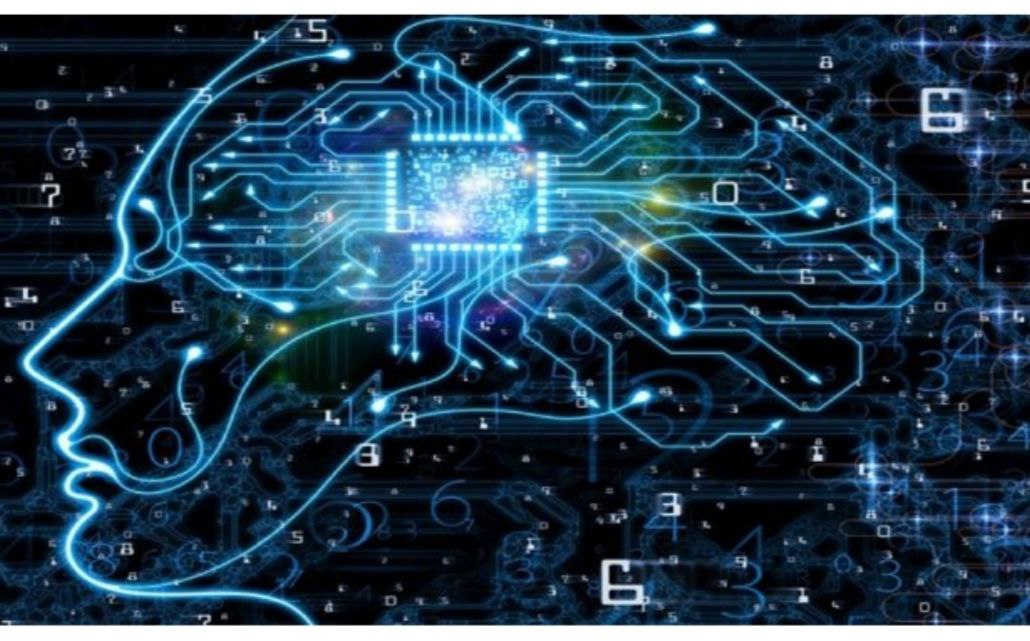
مقالة للتدريسية ( م.م زينب كاظم جابر) " Next-Generation Computer Architecture: Innovations and Emerging Trends"
As computational demands continue to grow with advancements in artificial intelligence (AI), big data, edge computing, and quantum technology, the field of computer architecture is rapidly evolving. Researchers and engineers are exploring new paradigms to overcome traditional limitations like power consumption, data transfer bottlenecks, and scalability. This article highlights some of the most innovative and forward-thinking ideas shaping the future of computer architecture.<br /><br />. Beyond the Von Neumann Architecture<br /><br />For decades, the Von Neumann architecture has been the foundation of most computing systems. However, its reliance on a single memory space for both instructions and data, and the inherent limitations of serial processing, have led to performance bottlenecks—known as the "Von Neumann bottleneck." Modern workloads, especially AI and machine learning tasks, require faster data movement and parallel computation.<br />a. Non-Von Neumann Architectures<br />To address these challenges, researchers are exploring Non-Von Neumann architectures. These architectures separate memory and computation more rigorously or integrate them to enable higher data throughput. Notable concepts include: <br /> Dataflow Architecture: In this model, computation happens when data is available, rather than relying on a linear instruction sequence. This structure is highly efficient for parallel processing and AI applications<br /> <br />- In-Memory Computing (IMC): Here, computation is performed directly within memory units, reducing the need to transfer data between the CPU and memory. This can greatly reduce energy consumption and latency, making it ideal for AI, edge computing, and real-time data processing.<br /><br />. Neuromorphic Computing<br />Inspired by the human brain, neuromorphic computing is a novel architecture that aims to replicate the neural structures and processes found in biological systems. Unlike traditional computers, which operate using binary logic (0s and 1s), neuromorphic systems use spiking neurons to simulate brain-like processing.<br /><br />Neuromorphic systems are highly efficient at pattern recognition, learning, and inference tasks. They hold immense potential for energy-efficient AI, real-time decision-making, and even adaptive, self-learning systems. Companies like IBM and Intel are already developing neuromorphic processors, such as Intel's Loihi chip, which could lead to new applications in robotics, autonomous systems, and AI.<br /><br />. Quantum Computing<br />Quantum computing represents a fundamental shift in computing power and architecture. By harnessing quantum mechanics principles, quantum computers process information in qubits rather than bits, allowing them to solve complex problems far more efficiently than classical computers. Problems like molecular simulation, cryptography, and complex optimization tasks could be revolutionized with quantum technology.<br /><br />Key innovations in quantum architecture include: <br />- Quantum Error Correction (QEC): Developing robust architectures that correct errors in quantum states is one of the biggest challenges facing quantum computing. Without QEC, quantum computers are prone to instability and noise.<br /> <br />- Hybrid Quantum-Classical Architectures: Many researchers envision the future of computing as hybrid systems, where quantum computers work in tandem with classical systems, handling specific tasks that classical systems can't solve efficiently.<br /><br />. HETEROGENEOUS ARCHITECTURES AND SPECIALIZED ACCELERATORS<br />General-purpose computing systems often struggle with performance and energy efficiency when faced with specialized workloads, such as deep learning or data analytics. This is driving the trend towards heterogeneous computing, where different types of processors, such as CPUs, GPUs, FPGAs (Field-Programmable Gate Arrays), and AI accelerators, are integrated into a single system.<br /><br />AI Accelerators a.<br />To cater to AI and machine learning applications, specialized accelerators like Google’s TPU (Tensor Processing Unit) and Graph core's IPU (Intelligence Processing Unit) are designed to handle specific tasks such as matrix multiplication and inference processing. These chips enable faster and more energy-efficient execution of AI workloads compared to traditional CPUs and GPUs<br /><br />b. 3D Chip Stacking and Heterogeneous Integration<br />To further enhance performance and reduce latency, 3D chip stacking is gaining traction. This involves stacking multiple layers of processors or memory chips in a vertical arrangement, reducing the physical distance between components and improving data transfer rates.<br /><br />Moreover, heterogeneous integration allows the combination of different chip technologies on a single substrate. This means that CPUs, GPUs, and AI accelerators can work together more seamlessly within a system, enabling efficient division of workloads for greater performance<br /><br /><br />. .Optical Computing and Photonic Chips5 <br /><br />One of the most promising areas for innovation in computer architecture is the shift from electronic to optical computing. Instead of using electrical signals to process and transfer data, optical computing relies on light, which travels faster and is more energy-efficient..<br /><br />a. Photonic Interconnects<br />One key application is the use of photonic interconnects to replace traditional copper wiring within chips and between systems. Photonic interconnects transmit data using light, drastically increasing bandwidth while reducing heat and power consumption. This can have transformative effects on data centers and high-performance computing (HPC) environments.<br /><br />b. Photonic Processors<br />Beyond interconnects, researchers are developing photonic processors, which compute using light rather than electricity. These processors could enable massive parallelism, ultra-fast data processing, and lower energy usage, opening new avenues for AI, telecommunications, and cryptography.<br /><br />Processing-in-Memory (PIM)) .6<br /><br />Traditional computing systems rely on the separation of processing units (CPUs, GPUs) and memory, leading to significant performance bottlenecks due to data movement. Processing-in-Memory (PIM) is a revolutionary architecture that moves computation directly into memory. This integration reduces the need for data transfers, improving speed and energy efficiency.<br /><br />In AI and big data workloads, PIM can be particularly effective because these tasks require constant movement of large datasets. By embedding computation within the memory modules, tasks such as deep learning training, data analytics, and real-time processing can be significantly accelerated.<br /><br />. Edge and Distributed Computing Architectures .7 <br /><br />With the rise of IoT and 5G technologies, there is a growing need for architectures that support edge computing. Instead of sending all data to centralized cloud data centers, edge computing performs processing closer to where the data is generated—at the "edge" of the network. This reduces latency, improves real-time decision-making, and conserves bandwidth.<br /><br />To support these trends, architectures are being developed that can dynamically allocate resources across distributed systems. This involves creating hardware and software frameworks that enable efficient data sharing, load balancing, and task migration across edge devices, cloud servers, and network infrastructure.<br /><br />Carbon Nanotube Transistors and Beyond Silicon. . 8<br /><br />As silicon-based transistors reach their physical limits, new materials are being explored for the next generation of processors. Carbon nanotubes, graphene, and other 2D materials have shown promise for creating faster and more efficient transistors at nanoscale levels. These materials can operate at much lower power levels and higher speeds than traditional silicon-based designs.<br /><br />Conclusion<br /><br />The future of computer architecture is moving beyond the traditional paradigms that have dominated for decades<br />As demands for performance, energy efficiency, and specialized computing increase, new approaches such as neuromorphic computing, quantum processors, photonic chips, and in-memory computing are emerging as solutions. These innovations are not only pushing the boundaries of what computers can achieve but also reshaping the very foundation of how computation is performed.<br />