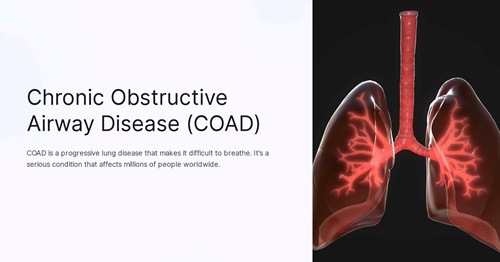
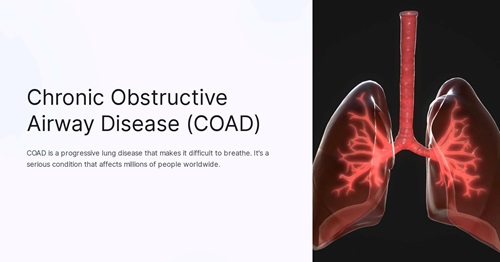
Scientific article by Dr. Ali Hussein Hamza Al-Nasrawi Otorhinolaryngologist and laser specialist entitled (Chronic obstructive airway diseases (COAD))
Chronic obstructive airway diseases (COAD), including chronic obstructive pulmonary disease (COPD), remain significant health concerns in Iraq. Recent studies have shed light on the causes, diagnosis, and treatments of these conditions in the Iraqi context.<br />Causes<br />The primary causes of COAD in Iraq include:<br />1. Smoking: Tobacco use remains a major risk factor for COPD in Iraq[3].<br />2. Environmental pollution: Exposure to ambient particulate matter and occupational particulate matter are significant contributors to COPD burden in the region[5].<br />3. Military service: Veterans who served in Iraq have shown an increased risk of developing respiratory illnesses, possibly due to exposure to dust, sand, chemicals, and burn pits[2].<br />Diagnosis:- Diagnosis of COAD in Iraq typically involves:<br />1. Lung Function Questionnaire: Used to assess respiratory symptoms, with scores ≤18 indicating the need for further testing[3].<br />2. Spirometry: The primary diagnostic tool for COPD, with FEV1/FVC ratio <70% indicating potential COPD[3].<br />3. Post-bronchodilator spirometry: Used to confirm COPD diagnosis and differentiate from asthma[3].<br />Treatment<br />Current treatment approaches for COAD in Iraq include:<br />1. Smoking cessation: A crucial first step in managing COPD[3].<br />2. Bronchodilators: Used to improve airflow and reduce symptoms[3].<br />3. Inhaled corticosteroids: For patients with frequent exacerbations[3].<br />4. Pulmonary rehabilitation: To improve exercise capacity and quality of life[3].<br /> Recent Developments<br />1. Increasing prevalence: The prevalence of COPD in Iraq has been rising, with a 30.6% increase in age-standardized point prevalence between 1990 and 2019[5].<br />2. Underdiagnosis: Only 12.6% of COPD cases in a Baghdad study had a previous physician diagnosis, indicating significant underdiagnosis[3].<br />3. Risk factors: Age over 55 years and smoking more than 40 pack-years were identified as significant independent determinants of COPD[3].<br />Recommendations<br /><br />1. Implement widespread spirometry testing for adult smokers[3].<br />2. Enhance smoking cessation programs and counseling[3].<br />3. Improve air quality and reduce occupational exposures to particulate matter[5].<br />4. Increase awareness and early detection efforts, particularly among high-risk groups[3][5].<br />These findings underscore the need for comprehensive strategies to address COAD in Iraq, focusing on prevention, early diagnosis, and effective management.<br /><br /><br /><br />Citations:<br />[1] https://pubmed.ncbi.nlm.nih.gov/7111874/<br />[2] https://www.research.va.gov/currents/summer2014/summer2014-24.cfm<br />[3] https://www.emro.who.int/emhj-volume-23-2017/volume-23-issue-2/prevalence-and-determinants-of-chronic-obstructive-pulmonary-disease-among-a-sample-of-adult-smokers-in-baghdad-iraq-2014.html<br />[4] https://academic.oup.com/milmed/article-abstract/181/5/476/4158248?login=false&redirectedFrom=fulltext<br />[5] https://respiratory-research.biomedcentral.com/articles/10.1186/s12931-022-02242-z<br />[6] https://pmc.ncbi.nlm.nih.gov/articles/PMC5817986/<br />[7] https://watson.brown.edu/costsofwar/files/cow/imce/papers/2015/Respiratory%20Disorders%20Following%20Service%20in%20Iraq.pdf<br />[8] https://pmc.ncbi.nlm.nih.gov/articles/PMC9480178/ <br /><br />Dr.Ali Hussein Alnasraw<br />Otorhinolaryngologist and MEDICAL LASER specialist<br /><br />