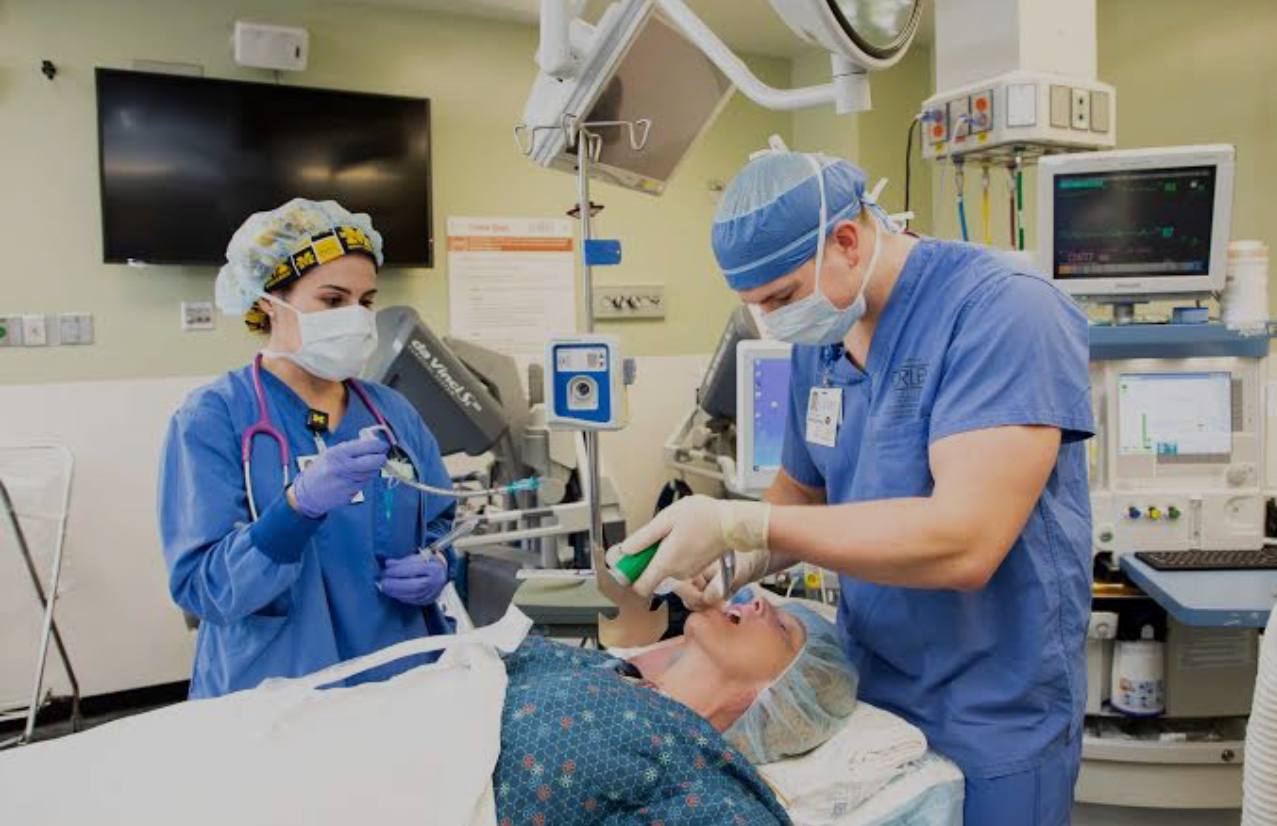
General anesthesia
General anesthesia puts you into a sleep-like state using a combination of medications. Anesthetic<br />medications are given before and during surgery or other medical procedures. General anesthesia<br />typically uses a combination of intravenous medications and inhaled gases.<br />You'll feel as if you're asleep, but general anesthesia is more than just a state of sleep. You won't<br />feel pain while you're under general anesthesia because your brain doesn't respond . to pain signals<br />or reflexes<br />An anesthesiologist is a specialist in anesthesia. In many hospitals, an anesthesiologist and a<br />registered nurse anesthetist work together as a team during the procedure. While you are under<br />anesthesia, the anesthesia team monitors your condition and vital signs, controls your breathing<br />rate and manages pain from the procedure.<br />General anesthesia is a very safe procedure, and most people do not experience any serious<br />complications from general anesthesia. This is also true for people with serious medical conditions.<br />The likelihood of complications for a patient is closely related to the type of surgery they are<br />undergoing and their overall physical health.<br />Older adults or those with serious health problems are more likely to become confused after<br />surgery. They are also at greater risk of developing pneumonia, stroke, or heart attack after surgery.<br />This is especially true for people undergoing more complex surgical procedures.<br />The following conditions increase the risk of complications during surgery:<br />Smoking.<br />Sleep apnea.<br />Obesity.<br />High blood pressure.<br />Diabetes.<br />Stroke.<br />Seizures.<br />Other conditions related to the heart, lungs, kidneys, or liver.<br />Medications that can increase bleeding.<br />Excessive alcohol or drug use.<br />Medication allergies.<br />Previous adverse allergic reactions to anesthesia.<br /> <br /><br />م. احمد ابراهيم عباس