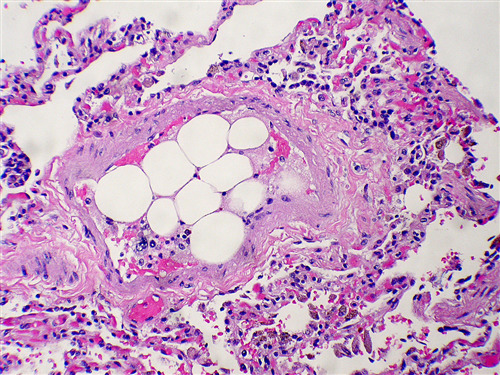
Pulmonary Embolism vs. Fat Embolism in Anesthesia
Pulmonary embolism (PE) and fat embolism syndrome (FES) are both serious complications that can occur during or after surgery. While they share some similarities, they have distinct causes, presentations, and management strategies.<br />Pulmonary Embolism (PE)<br />Cause:<br />• Occurs when a blood clot (thrombus) forms in a deep vein, usually in the legs, and travels to the lungs.<br />• Risk factors include prolonged immobility, surgery, trauma, and certain medical conditions.<br />Presentation:<br />• Shortness of breath<br />• Chest pain<br />• Tachycardia (rapid heart rate)<br />• Tachypnea (rapid breathing)<br />• Cough (may be bloody)<br />• Low blood pressure<br />• Sudden death<br />Management:<br />• Anticoagulation therapy (e.g., heparin, warfarin)<br />• Thrombolytic therapy (e.g., tissue plasminogen activator) in severe cases<br />• Oxygen therapy<br />• Supportive care (e.g., pain management, fluid management)<br />Fat Embolism Syndrome (FES)<br />Cause:<br />• Occurs when fat globules from bone marrow enter the bloodstream, typically after long bone fractures or orthopedic surgery.<br />• Risk factors include long bone fractures, multiple trauma, and liposuction.<br /><br />Presentation:<br />• Respiratory distress<br />• Confusion or altered mental status<br />• Petechial rash (small red spots on the skin)<br />• Fever<br />• Tachycardia<br />• Hypotension<br />Management:<br />• Supportive care (e.g., oxygen therapy, fluid management)<br />• Early mobilization to prevent further fat embolism<br />• Corticosteroids (controversial)<br />• Anticoagulation therapy (controversial)<br />Key Differences<br />Feature Pulmonary Embolism Fat Embolism Syndrome<br />Cause Blood clot Fat globules from bone marrow<br />Risk Factors Prolonged immobility, surgery, trauma, medical conditions Long bone fractures, multiple trauma, liposuction<br />Presentation Shortness of breath, chest pain, tachycardia, tachypnea, cough Respiratory distress, confusion, petechial rash, fever, tachycardia, hypotension<br />Management Anticoagulation, thrombolytic therapy, supportive care Supportive care, corticosteroids (controversial), anticoagulation (controversial)<br />Prevention<br />• Early mobilization after surgery<br />• Adequate hydration<br />• Anticoagulation prophylaxis in high-risk patients<br />Both PE and FES are serious complications that require prompt diagnosis and treatment. Anesthesiologists play a crucial role in preventing and managing these conditions by optimizing perioperative care, including careful fluid management, early mobilization, and appropriate use of anticoagulation prophylaxis.<br /><br /><br /><br />م.م نهى نوماس