
A Scientific Article By Saja.Fadil.Abbas Entitled: Fabry Disease: Understanding the Condition and Its Impact on Daily Life
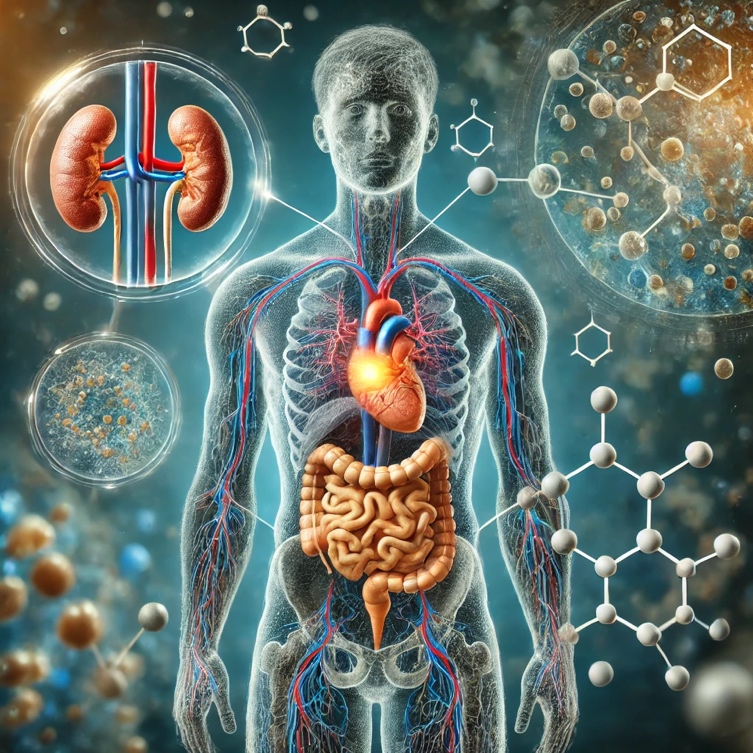
Fabry Disease: Understanding the Condition and Its Impact on Daily Life<br /><br />Fabry disease is a rare genetic disorder that primarily affects blood vessels and internal organs. It belongs to a group of genetic disorders known as “enzyme deficiencies,” where the lack or absence of a crucial enzyme leads to the accumulation of complex fatty substances in the body’s cells, causing a range of complex health problems.<br /><br /><br />Here is the conceptual image representing Fabry disease, showing areas of the body affected by the disease, such as the kidneys, heart, brain, and skin, along with molecular accumulation inside cells.<br /><br /><br />Causes of Fabry Disease<br /><br />Fabry disease results from genetic mutations in the “alpha-galactosidase A” gene, which is responsible for producing the enzyme that helps break down a substance called “globotriaosylceramide” in cells. When this enzyme is missing or its levels are too low, the substance accumulates in blood vessels, kidneys, heart, brain, and nerves, leading to damage in these organs.<br /><br /><br /><br /><br /><br /><br />Symptoms<br /><br />The symptoms of Fabry disease can vary from person to person and often appear early in life. Diagnosis is frequently delayed due to the diverse nature of the symptoms and their similarity to other conditions. Common symptoms include:<br /> • Burning pain: Patients with Fabry disease often experience a burning pain in the extremities, particularly the hands and feet.<br /> • Skin issues: A characteristic rash known as “angiokeratomas” may appear on the skin, especially on the limbs.<br /> • Gastrointestinal problems: Some individuals suffer from chronic diarrhea or constipation.<br /> • Kidney failure: The buildup of toxic substances in the kidneys can lead to a decline in kidney function over time.<br /> • Cardiac and neurological issues: Accumulation in the heart can increase the risk of heart failure, while deposits in the brain can cause issues with hearing, vision, or even strokes.<br /><br />Diagnosis and Treatment<br /><br />Diagnosis typically involves laboratory tests to confirm the levels of the “alpha-galactosidase A” enzyme in blood or tissue samples. Early diagnosis is crucial to prevent the more severe complications that can affect vital organs.<br /><br />Regarding treatment, enzyme replacement therapy (ERT) is the most common option, where patients are given synthetic enzymes to compensate for the missing enzyme. Additionally, supportive treatments like medications to improve organ function are often used.<br /><br />Life Challenges for Fabry Disease Patients<br /><br />In addition to the physical effects of the disease, Fabry patients face psychological and social challenges. They need ongoing medical follow-ups and may have to adjust their lifestyles to cope with the chronic symptoms of the disease. The high cost of treatment and continuous medical needs can also impact their ability to adapt to society.<br /><br />Future and Scientific Research<br /><br />Research on Fabry disease continues to evolve, focusing on improving available treatments and exploring new options for patients. There is also increasing interest in studying the relationship between Fabry disease and other conditions such as cardiovascular diseases and strokes, aiming to better understand the broader impact of the disease.<br /><br />Sources<br /> 1. “Fabry Disease: Insights into the Molecular Pathogenesis, Diagnosis, and Treatment,” The New England Journal of Medicine (2015).<br /> 2. Mauer, M., et al. “The Role of Enzyme Replacement Therapy in Fabry Disease,” Clinical Genetics (2017).<br /> 3. “Fabry Disease and Its Management,” Orphanet Journal of Rare Diseases (2019).<br /><br />Fabry disease is a stark example of how rare genetic disorders can profoundly affect individuals’ lives. With advancements in medical science and technology, researchers hope to make greater strides in improving the diagnosis and treatment of this condition, offering hope to thousands of patients worldwide.<br /><br />