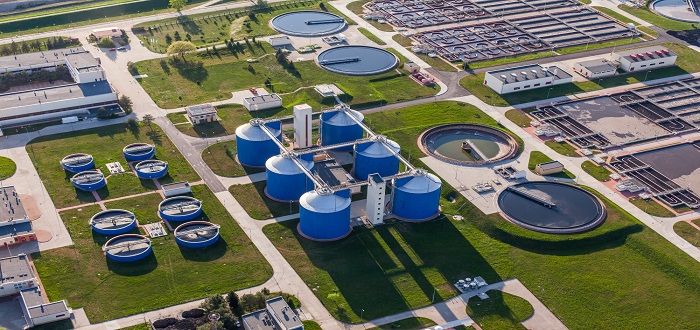
A scientific article by Ms. (Nour Al-Huda Azmi Hassan) entitled "The role of technology in addressing water scarcity in urban areas"
**The Role of Technology in Addressing Water Scarcity in Urban Areas**<br /><br />Water scarcity is becoming an increasingly critical issue, particularly in urban areas where population growth, climate change, and inadequate infrastructure contribute to water shortages. As cities continue to expand, the demand for fresh water intensifies, putting tremendous pressure on existing water resources. However, technological advancements offer promising solutions to mitigate these challenges. This article explores how technology is playing a pivotal role in addressing water scarcity in urban areas.<br /><br />### 1. **Smart Water Management Systems**<br /><br />One of the most significant technological advancements in urban water management is the development of **smart water management systems**. These systems use sensors, real-time data collection, and advanced analytics to monitor water usage, detect leaks, and optimize the distribution of water. For instance, sensors embedded in pipes can immediately detect leaks or changes in water pressure, allowing for rapid response and repair before the issue escalates. This not only reduces water loss but also helps prevent costly repairs and maintenance.<br /><br />Additionally, **smart meters** help consumers track their water usage, providing them with insights into how they can reduce consumption. This fosters better water conservation habits among residents and businesses, contributing to the overall goal of sustainable water use.<br /><br />### 2. **Water Recycling and Reuse Technologies**<br /><br />Water recycling and reuse are crucial in urban areas where demand for water exceeds supply. **Advanced wastewater treatment** technologies have made it possible to treat and purify wastewater, turning it into high-quality water suitable for non-potable uses such as irrigation, industrial processes, or even toilet flushing. **Membrane filtration**, **reverse osmosis**, and **ultraviolet (UV) disinfection** are some of the methods that enable the recycling of water with minimal environmental impact.<br /><br />In some cities, **greywater systems** (which reuse water from sinks, showers, and washing machines) are being integrated into buildings to reduce the demand on municipal water systems. This technology reduces the volume of water required from primary sources and helps to conserve valuable freshwater resources.<br /><br />### 3. **Desalination Technologies**<br /><br />For cities located near coastlines, **desalination** is an increasingly important solution for augmenting freshwater supply. Desalination is the process of removing salts and minerals from seawater to produce potable water. Technologies such as **reverse osmosis desalination** are being used to provide a reliable source of fresh water. Though desalination is energy-intensive, innovations in energy-efficient desalination technologies and the use of **renewable energy** sources like solar and wind power are helping to make this solution more sustainable.<br /><br />### 4. **Rainwater Harvesting Systems**<br /><br />Another technological approach gaining popularity in urban areas is **rainwater harvesting**. This involves collecting and storing rainwater from rooftops or other surfaces for later use. Technological innovations in filtration and storage systems ensure that collected rainwater is clean and safe for consumption or use in non-potable applications. In many cities, the installation of rainwater harvesting systems has been incentivized for both residential and commercial buildings, helping reduce dependence on municipal water supplies.<br /><br />### 5. **Water-Efficient Infrastructure**<br /><br />Urban infrastructure is another area where technology is making a significant impact. **Smart irrigation systems**, for example, utilize weather forecasts and soil moisture sensors to optimize water usage for landscaping and agriculture. These systems adjust the watering schedule based on real-time data, preventing overuse of water and ensuring that plants receive only the water they need.<br /><br />Furthermore, **green infrastructure**—such as permeable pavements, green roofs, and urban wetlands—helps absorb rainwater, reducing the burden on drainage systems and preventing water wastage.<br /><br />### 6. **Big Data and Artificial Intelligence (AI)**<br /><br />**Big data** and **artificial intelligence (AI)** are becoming essential tools in water resource management. By collecting vast amounts of data from sensors, satellite imagery, and historical records, AI algorithms can predict water demand, monitor water quality, and optimize water distribution. This predictive modeling helps city planners make more informed decisions about where to invest in infrastructure improvements and how to allocate water resources more efficiently.<br /><br />For example, AI can analyze weather patterns, population growth, and consumption trends to forecast future water demands, enabling better long-term planning and water conservation strategies.<br /><br />### 7. **Public Awareness and Education Through Technology**<br /><br />Technology also plays a crucial role in educating the public about the importance of water conservation. **Mobile apps** and **web platforms** are being developed to provide real-time information on water usage, conservation tips, and local water shortages. By raising awareness and encouraging responsible water use, these tools help individuals and businesses adopt sustainable practices that contribute to overall water savings in urban areas.<br /><br />### 8. **The Future of Water Technology: Innovations on the Horizon**<br /><br />As urban water scarcity continues to worsen, new technologies are emerging to address the issue. **Solar-powered desalination** plants, **smart water treatment plants** that use artificial intelligence for real-time monitoring and optimization, and **hydroponic systems** for urban farming are just a few examples of technologies that could revolutionize urban water use in the future. The continued development and adoption of these technologies will be critical to ensuring that cities can meet their growing water needs without compromising environmental sustainability.<br /><br />### Conclusion<br /><br />The role of technology in solving the problem of water scarcity in urban areas cannot be overstated. Through innovations such as smart water management systems, water recycling technologies, desalination, and AI-based solutions, cities are finding more efficient and sustainable ways to manage their water resources. As these technologies continue to evolve, they will play a central role in ensuring that urban areas can meet their water needs while minimizing environmental impact. To fully realize the potential of these technologies, however, collaboration between governments, businesses, and individuals is essential, as well as continued investment in research and development.