
Object-Oriented Programming (OOP) and Its Importance in Software Development (Prof. Dr. Mehdi Ebady Manaa)
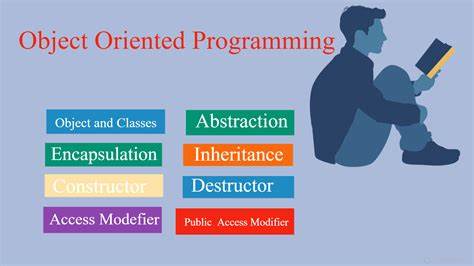
Object-Oriented Programming (OOP) is a programming paradigm that organizes code into objects containing specific data and behaviors. This methodology relies on key concepts such as Encapsulation, Inheritance, Polymorphism, and Abstraction, making software more organized, reusable, and maintainable.<br />The object is the core component of OOP, representing a unit that contains data (attributes or properties) and functions (methods) that interact with the data. A class serves as a blueprint for creating objects, defining the type of data and behaviors the object should have.<br />One of the key benefits of OOP is Encapsulation, which ensures data security by preventing direct modification from outside the object, thus reducing errors. Inheritance allows code reuse by enabling new classes to inherit properties and behaviors from existing classes, minimizing redundancy and improving efficiency. Polymorphism enables the use of the same interface to perform different functions, making it easier to expand and modify programs without affecting existing code.<br />OOP is widely used in various fields, including desktop application development, web applications, game development, and artificial intelligence. It is also the foundation of many modern programming languages such as Java, C++, Python, C#, and Ruby, making it one of the most commonly used programming paradigms.<br />Despite its advantages, OOP can be complex for beginners and may consume more memory compared to procedural programming. However, its benefits in reducing complexity, improving maintainability, and developing flexible and scalable software make it the preferred choice for most modern programming projects.<br />With rapid advancements in programming, Object-Oriented Programming remains one of the most essential approaches that help developers build robust and adaptable systems that effectively meet user needs.<br />