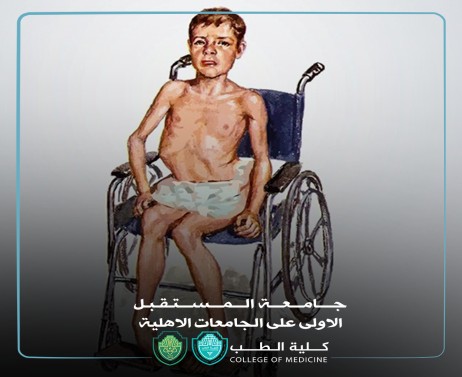
Duchenne disease
Duchenne muscular dystrophy is a severe form of muscular dystrophy. Duchenne illness is a hereditary condition that causes the muscles to weaken, atrophy, and continuously deteriorate. One of the most prevalent forms of muscular dystrophies is Duchenne disease. Muscular dystrophy disorders are a class of illnesses that can cause muscles to weaken and lose their flexibility over time.<br />Duchenne illness is caused by a particular genetic defect that may adversely impact certain protein types that are responsible for preserving the integrity of muscle cells.<br /> <br />People with this disease may experience a variety of motor difficulties, particularly when attempting to walk or climb stairs. As their condition worsens over time, they may experience motor disabilities in addition to numerous health complications in certain body organs, such as the heart, which can result in death.<br />Duchenne disease typically affects males and typically manifests symptoms in the early years of life, typically between the ages of two and three.<br />Despite the fact that there is currently no known cure for Duchenne disease, patients can now live longer thanks to the support and healthcare systems that have become available to those with this disease.<br /> <br />• Causes of Duchenne Disease<br />Duchenne muscular dystrophy is caused by a genetic problem in producing dystrophin, a protein that protects muscle fibers from breaking down when exposed to enzymes. However, low levels of it may cause muscle dysfunction that may weaken them over time.<br />Due to the way its genes are inherited, Duchenne disease is a sex-linked disease, as the genes responsible for the disease are usually located on the X chromosome, and these genes can be inherited from the mother who carries the disease genes to male children.<br />Although the genetic defect is often transmitted through heredity, in some rare cases it may arise suddenly without a genetic origin. It should also be noted that this disease may affect females in some rare cases, but females are often carriers of Duchenne disease genes only and are not affected with it.<br />• Symptoms of Duchenne Disease:<br />These are the most prominent symptoms of the disease that may appear in the affected person:<br />1) Initial symptoms: Before the patient reaches the age of 6 years, some problems often begin to appear in the muscles of the lower extremities, which may cause:<br />• The child is delayed in walking compared to other children his age<br />• The child falls frequently when he starts walking.<br />• The child faces some difficulty when trying to climb stairs or when trying to get up.<br />• After that, it may be noticed that the child has begun to tend to walk on his toes.<br />2) Later symptoms: As the child grows and years pass, the following additional symptoms may appear on a person with Duchenne disease:<br />• Scoliosis, a condition that causes a curvature of the spine<br />• Contraction of the leg muscles.<br />• Problems with studying, memory and concentration, with headaches and drowsiness.<br />• Breathing problems, such as shortness of breath, which are often attributed to the beginning of weakness in the heart muscle and respiratory muscles.<br />A child who is 12 years old will frequently no longer be able to move around independently without the use of a wheelchair, and as they get older, their heart and respiratory systems may deteriorate and eventually fail, which could result in their death, usually in the third decade of their lives.<br /> It should be noted that the resulting muscle problems may not be limited to the muscles of the lower extremities only, but may also affect the muscles of other areas of the body, such as the muscles of the arms and neck.<br />• Diagnosis of Duchenne Disease<br />• After conducting a physical and taking a detailed history of signs and symptoms, noting any occurrence of muscular dystrophy in family members, The physician performs tests and evaluates the child's health, including:<br />• Blood tests: These include genetic blood tests, which can reveal the gene mutation causing absence of dystrophin in about two thirds of boys with DMD.<br /><br />• Muscle biopsy: For those children who have clinical evidence of DMD but who do not show one of the common mutations, a small sample of muscle tissue examined under a microscope can confirm the diagnosis.<br /><br />• Electromyogram (EMG): This test checks to see if the child muscle weakness is a result of destruction of muscle tissue rather than nerve damage.<br /><br />• Electrocardiogram (ECG or EKG): A test that records the electrical activity of the heart, an ECG shows abnormal rhythms (arrhythmias or dysrhythmias) and detects heart muscle damage.<br /><br />• A genetics counselor reviews the history of disease with each family, discusses the principles of inheritance and helps weigh risks and benefits of genetic testing of various family members, including the affected child and potentially carrier testing for the mother.<br />• Treatment of Duchenne Disease<br />There is no known cure for Duchenne disease, but some treatment methods can help slow the progression of the disease in the body and keep its complications under control, as follows:<br />1) Use some types of medications, such as: steroids (Prednisone), which may help slow the progression of the disease, and the drug Eteplirsen, which may help compensate for the deficiency in dystrophin levels.<br />2) Consult physical and occupational therapists for assistance in creating customized programs to help the patient manage his muscular shrinking.<br />3) Subjecting the patient to surgery in some cases where the muscle contraction may be severe, or in cases of scoliosis.<br />4) Using additional treatment techniques to try to control some of the consequences that the condition may cause, like breathing and cardiac issues.<br />Dr. Zahraa Tariq Hassoun<br />PhD in Neurophysiology<br />