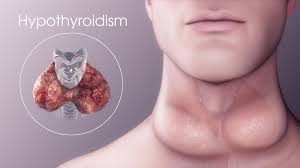
Hypothyroidism
Its happens when the thyroid gland doesn't make enough thyroid hormone. This condition also is called underactive thyroid. Hypothyroidism may not cause noticeable symptoms in its early stages. Over time, hypothyroidism that isn't treated can lead to other health problems, such as high cholesterol and heart problems.<br />Blood tests are used to diagnose hypothyroidism. Treatment with thyroid hormone medicine usually is simple, safe and effective once you and your health care provider find the right dosage for you.<br />The symptoms of hypothyroidism depend on the severity of the condition. Problems tend to develop slowly, often over several years.<br />At first, you may barely notice the symptoms of hypothyroidism, such as fatigue and weight gain. Or you may think they are just part of getting older. But as your metabolism continues to slow, you may develop more-obvious problems.<br />Hypothyroidism symptoms may include:<br />• Tiredness.<br />• More sensitivity to cold.<br />• Constipation.<br />• Dry skin.<br />• Weight gain.<br />• Puffy face.<br />• Hoarse voice.<br />• Coarse hair and skin.<br />• Muscle weakness.<br />• Muscle aches, tenderness and stiffness.<br />• Menstrual cycles that are heavier than usual or irregular.<br />• Thinning hair.<br />• Slowed heart rate, also called bradycardia.<br />• Depression.<br />• Memory problems.<br />Causes<br />The thyroid is a small, butterfly-shaped gland located at the base of the neck, just below the Adam's apple. The thyroid gland makes two main hormones: thyroxine (T-4) and triiodothyronine (T-3). These hormones affect every cell in the body. They support the rate at which the body uses fats and carbohydrates. They help control body temperature. They have an effect on heart rate. And they help control how much protein the body makes.<br />Hypothyroidism happens when the thyroid gland doesn't make enough hormones. Conditions or problems that can lead to hypothyroidism include:<br />Autoimmune disease. The most common cause of hypothyroidism is an autoimmune disease called Hashimoto's disease. Autoimmune diseases happen when the immune system makes antibodies that attack healthy tissues. Sometimes that process involves the thyroid gland and affects its ability to make hormones.<br />Thyroid surgery. Surgery to remove all or part of the thyroid gland can lower the gland's ability to make thyroid hormones or stop it completely.<br />Radiation therapy. Radiation used to treat cancers of the head and neck can affect the thyroid gland and lead to hypothyroidism.<br />Thyroiditis. Thyroiditis happens when the thyroid gland becomes inflamed. This may be due to an infection. Or it can result from an autoimmune disorder or another medical condition affecting the thyroid. Thyroiditis can trigger the thyroid to release all of its stored thyroid hormone at once. That causes a spike in thyroid activity, a condition called hyperthyroidism. Afterward, the thyroid becomes underactive.<br />Medicine. A number of medicines may lead to hypothyroidism. One such medicine is lithium, which is used to treat some psychiatric disorders. If you're taking medicine, ask your heath care provider about its effect on the thyroid gland.<br />Risk factors<br />• Are a woman.<br />• Have a family history of thyroid disease.<br />• Have an autoimmune disease, such as type 1 diabetes or celiac disease.<br />• Have received treatment for hyperthyroidism.<br />• Received radiation to your neck or upper chest.<br />• Have had thyroid surgery<br />د. رؤى نشأت الصفار <br /><br /><br /><br />The first university in Iraq