Thyroid cancer by dr. lamees abdulraheem
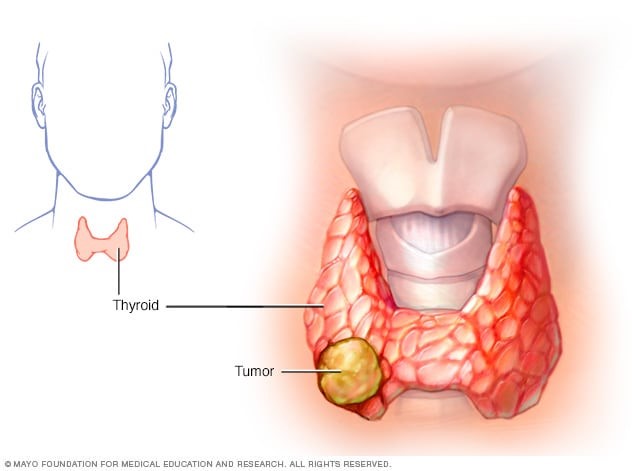
Thyroid Cancer: An Overview<br />Thyroid cancer is a type of cancer that originates in the thyroid gland, a butterfly-shaped organ located at the base of the neck. The thyroid plays a crucial role in regulating metabolism by producing hormones such as thyroxine (T4) and triiodothyronine (T3). Although thyroid cancer is relatively rare, its incidence has been increasing in recent years, making it an important topic for public health awareness.<br />Types of Thyroid Cancer<br />There are several different types of thyroid cancer, each with distinct characteristics. The main types include:<br />1. Papillary Thyroid Cancer (PTC):<br />o The most common type, accounting for approximately 70-80% of thyroid cancers.<br />2. Follicular Thyroid Cancer (FTC)<br />3. Medullary Thyroid Cancer (MTC)<br />4. Anaplastic Thyroid Cancer (ATC)<br />5. Hurthle Cell Carcinoma<br />Symptoms of Thyroid Cancer<br />Thyroid cancer often does not cause symptoms in its early stages. As the tumor grows, the following signs and symptoms may develop:<br />• A lump or nodule in the neck<br />• Changes in voice<br />• Difficulty swallowing or breathing<br />• Pain in the neck or throat<br />• Swollen lymph nodes<br />Risk Factors for Thyroid Cancer<br />While the exact cause of thyroid cancer is not fully understood, several risk factors may increase the likelihood of developing the disease:<br />• Gender and Age: Thyroid cancer is more common in women, especially between the ages of 20 and 55.<br />• Family History: A family history of thyroid cancer or certain inherited conditions, such as Multiple Endocrine Neoplasia type 2 (MEN2), increases the risk.<br />• Radiation Exposure<br />• Genetic Factors: Certain genetic mutations, such as those involving the RET proto-oncogene (in medullary thyroid cancer), can increase the risk.<br />• Iodine Deficiency<br />Diagnosis of Thyroid Cancer<br />The process of diagnosing thyroid cancer typically involves several steps:<br />1. Physical Examination<br />2. Ultrasound: This is the primary imaging tool used to assess thyroid nodules. <br />3. Fine Needle Aspiration (FNA) Biopsy: If a nodule is detected, an FNA biopsy may be performed to obtain a sample of tissue for analysis. This is the most definitive way to diagnose thyroid cancer.<br />4. Blood Tests<br />5. CT Scan or MRI: These imaging tests may be used to evaluate the extent of cancer spread, particularly to the lungs or bones.<br />6. Radioactive Iodine Scan <br />Treatment of Thyroid Cancer<br />The treatment plan for thyroid cancer depends on the type, stage, and other factors such as the patient's age and general health. Common treatment options include:<br />1. Surgery:<br />2. Radioactive Iodine (RAI) Therapy:<br />3. External Beam Radiation Therapy:<br />4. Thyroid Hormone Therapy:<br />5. Chemotherapy and Targeted Therapy:<br />Prognosis and Survival Rates<br />The prognosis for thyroid cancer generally depends on the type, stage, and the patient’s age and overall health. Papillary and follicular thyroid cancers have high survival rates, especially when detected early. The 5-year survival rate for these cancers is over 98%.<br />Medullary thyroid cancer has a somewhat lower survival rate, depending on whether it has spread at the time of diagnosis. Anaplastic thyroid cancer, on the other hand, has a poor prognosis due to its aggressive nature, with a 5-year survival rate of less than 10%.