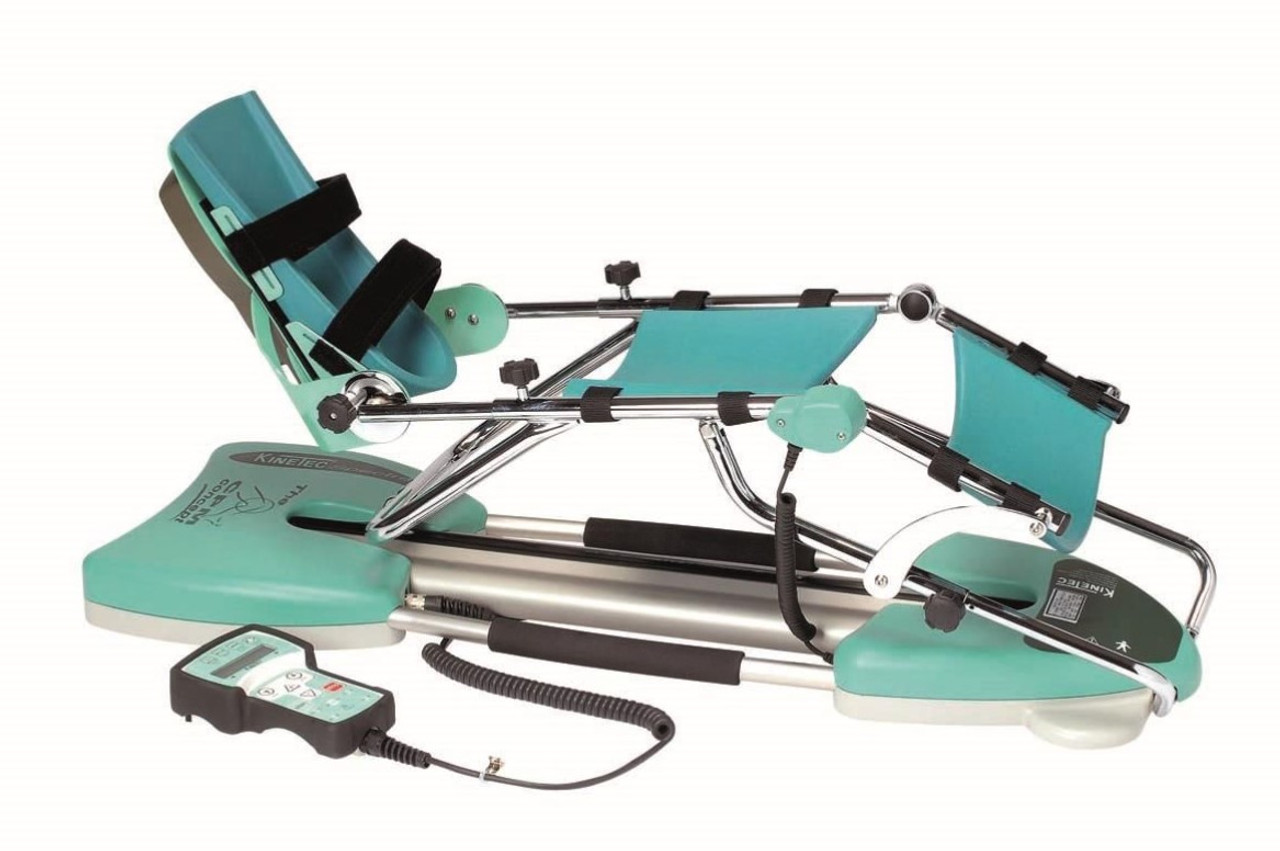
Scientific article entitled "Continuous Passive Motion (CPM) Device in Medical Rehabilitation" by Eng. Ikram Falah Hadi
Introduction<br />Physical therapy is an essential part of rehabilitation after surgery and musculoskeletal injuries. Among the techniques used to improve recovery and reduce complications, the continuous passive motion (CPM) device stands out as an effective tool to help restore movement and improve joint healing. This device is used in hospitals and physical therapy centers to support patients who have undergone joint replacement or ligament repair surgeries, as it provides periodic movements without the need for the patient's effort.<br /><br />What is a CPM device and how does it work?<br /><br />A continuous passive motion (CPM) machine is a motorized device that passively moves a joint through a pre-set range of motion. and is a safe and effective way to prevent stiffness, reduce pain, swelling after orthopedic surgery to the knee, decreased analgetics use, and shorter hospital stay.<br /><br />The device is used in several medical conditions, including :-<br />• Knee or hip replacement surgery: to reduce loss of movement after surgery.<br />• Sports injuries: such as torn ligaments and cartilage injuries.<br />• Bone fractures: especially if the patient is unable to move the affected limb on his own.<br />• Shoulder, elbow and wrist surgeries: It helps in gradually restoring range of motion.<br /><br />Benefits of CPM<br />- Improve range of motion (ROM) without stressing the patient.<br />- Reduce stiffness and scarring within the joint.<br />- Enhance blood flow to the affected tissues, which helps in speeding up the healing process.<br />- Reduce pain and swelling after surgery.<br />- Improve long-term outcomes for patients who have undergone joint surgeries.<br /><br />Challenges and limitations<br /><br />- Some studies question the long-term effectiveness of CPM compared to active physical therapy.<br />- It may not be suitable for all patients, especially those with complications such as severe osteoarthritis.<br />Conclusion<br />The CPM is a useful tool in the rehabilitation of patients with joint problems, as it helps reduce pain and stiffness and improve movement after surgery. However, its use remains part of a comprehensive treatment plan that includes physical therapy and effective exercises to ensure the best results. As technology advances, this device may see additional improvements that will make it even more effective and efficient in the future.<br /><br /><br />