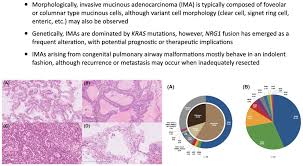
Mucinous Adenocarcinoma
Mucinous adenocarcinoma (MAC) is a distinct histological subtype of adenocarcinoma characterized by the presence of abundant extracellular mucin that constitutes at least 50% of the tumor volume. This malignancy arises from epithelial cells that produce mucus and can occur in various organs, including the colon, rectum, breast, ovary, pancreas, and lung. The pathophysiology, clinical features, and prognosis of MAC differ from those of non-mucinous adenocarcinomas, often presenting unique diagnostic and therapeutic challenges.<br />Pathophysiology<br />The hallmark of mucinous adenocarcinoma is the excessive production and accumulation of mucin. This phenomenon results from genetic mutations and dysregulation of signaling pathways, including mutations in KRAS, BRAF, and p53 genes, as well as alterations in the Wnt/β-catenin signaling pathway. The abundant mucin not only facilitates tumor growth and metastasis but also creates a hypoxic microenvironment that promotes resistance to therapy. Mucin acts as a physical barrier, impeding drug penetration and shielding tumor cells from immune surveillance.<br />Future University is the first university in Iraq