Review Future of Internet of Things in Health Services Facilities Dr. Tarik Raoof Al-Khateeb
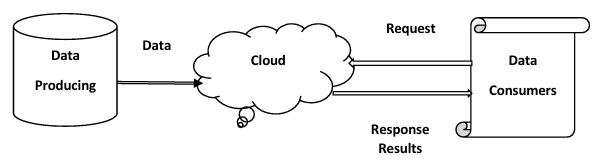
There are big challenges in IoT applications. The security of the huge data is one of <br />them. As a huge amount of data will be gathered from various resources. Health is <br />one of the important issues of this world. Every country spends lots of money to <br />provide better health facilities for its citizens. With advanced technologies like IOT <br />and others, we can provide a better health environment. With advanced <br />technologies, doctors can work more efficiently. With the help of IoT healthcare <br />systems can be made more fast, efficient, and reliable which will give a better service <br />for the people. In the coming decades, the delivery model of healthcare <br />will transform from the present hospital-centric, to hospital-home-balanced in the <br />twentieth century to be done in 2040th. This data can be general or critical from <br />secret agencies or organizations like the Army. <br />The other issues with IoT are Low-power systems, manufacturing, and processing. <br />In the IoT, most of the things will be battery-operated. It will not be convenient to <br />replace the batteries or charge the battery after a small interval of time. To avoid <br />this, we have to use devices and sensors that consume as little power as possible. <br />Show the duration of the battery can be increased. The IoT is in its starting phase so <br />appropriate and regulated manufacturing. Then the selection of hardware and <br />software is mainly up to the manufacturers. <br />The features and specification of updated devices required data acquire us from <br />the surrounding environments by using embedded sensors, processors and <br />communication hardware. These devices, often called "connected" or "smart" <br />devices as it can talk through machine-to-machine (M2M) communication other <br />related devices and can act on the information they get from one another. Humans <br />can interact with the devices to set them up, and give them instructions or access the <br />necessary data, nonetheless these devices are doing most of the tasks on their own <br />without human intervention. <br />At the present time, communication and network represents one of the most <br />significant events of our interconnected world, because the Internet is a vital <br />technology that provides many beneficial applications for our society and our daily <br />lives activities. From the advantage of the Internet architecture, Internet of Things <br />(IoT) has been developed in which different types of devices or substances things <br />can make decisions, communicate, and exchange data with each other. The advance <br />deployment and various practical applications, wireless sensor networks (WSNs) [2] <br />have become a serious factor for the Future Internet (FI) example in the IoT era with <br />the rapidly growing number of Internet users. <br />Where, Internet of Things (IoT) has been used in numerous fields such as smart and <br />intelligent homes, healthcare, smart cities, automation, smart grid, traffic <br />management, agriculture, and so on. Though, medical services and health care <br />facilities are the most significant areas for IoT growth. Where, IoT development and <br />advancements in healthcare technologies reduces cost and increase the quality of <br />user’s life as they can monitor their everyday activities such as dietary habits, sleep <br />cycles, and exercise routines to produce specific tips that help and keep maintaining <br />healthier lifestyle for better. Moreover, the use of IoT’s has benefited many medical <br />fields in the healthcare environment. The continuous real-time tracking, <br />management of patient information, health emergency management, management of <br />blood information, and health management. <br />Although, health system is the one of the significant concern of the world. <br />Developed countries spend masses of funds to offer better health facilities to their <br />citizens. With the advancement of new technologies, and the latest improvements <br />in Internet of Things (IoT) is the vision of a future connected to the world. With the <br />Internet of Things (IoT) we can provide a better health environment healthcare <br />system can be made more fast, efficient, reliable which will give a better service for <br />the people. <br />There were also some challenges in IoT’s implementation when there is huge <br />amount of data will be gathered from various resources connected devices become <br />intelligent, powerful, and more efficient. These devices on the Internet can easily <br />communicate and exchange data with other objects according to environment, and <br />have various forms of data; such as wearable, implanted, and environmental were <br />interconnected through a network. These devises were producing a large amount of <br />data. In order to execute their desired functionality, these devices are controlled <br />remotely to the IoT’s systems. <br />Generally, IoT’s devices and sensors produce a large amount of health information <br />that gathered, processed, and analyzed. Devices containing sensors have low power, <br />limited memory, network and battery charge limitations, so IoT data needs to be <br />computed, stored, accessed, and analyzed. Also, there is a major issue in the storage <br />and security of the enormous volume of data that is produced by healthcare IoT <br />devices. A platform that handles all this is called “Cloud”. Cloud has unlimited <br />capabilities of storage and processing power. Figure (1) shows the conventional <br />cloud computing structure which enables data to be generated from various sites and <br />devices and output is again sent to the desired device. <br />The integration of IoT’s and cloud provides storage, processing, and network <br />capabilities. Cloud computing can help in avoiding IoT limitations. The key <br />requirement for the IoT platform is the sharing of resources. Cloud computing shares <br />and maximizes resources. It is location independent as user access cloud services <br />from any location and from any computer through the internet connection.<br />Dr. Tarik Raoof Al-Khateeb <br />