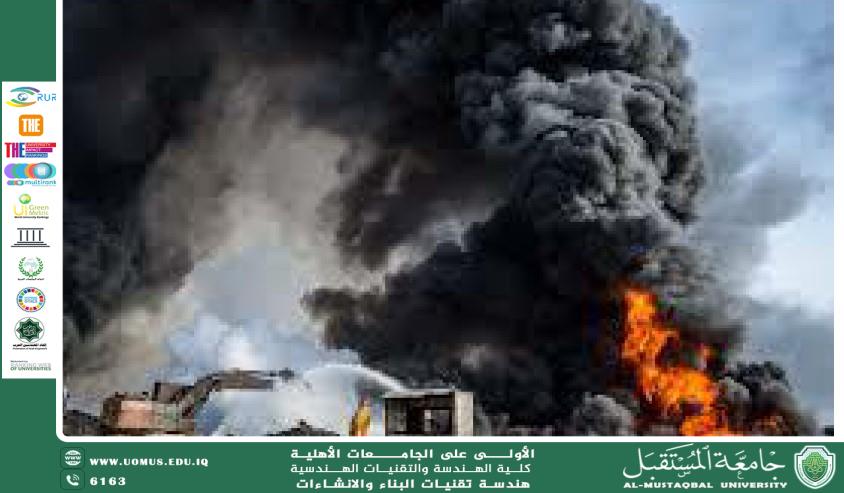
Air Pollution Challenges in Crowded Urban Cities
By Prof. Dr. Najah M. L. Al Maimuri, <br />Al Mustaqbal Unv. College of Engineering and Engineering Technologies, Building and construction engineering <br />dept, 2025 <br /><br /> <br /><br />Introduction <br />Air pollution remains one of the most pressing environmental and public health challenges in <br />crowded urban cities. As urbanization accelerates, so does the demand for transportation, energy, <br />and industrial activities—major contributors to deteriorating air quality. From smog-covered <br />skylines to respiratory illnesses, air pollution has far-reaching consequences. This article <br />explores the major challenges associated with air pollution in densely populated urban areas, its <br />impact, and potential solutions. <br />Major Challenges <br />1. Vehicular Emissions <br />Urban areas experience high volumes of traffic, leading to significant emissions of pollutants <br />such as nitrogen oxides (NOx), carbon monoxide (CO), and particulate matter (PM2.5 and <br />PM10). Congested roads, outdated vehicle technology, and confidence on fossil fuels further <br />worsen the problem. In cities like Delhi, Beijing, and Los Angeles, vehicular emissions <br />contribute heavily to the persistent smog and haze. <br /><br /> <br /><br /><br />2. Industrial and Construction Pollution <br />Factories and power plants located in or near urban areas release pollutants such as sulfur <br />dioxide (SO2) and volatile organic compounds (VOCs). Additionally, rapid infrastructure <br />development leads to dust pollution, increasing the concentration of harmful airborne particles. <br />Cities like Dhaka and Jakarta face continuous construction-related pollution, significantly <br />affecting air quality. <br />3. Biomass and Waste Burning <br />In many developing urban centers, waste burning remains a common practice, releasing toxic <br />pollutants into the air. Biomass burning, such as the seasonal burning of agricultural waste in <br />regions surrounding cities, exacerbates air pollution, creating hazardous smog that impacts <br />millions. <br />4. Climate Change and Weather Conditions <br />Weather patterns play a crucial role in air pollution levels. Temperature inversions, where a <br />layer of warm air traps pollutants close to the surface, prevent dispersion and lead to prolonged <br />periods of poor air quality. Cities like Mexico City and Kathmandu, situated in basins, <br />experience this effect frequently. <br />5. Lack of Effective Policies and Enforcement <br />While many governments have introduced air quality regulations, enforcement remains a <br />challenge. Weak policies, corruption, and insufficient monitoring allow industries and <br />individuals to bypass emission standards, worsening urban air pollution. <br />Health and Environmental Impact <br />The impact of air pollution on human health is severe. Prolonged exposure to polluted air can <br />lead to respiratory diseases such as asthma, bronchitis, and lung cancer. Children and elderly <br />individuals are particularly vulnerable. Additionally, air pollution contributes to environmental <br />degradation, affecting ecosystems, reducing agricultural yields, and accelerating climate change. <br />Possible Solutions <br />1. Promoting Public Transportation and Electric Vehicles <br />Encouraging the use of electric vehicles (EVs), expanding metro systems, and improving <br />cycling infrastructure can significantly reduce vehicular emissions. Cities like Copenhagen and <br />Amsterdam serve as examples of successful sustainable urban mobility initiatives. <br />2. Strengthening Air Quality Regulations <br /><br /><br />Governments must implement and enforce strict air quality standards, ensuring that industries <br />and transportation sectors comply with emission limits. Regular air quality monitoring and <br />public reporting can enhance transparency and accountability. <br />3. Green Urban Planning <br />Expanding green spaces, planting trees, and creating vertical gardens can help absorb <br />pollutants and improve air quality. Green infrastructure also enhances urban resilience against <br />climate change. <br />4. Encouraging Clean Energy Transition <br />Shifting from coal and diesel-based power generation to renewable energy sources such as <br />wind, solar, and hydroelectric power can significantly reduce urban emissions. Investment in <br />clean energy should be a top priority for urban policymakers. <br />5. Community Awareness and Involvement <br />Educating citizens about the causes and consequences of air pollution empowers them to <br />adopt sustainable practices, such as carpooling, waste management, and reducing energy <br />consumption. <br />Conclusion <br />Addressing air pollution in crowded urban cities requires a multi-faceted approach involving <br />policy intervention, technological innovation, and public participation. As cities continue to <br />grow, prioritizing clean air initiatives will be essential for ensuring healthier, more sustainable <br />urban environments. Governments, industries, and individuals must work together to combat air <br />pollution and safeguard the future of our cities. <br />References <br />1- World Health Organization (WHO) – “Air Pollution and Health” <br />https://www.who.int/health-topics/air-pollution <br />2- United Nations Environment Programme (UNEP) – “Air Pollution in Cities” <br />https://www.unep.org/explore-topics/air <br />3- U.S. Environmental Protection Agency (EPA) – “The Challenges of Urban Air Pollution” <br />https://www.epa.gov/air-pollution <br />4- State of Global Air Report (2023) – “Global Air Quality Trends” <br /><br /><br />https://www.stateofglobalair.org <br />5- NASA Earth Observatory – “How Weather Influences Air Pollution” <br />https://earthobservatory.nasa.gov <br />6- International Energy Agency (IEA) – “Energy and Urban Air Pollution” <br />https://www.iea.org <br />7- European Environment Agency (EEA) – “Air Pollution in Major Cities” <br />https://www.eea.europa.eu/themes/air