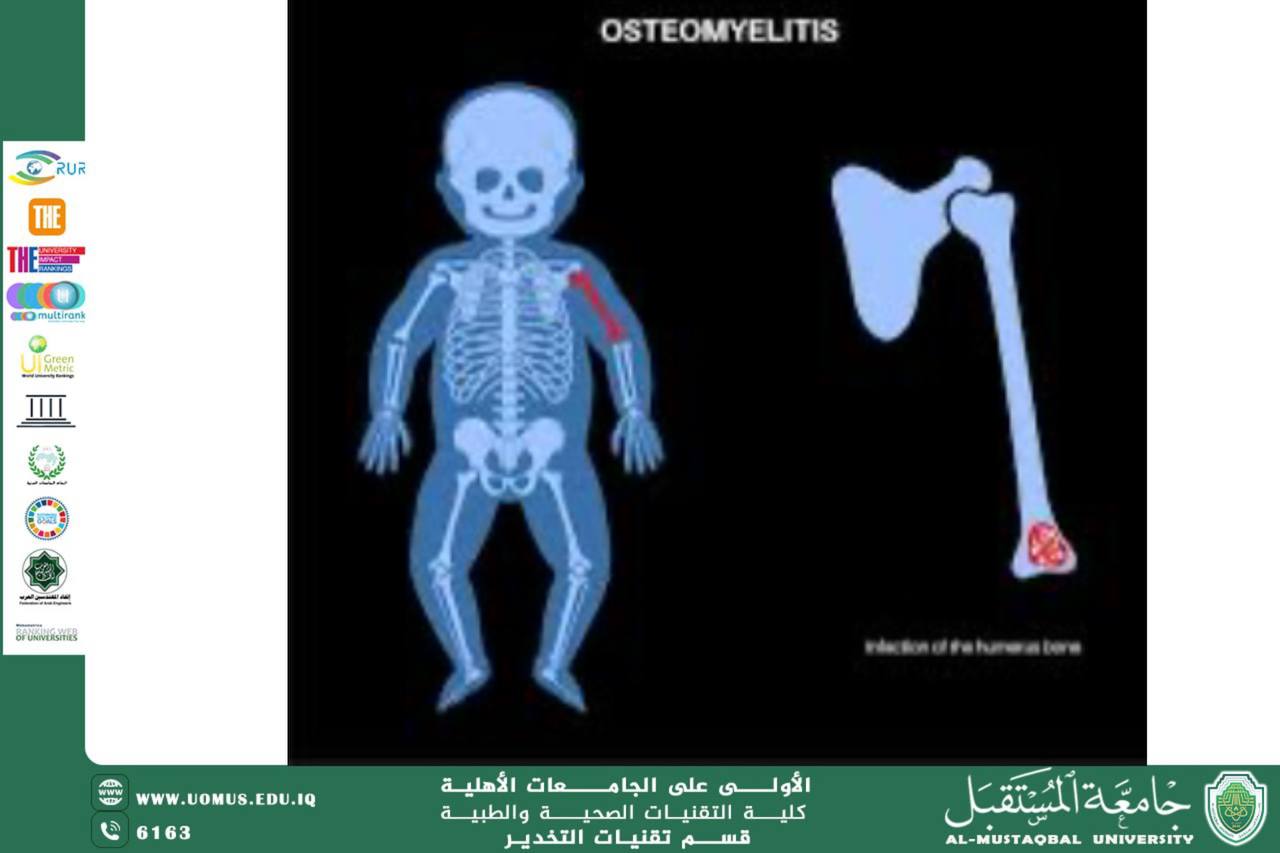
Osteomyelitis in children
In high-income countries, acute osteomyelitis occurs in about 8 of 100,000 children per year,2 but it is considerably more common in low-income countries. Boys are affected twice as often as girls.2,3 Unless acute osteomyelitis is diagnosed promptly and treated appropriately,4 it can be a devastating or even fatal disease with a high rate of sequelae, especially in resource-poor countries where patients present with advanced disease and survivors often have complications that are serious and long-lasting<br /> Acute osteomyelitis<br />Osteomyelitis is the inflammation of bone caused by pyogenic organisms. In the acute setting, the duration of symptoms is less than two weeks., subacute for a duration of 2 weeks to 3 months, and chronic for a longer duration. The major sources of infection are haematogenous spread, tracking from adjacent foci of infection, and direct inoculation from trauma or surgery. Haematogenous spread is the most common source of infection in children, typically affecting the long bones. The infection seeds in the metaphysis, where blood flow is rich but sluggish. The femur and tibia are most commonly affected (27% and 26%, respectively, Osteomyelitis is a serious condition requiring immediate medical attention It's more common in premature infants and babies born with complications .but can occur in children of any age.<br />Symptoms of osteomyelitis<br />While symptoms can vary from child to child, the most common include:1- Tenderness or pain in the infected area <br />2-Child limits use or doesn't use the infected extremity at all<br />3-child typically guards or protects this area from being touched or looked at 4-Swelling and redness in the affected area 5- Warmth around the infected area 6- fever<br />Causes osteomyelitis:-<br />Many different types of bacteria and viruses can cause osteomyelitis. The most common type of bacteria is called Staphylococcus aureus <br />(commonly called staph). The bacteria can enter the body in a variety of ways including:<br />1-Infected wounds 2-open fracture(broken bones penetrate through the skin) 3- Foreign object the skin 4- infected joint 5- Trauma<br />Infection that spreads from another source inside the body, such as ear infection ,tonsillitis . <br />Diagnosis :-<br />Child's doctor will take a complete medical history and do a physical exam and diagnostic tests. Some of those tests may include:<br />1-X-rays 2- Blood tests 3-Bone scan( to detect bone disease and tumors<br />Treatment <br />delay in initiating treatment and antibiotic courses of less than 3 weeks' duration — were deemed to be risk factors for relapse Conservative treatment is effective in up to 90% of cases of acute osteomyelitis if it is diagnosed early in the course of the illness.<br />If you suspect osteomyelitis, it's important to contact the doctor immediately. The goal of treatment is to relieve the pain and completely treat the infection. In most cases, the infection is cured <br />with antibiotic medication. In severe cases, the infection can be very destructive to the bone, surrounding muscles, tendons, and blood vessels, which may require the amputation of the infected l <br />1 Administration of intravenous (IV) antibiotics (to fight the infection) which should be chosen depending on the findings of the culture and the characteristics of each patient<br />2-Pain medications<br />3-Bed rest (or restricted movement of the affected area)<br />4-Surgery (to clean out the infected area in and around the bone)<br /> <br /><br />د طالب جيجان طاهر اسنتشاري جراحة العظام والكسور<br />قسم تقنيات التخدير<br /><br /><br /><br /><br /><br />AL_mustaqbal University is the first university in Iraq<br /><br />