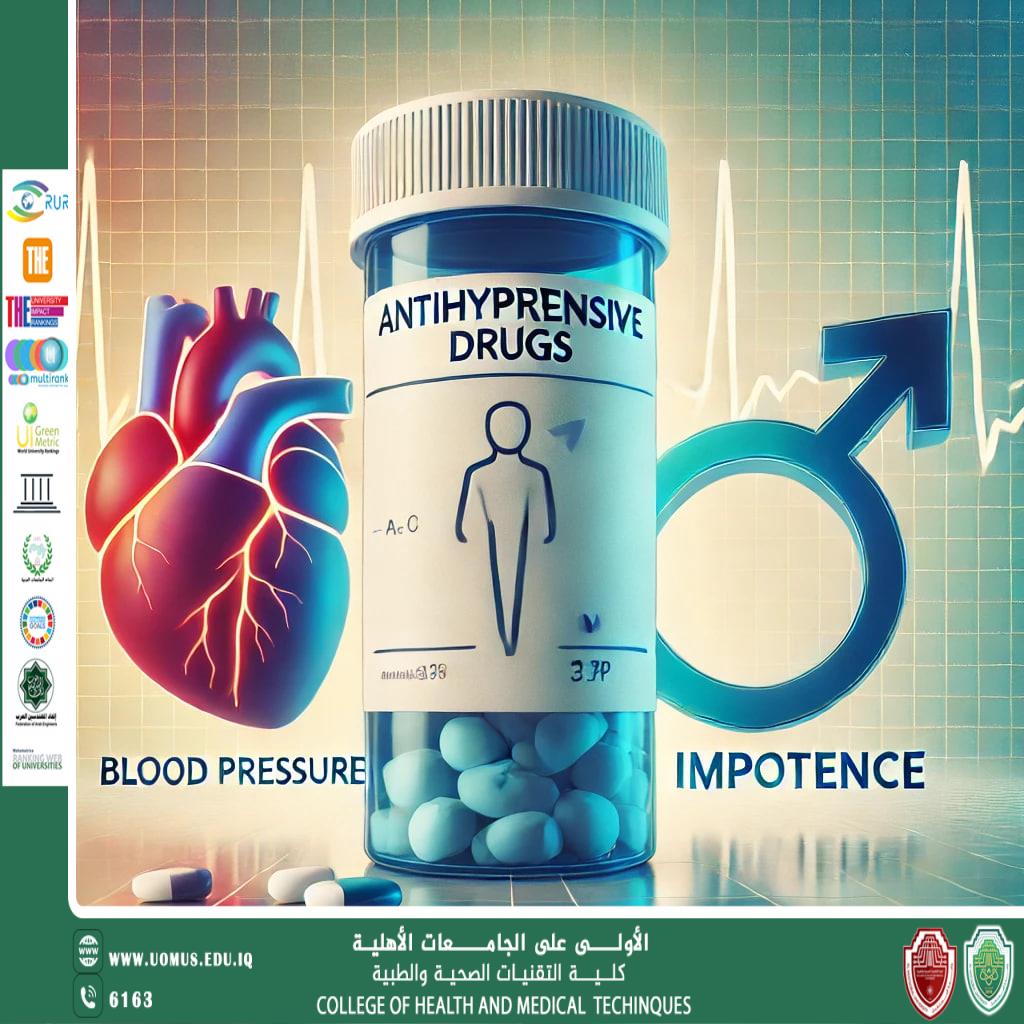
Antihypertensive drugs and impotence
Antihypertensive drugs are commonly prescribed to treat high blood pressure (hypertension), but some of these medications can affect sexual function, including causing impotence (erectile dysfunction). Erectile dysfunction (ED) refers to the inability to achieve or maintain an erection sufficient for sexual intercourse.<br />Here are some classes of antihypertensive drugs and their potential impact on sexual function:<br /> 1. Beta-blockers (e.g., propranolol, atenolol):<br /> ◦ These medications can reduce blood flow and affect the nervous system, potentially leading to ED. Some individuals may experience decreased libido or trouble achieving an erection while on beta-blockers.<br /> 2. Diuretics (e.g., hydrochlorothiazide, furosemide):<br /> ◦ Diuretics help reduce fluid buildup and lower blood pressure, but they can lower potassium levels, which might affect sexual performance. They may also cause reduced blood flow to the genitals, leading to erectile dysfunction in some men.<br /> 3. Angiotensin-converting enzyme (ACE) inhibitors (e.g., enalapril, lisinopril):<br /> ◦ These are less likely to cause ED compared to other antihypertensive drugs. ACE inhibitors tend to have a lower incidence of sexual side effects, although some people may still experience issues with libido or erectile function.<br /> 4. Angiotensin II receptor blockers (ARBs) (e.g., losartan, valsartan):<br /> ◦ ARBs have a lower likelihood of causing erectile dysfunction compared to older antihypertensive drugs like beta-blockers and diuretics. In fact, some studies suggest that ARBs may even have a beneficial effect on erectile function in men with hypertension.<br /> 5. Calcium channel blockers (e.g., amlodipine, diltiazem):<br /> ◦ These medications are generally well-tolerated and are less likely to cause ED. However, some people may still experience sexual dysfunction due to changes in blood flow or other side effects.<br /> 6. Alpha-blockers (e.g., doxazosin, prazosin):<br /> ◦ Alpha-blockers relax the blood vessels and improve blood flow. They can help with erectile function in some cases, especially if ED is related to high blood pressure. However, in rare cases, they can cause dizziness or low blood pressure, which might indirectly affect sexual performance.<br />Managing Impotence While on Antihypertensive Medications:<br />If you're experiencing erectile dysfunction while on antihypertensive medications, here are a few steps to consider:<br /> • Talk to your doctor: Your healthcare provider can help identify if the medication is causing ED and may adjust the dosage or suggest switching to another drug.<br /> • Lifestyle changes: Healthy habits like regular exercise, a balanced diet, stress management, and weight loss can help improve sexual health and reduce the impact of hypertension on erectile function.<br /> • Erectile dysfunction treatment: In some cases, medications like sildenafil (Viagra) or tadalafil (Cialis) may be prescribed to help with ED, though it's important to check with a doctor before combining these with antihypertensive drugs.<br />Ultimately, the choice of antihypertensive medication will depend on a variety of factors, including the severity of hypertension, the presence of any underlying conditions, and the potential for side effects like erectile dysfunction. Your doctor can guide you to the best treatment plan.<br /><br />د.بشار هادي شعلان<br />Al-Mustaqbal University is the first university in Iraq