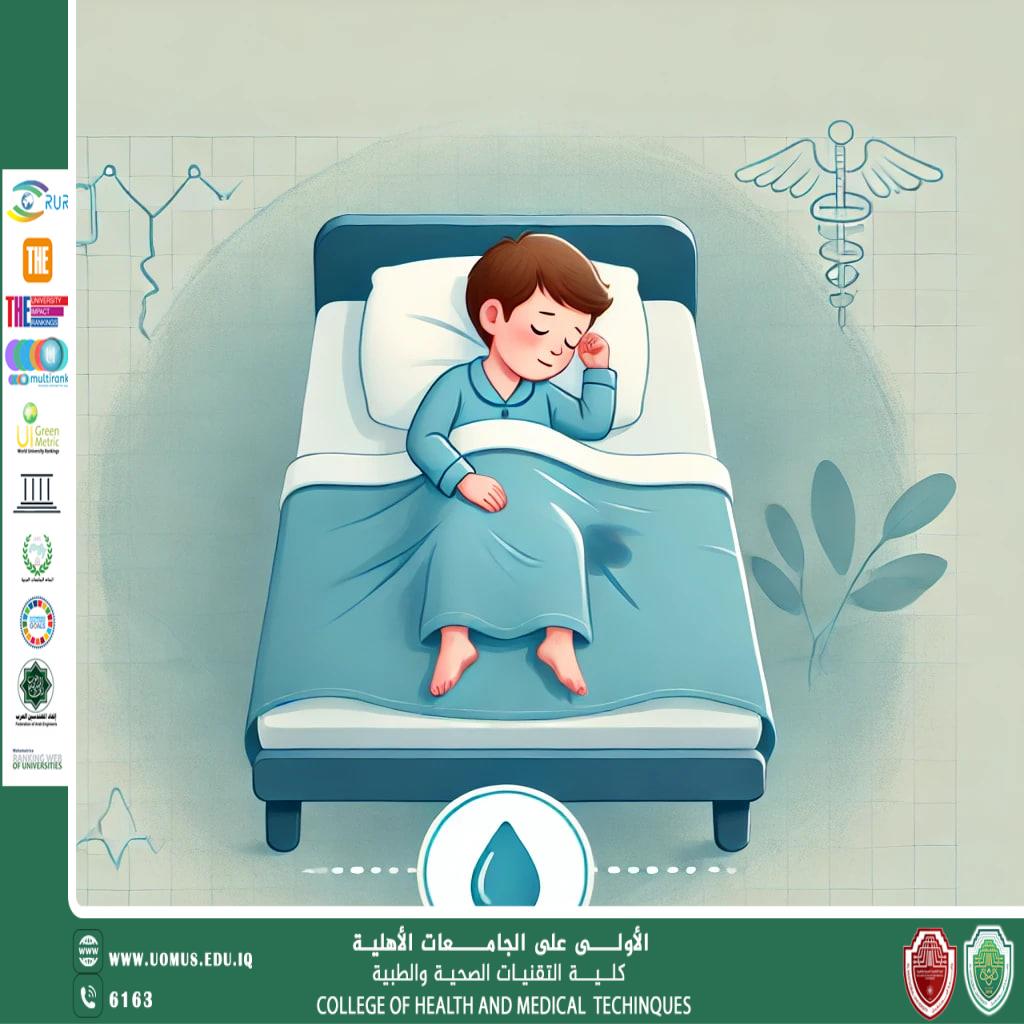
Enuresis
refers to the involuntary urination that usually occurs at night, commonly known as bedwetting. It can affect both children and adults but is most commonly seen in children. Enuresis is generally classified into two types:<br /> 1. Primary Enuresis: When a child has never achieved consistent nighttime dryness.<br /> 2. Secondary Enuresis: When a child or adult who previously was dry at night starts bedwetting again after a period of dryness.<br />Symptoms of Enuresis<br /> • Bedwetting at night (nocturnal enuresis).<br /> • Frequent daytime accidents may occur.<br /> • Urgency or difficulty in holding urine.<br /> • Wetting during naps.<br /> • Increased frequency of urination.<br /> • Sleep disturbances: Some individuals sleep deeply and don't wake up when they need to urinate.<br />In children, the issue may be distressing, especially if it persists beyond typical age milestones for bladder control (usually by age 5). For adults, enuresis can be a source of embarrassment and discomfort.<br />Causes of Enuresis<br /> 1. Genetic factors: A family history of enuresis can increase the likelihood of a child experiencing it.<br /> 2. Delay in bladder maturation: Some children have a bladder that has not yet matured to the point of being able to hold urine all night.<br /> 3. Hormonal imbalances: A deficiency in antidiuretic hormone (ADH) can lead to excessive urine production at night.<br /> 4. Deep sleep: Some individuals may be deep sleepers and are less likely to respond to the sensation of a full bladder.<br /> 5. Urinary tract infections (UTIs): UTIs can cause an urgent need to urinate, leading to accidents.<br /> 6. Constipation: A full bowel can press on the bladder, reducing its capacity and causing accidents.<br /> 7. Stress or emotional factors: Changes in routine, family issues, or trauma can contribute to enuresis in children.<br /> 8. Medical conditions: Conditions like diabetes, neurological disorders, or abnormalities in the urinary system can lead to enuresis.<br />Management of Enuresis<br /> 1. Behavioral Interventions:<br /> ◦ Bladder training: Encouraging regular bathroom visits during the day can help improve bladder control.<br /> ◦ Positive reinforcement: Reward systems can help encourage children to stay dry at night.<br /> ◦ Enuresis alarms: These are moisture-sensitive devices that alert the individual when they begin to urinate at night. Over time, they can help train the brain to wake up to the sensation of a full bladder.<br /> ◦ Fluid restriction: Limiting fluid intake in the evening can sometimes help, though this should be done with care to avoid dehydration.<br /> 2. Medications:<br /> ◦ Desmopressin: A synthetic version of the hormone ADH, it reduces nighttime urine production and is commonly used to treat nocturnal enuresis.<br /> ◦ Imipramine: A tricyclic antidepressant, sometimes used to reduce bedwetting, though it has side effects and is generally used as a last resort.<br /> ◦ Oxybutynin: An anticholinergic medication, sometimes used to treat daytime enuresis, especially in cases of overactive bladder.<br /> 3. Addressing underlying medical conditions: If a condition like a urinary tract infection, constipation, or diabetes is contributing to the problem, treating the underlying cause can help resolve the enuresis.<br /> 4. Psychological support: If emotional factors like stress or trauma are contributing, counseling or therapy can be helpful.<br /> 5. Lifestyle changes:<br /> ◦ Encouraging regular bathroom breaks throughout the day.<br /> ◦ Using nightlights to help children feel more comfortable using the bathroom at night.<br /> ◦ Ensuring the child or adult has easy access to the bathroom during the night.<br /> 6. Parental support: It is important to provide encouragement and avoid punishment for children experiencing enuresis. The condition is not intentional, and shame or punishment can exacerbate the problem.<br />In adults, the management of enuresis typically involves identifying and addressing the underlying medical causes, while for children, a combination of behavioral strategies and, if necessary, medication is often most effective.<br />If enuresis persists or seems to be caused by other health concerns, consulting with a pediatrician, urologist, or other relevant healthcare provider is essential to determine the best course of action.<br /><br />د.بشار هادي شعلان<br />Al-Mustaqbal University is the first university in Iraq