Analysis and Design of Fractal Antenna Arrays and Their Comparison with Linear Arrays in Modern Communication Systems
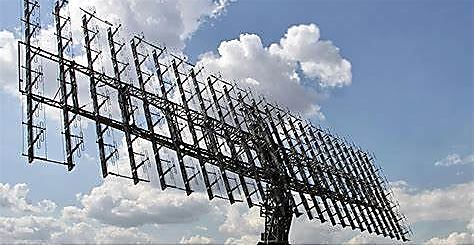
Antenna arrays play a crucial role in wireless communication systems by enhancing signal transmission and reception efficiency. Among the widely used configurations, linear antenna arrays are among the simplest, consisting of multiple identical elements arranged in a straight line and fed with signals of specific phases to achieve desired radiation patterns. Their performance depends on the spacing between elements and the applied feeding technique, allowing precise beam steering and power distribution control, making them suitable for applications such as radar systems and modern wireless communication networks.<br />On the other hand, fractal antenna arrays have emerged as a more advanced alternative, leveraging the principles of fractal geometry, which rely on the self-replication of a specific pattern at multiple levels. These arrays offer significant design flexibility, enabling reduced antenna size while maintaining radiation efficiency and achieving multi-band frequency operation. This design allows for the formation of complex radiation patterns and improved spectral efficiency, making them ideal for 5G applications and intelligent sensing systems.<br />When comparing both array types, linear arrays exhibit a straightforward design that is easier to analyze. Their primary advantage lies in the control of beam direction and sidelobe levels by adjusting the number and spacing of elements. However, they may face limitations in bandwidth and adaptability to dynamic wireless environments. In contrast, fractal antenna arrays offer higher adaptability to modern communication demands, as they can be designed to achieve multi-frequency responses while enhancing radiation efficiency and reducing interference effects. This makes them more efficient in applications requiring multi-band operation and flexible design configurations.<br />From a mathematical perspective, the radiation patterns of linear arrays are described by equations based on current distribution and wavefront interference from individual elements. Meanwhile, fractal arrays require more complex equations, considering their recursive structure and its impact on radiation characteristics and bandwidth. As a result, designing and analyzing these arrays necessitates advanced mathematical models and simulation techniques such as MATLAB to evaluate their performance accurately before practical implementation.<br />With the continuous advancement in communication technologies, the demand for more efficient antenna design solutions is increasing. Fractal arrays present a promising solution that combines improved gain, reduced size, and enhanced multi-frequency performance. Ongoing research in this field is expected to develop more precise and effective models, further enhancing their applications in modern communication systems such as 5G networks, satellite communications, and advanced sensing technologies.<br />بواسطة التدريسية:م.م هدى اسعد عبلا الامير <br />