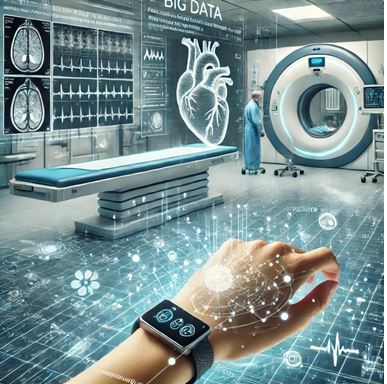
The Digital Future of Medical Devices: From Big Data to Disease Prediction
The rapid advancement of technology has revolutionized various sectors, and the healthcare industry is no exception. One of the most transformative trends in modern healthcare is the digitalization of medical devices, which is reshaping the way diseases are diagnosed, monitored, and treated. In particular, the integration of big data analytics and predictive models into medical devices is opening up new possibilities for early detection and personalized treatment plans. This article delves into the digital future of medical devices, from the role of big data to the exciting potential for disease prediction.<br />The Role of Big Data in Medical Devices<br />Big data refers to vast amounts of information that can be collected, processed, and analyzed to reveal patterns, correlations, and trends. In the healthcare sector, big data comes from a variety of sources, including patient records, medical imaging, sensor data from wearable devices, and even social determinants of health. The ability to harness this data effectively has the potential to significantly improve patient outcomes.<br />Medical devices, once limited to basic diagnostic tools, are now at the forefront of data collection. Wearable health trackers, for example, continuously monitor vital signs such as heart rate, blood pressure, and glucose levels, generating real-time data. Diagnostic imaging devices such as MRIs and CT scans produce vast amounts of imaging data, which can be analyzed for abnormalities. The integration of these data streams into a cohesive digital platform allows healthcare providers to make more informed decisions.<br />Data Analytics and Machine Learning: Transforming Medical Devices<br />While the collection of big data is essential, its true value lies in its analysis. This is where data analytics, artificial intelligence (AI), and machine learning (ML) come into play. By using algorithms to analyze large datasets, medical devices can identify patterns and predict outcomes that were previously impossible to detect.<br />For example, AI-powered imaging devices can analyze medical scans far more quickly and accurately than human doctors. These systems are capable of detecting early-stage tumors or identifying signs of diseases such as Alzheimer’s, even before symptoms appear. Furthermore, machine learning models can adapt and improve over time, becoming more accurate as they are exposed to more data.<br />Predictive Analytics: Anticipating Disease and Improving Preventative Care<br />One of the most promising applications of big data and AI in medical devices is the ability to predict diseases before they occur. Predictive analytics involves using historical and real-time data to forecast future health outcomes. By analyzing patterns in a patient’s medical history, lifestyle, and genetic information, medical devices can identify individuals at risk of developing chronic conditions such as diabetes, heart disease, or even cancer.<br />For instance, wearable health devices that track physical activity, sleep patterns, and heart rate variability are increasingly being used to predict the onset of conditions like heart failure. Similarly, diabetes management devices that continuously monitor glucose levels can predict periods of hyperglycemia or hypoglycemia, allowing for timely interventions. This early detection allows healthcare professionals to implement preventative measures, leading to better patient outcomes and reduced healthcare costs.<br />Personalized Medicine: Tailoring Treatments to Individuals<br />As we move into the digital future, the focus of healthcare is shifting from a one-size-fits-all approach to personalized medicine. With the help of medical devices and digital tools, treatments are becoming more tailored to the individual patient’s unique genetic makeup, lifestyle, and health history.<br />For example, AI-powered devices are being used to analyze genetic information and suggest the most effective treatments for patients based on their DNA. This technology is particularly promising in cancer treatment, where personalized therapy regimens are designed to target specific genetic mutations that drive tumor growth.<br />Challenges and Ethical Considerations<br />While the potential of digital medical devices is vast, there are challenges and ethical considerations that must be addressed. The accuracy and reliability of predictive models are essential to ensure that medical devices provide accurate diagnoses and predictions. There is also the issue of data privacy and security, as medical devices collect sensitive patient information. Strong cybersecurity measures must be implemented to protect against data breaches and unauthorized access.<br />Moreover, the increasing reliance on AI and machine learning raises questions about the role of human doctors and the potential for algorithmic biases. It’s crucial to ensure that AI systems are transparent, fair, and do not inadvertently perpetuate healthcare disparities.<br />The Road Ahead: A Digital Transformation in Healthcare<br />The digital future of medical devices is an exciting one. As technology continues to evolve, we can expect even more innovative devices that integrate big data, predictive analytics, and personalized medicine. These advancements hold the potential to revolutionize healthcare by making it more proactive, efficient, and patient-centered.<br />In the coming years, medical devices will become smarter and more interconnected, enabling continuous health monitoring and providing healthcare providers with real-time insights. We are moving toward a future where disease prediction, early intervention, and personalized treatments are the norm, rather than the exception.<br />Conclusion<br />The convergence of big data, AI, and medical devices marks the beginning of a new era in healthcare. These technologies are not only enhancing the accuracy and efficiency of medical devices but also paving the way for a more personalized, preventative approach to healthcare. As we look toward the future, the digital transformation of medical devices will continue to drive innovation, improve patient outcomes, and ultimately change the way we approach health and wellness.<br />bu:m.s.c Huda Asaad Abd Al-Ameer<br />