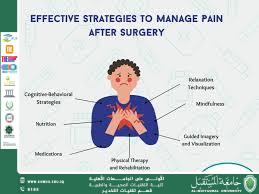
Post –operative pain management strategies
Post-surgical pain management is a critical aspect of patient care, aiming to minimize discomfort and facilitate recovery. Effective strategies involve a multimodal approach, combining pharmacological and non-pharmacological techniques tailored to individual needs.<br />Pharmacological Approaches:<br />• Opioids: These potent analgesics are commonly used for acute post-surgical pain. However, their use is carefully monitored due to potential side effects like respiratory depression, constipation, and dependence.<br />• Non-steroidal anti-inflammatory drugs (NSAIDs): NSAIDs, such as ibuprofen or naproxen, can effectively manage mild to moderate pain and reduce inflammation. They are often used in conjunction with opioids to provide comprehensive pain relief.<br />• Local anesthetics: Administered directly to the surgical site, local anesthetics can provide targeted pain relief and reduce the need for systemic analgesics.<br />• Adjuvant analgesics: Certain medications, like gabapentin or pregabalin, may be used to manage neuropathic pain or reduce opioid consumption.7<br />Non-Pharmacological Approaches:<br />• Regional anesthesia: Techniques like epidural or spinal anesthesia can provide excellent pain control during and after surgery.<br />• Nerve blocks: These involve injecting local anesthetic near specific nerves to block pain signals.<br />• Physical therapy: Early mobilization and targeted exercises can improve range of motion, reduce stiffness, and promote healing.<br />• Cognitive-behavioral therapy (CBT): CBT techniques, such as relaxation, distraction, and guided imagery, can help patients manage pain and reduce anxiety.<br />• Acupuncture: This traditional Chinese medicine technique involves inserting thin needles into specific points on the body to stimulate energy flow and alleviate pain.<br />• Transcutaneous electrical nerve stimulation (TENS): TENS units deliver mild electrical impulses to the affected area, which can help reduce pain perception.<br />• Cryotherapy: Applying ice packs to the surgical site can reduce swelling and numb the area, providing pain relief.<br />• Heat therapy: Applying heat can help relax muscles, increase blood flow, and ease pain.<br /><br /><br />Multimodal Approach:<br />Combining different pain management techniques often provides the most effective and comprehensive pain relief. This approach allows for lower doses of individual medications, reducing the risk of side effects while maximizing pain control.<br />Individualized Care:<br />Pain management strategies should be tailored to each patient's specific needs, considering factors like the type of surgery, pain intensity, medical history, and personal preferences. Regular assessment and communication between the patient and healthcare provider are crucial to ensure optimal pain relief and satisfaction.<br />Patient Education:<br />Educating patients about their pain management plan empowers them to actively participate in their recovery. Understanding the different techniques available, potential side effects, and the importance of communication can help patients manage their pain effectively and improve their overall experience.<br />By employing a multimodal approach, considering individual needs, and prioritizing patient education, healthcare providers can effectively manage post-surgical pain, facilitating recovery and improving patient outcomes.<br /><br />م.م نهى نوماس <br /><br />AL_mustaqbal University is the first university in Iraq<br /><br />