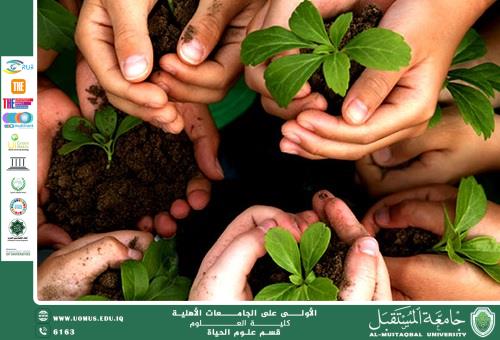
A scientific article by Ms. Ala Adel Rasmi entitled "Environmental Education and Student Education"
Environmental Education and Student Education<br /><br />The world in the modern era is witnessing many environmental challenges that require a rapid and effective response to preserve the environment and biodiversity. Among the methods that contribute to solving these problems is environmental education, which is a powerful tool in educating students and enhancing their awareness of the importance of preserving the environment. This type of education aims to develop students' understanding of environmental problems and provide them with the knowledge and skills necessary to contribute to sustainable solutions. In this article, we will discuss the role of environmental education in educating students and how it affects enhancing their environmental awareness.<br /><br />1. Definition of Environmental Education<br />Environmental education is a learning process that aims to increase environmental awareness and enhance knowledge about environmental issues and challenges, with a focus on the importance of preserving the environment and interacting with it in a positive and sustainable way. This education includes a set of activities that enhance students' understanding of environmental challenges such as pollution, climate change, resource sustainability, and wildlife protection.<br /><br />2. Objectives of Environmental Education<br />Raising environmental awareness: The primary goal of environmental education is to increase students' awareness of current and future environmental issues.<br />Encouraging environmentally friendly behaviors: Environmental education motivates students to adopt daily practices that promote environmental conservation, such as reducing waste, recycling, and using renewable energy.<br />Providing students with the necessary knowledge and skills: Environmental education aims to provide students with the knowledge that enables them to understand how humans affect the environment and ways to reduce these effects.<br />3. The importance of environmental education in educating students<br />Building an environmentally aware generation: Environmental education is an effective tool in building a generation aware of the importance of the environment. By educating students about environmental problems, they can contribute to finding sustainable solutions to these problems in the future.<br />Enhancing critical thinking: Environmental education encourages students to think critically and deeply analyze environmental phenomena and how they affect their lives and the lives of future generations.<br />Directing students' behaviors towards sustainability: By learning about issues such as climate change and pollution, students become more keen to adopt environmentally friendly behaviors, such as reducing water and energy consumption and choosing sustainable means of transportation.<br />4. How is environmental education implemented in schools?<br />Practical activities: Awareness campaigns can be organized within schools to educate about recycling, renewable energy, and sustainable agriculture. Activities can also include field visits to nature reserves or water treatment plants.<br /><br />Integrating environmental issues into the curriculum: Environmental topics are integrated into the curriculum through studies in geography, science, and mathematics, which helps enhance students’ environmental understanding.<br /><br />Environmental projects: Students can participate in environmental projects such as planting trees, creating school gardens, or organizing clean-up campaigns in the local community, which enhances their awareness and contributes to teaching them teamwork and contributing to improving the environment.<br /><br />5. The impact of environmental education on students’ behavior<br /><br />Interest in sustainable practices: After receiving appropriate environmental education, students are more interested in applying sustainable practices in their daily lives, such as reducing waste, conserving natural resources, and following healthy lifestyles.<br /><br />Active participation in the community: Students who receive environmental education are usually more willing to participate in environmental awareness campaigns and organize community activities, such as collecting waste or spreading information about the importance of preserving the environment.<br />Impact on the wider community: Students can become environmental ambassadors in their families and communities, conveying the environmental messages they have learned to others and encouraging them to adopt environmentally friendly behaviors.<br />6. The role of environmental education in addressing global environmental challenges<br />Climate change: With the growing issues of climate change, environmental education is essential to enable individuals to understand the effects of this change on the environment and how to mitigate its effects.<br />Pollution: By teaching students about the sources of pollution and its impact, they become able to act responsibly to reduce pollutants, whether environmental or behavioral.<br />Loss of biodiversity: Environmental education is a powerful tool to raise awareness of the importance of preserving biodiversity and protecting endangered species.<br /><br />AL_mustaqbal University is the first university in Iraq