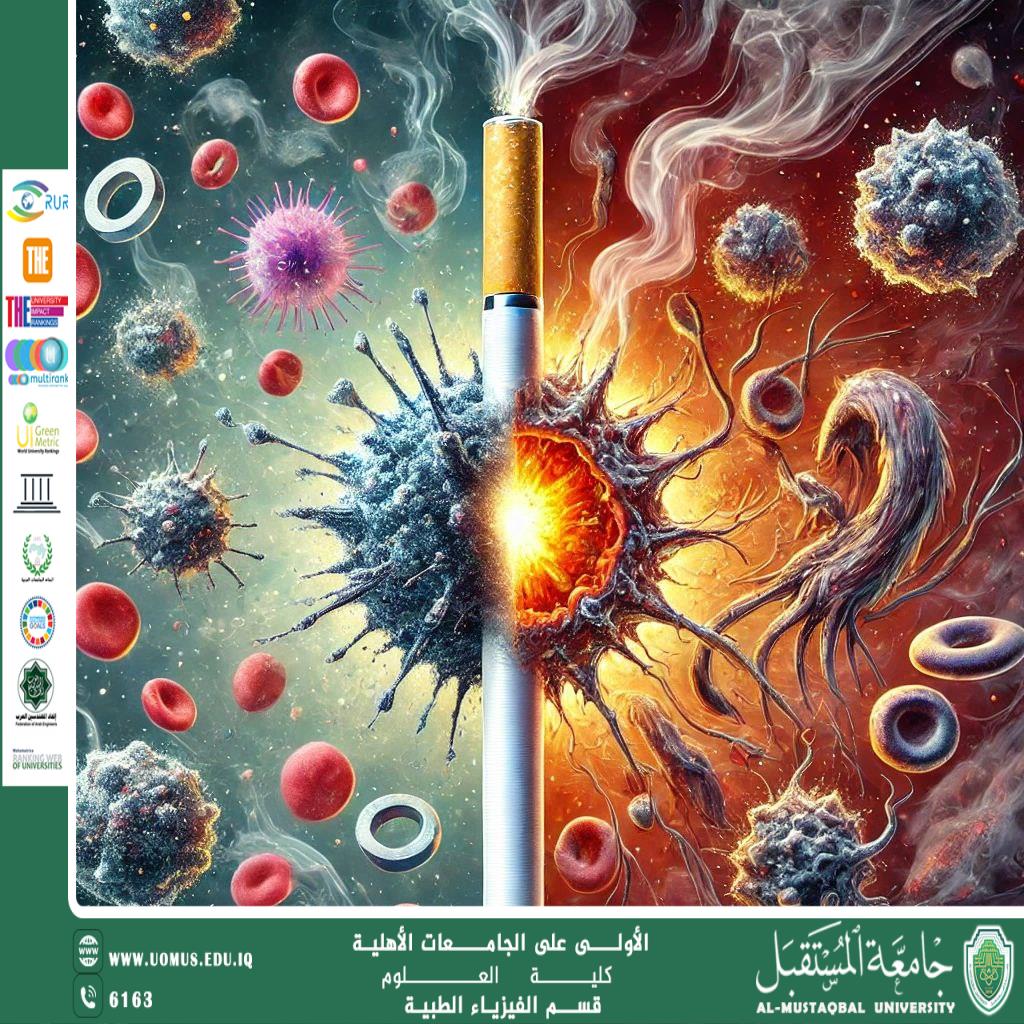
Scientific Article by Assistant Lecturer Hassan Hadi The Effect of Nicotine on the Immune System
Nicotine is the primary compound found in tobacco and is known to be toxic to the human body. While nicotine is a stimulant of the central nervous system, it also has numerous harmful effects, especially on the immune system. The immune system is the body's defense mechanism against microbes, viruses, and diseases, but nicotine can weaken its effectiveness, making the body more susceptible to infections and chronic conditions.<br />1. Suppression of Immune Response: Nicotine interferes with the immune system's ability to respond effectively to threats. When nicotine enters the body, it interacts with nicotine receptors on immune cells, reducing their ability to fight off microbes and viruses. Nicotine can impair the cells' ability to recognize pathogens and decreases the body's ability to mount a strong immune response.<br />2. Impact on White Blood Cells: White blood cells (immune cells) are essential for combating infections. Nicotine negatively affects the function of these cells, reducing their ability to attack pathogens. As a result, smokers are more prone to infections, such as bronchitis and pneumonia, because their immune system is less capable of handling these threats.<br />3. Increased Chronic Inflammation: Nicotine contributes to chronic inflammation within the body. Smoking leads to the increased production of chemicals that trigger inflammation, causing a constant state of inflammation. Chronic inflammation weakens the immune system and increases the risk of developing chronic diseases such as cardiovascular disease and chronic lung conditions like chronic obstructive pulmonary disease (COPD).<br />4. Effect on T-cells: T-cells are a type of immune cell that plays a crucial role in fighting infections and viruses. Studies have shown that nicotine can negatively affect T-cell function, decreasing the body's ability to fight off viruses. This is one of the reasons why smokers are more vulnerable to respiratory diseases.<br />5. Impact on Autoimmune Diseases: Nicotine's immunosuppressive effects increase the likelihood of developing autoimmune diseases, such as rheumatoid arthritis and multiple sclerosis. In autoimmune diseases, the immune system mistakenly attacks the body's healthy cells. Nicotine can exacerbate this attack, worsening symptoms and the severity of the disease.<br />6. Impact on Healing and Immune Recovery: Smokers experience longer recovery times after illness or injury. Nicotine slows down the immune system's recovery process, making the body less efficient at healing. Additionally, nicotine can delay the resolution of infections, increasing the risk of disease progression.<br />Conclusion: Nicotine has detrimental effects on the immune system by reducing the ability of immune cells to function properly, increasing the body's vulnerability to infections and diseases. Furthermore, nicotine promotes chronic inflammation and raises the risk of autoimmune diseases. Quitting smoking is a crucial step in improving immune health and enhancing the body’s ability to combat infections and diseases.<br /><br />"AL_mustaqbal University is the first university in Iraq"