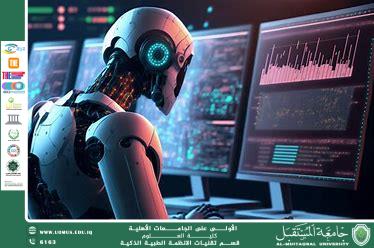


Protecting Enterprise Data Through Artificial Intelligence: A Digital Shield Against Cyber Threats (Prof. Dr. Mehdi Ebady Manaa)
In today’s digital age, data has become one of the most valuable assets that organizations rely on for strategic decision-making, performance enhancement, and competitive advantage. However, the increasing number of cyberattacks and security breaches has made data protection a growing challenge that requires advanced solutions capable of countering constantly evolving threats. This is where artificial intelligence plays a crucial role as an effective tool for strengthening cybersecurity by analyzing vast amounts of data, detecting unusual patterns, and responding to threats in real-time.<br />Artificial intelligence enhances data security by leveraging technologies such as machine learning, which allows security systems to learn from past attacks and improve their ability to recognize suspicious activity in the future. Deep neural networks also play a significant role in analyzing complex data and identifying unconventional threats that are difficult to detect using traditional methods. AI algorithms help filter network traffic, analyze user behavior, and detect any anomalies that could indicate an attempted breach or data theft.<br />One of AI’s most important advantages in enterprise security is its ability to predict security threats before they occur. Intelligent systems can monitor data, analyze past attack patterns, and anticipate future threats, enabling organizations to take proactive measures. AI also provides advanced solutions for detecting malware, viruses, and other cyber threats, allowing them to be neutralized before they cause damage or compromise sensitive information. This makes cybersecurity systems more resilient in the face of increasing digital threats.<br />Despite the numerous benefits AI brings to cybersecurity, it is not without its challenges. These systems require vast amounts of data for training and analysis, which raises concerns about privacy and data protection. Additionally, cybercriminals are now leveraging AI to execute more sophisticated attacks that are harder to detect, making the need for smarter and more responsive security systems increasingly urgent. Overreliance on AI for cybersecurity could also create vulnerabilities if there is no continuous human oversight to review and validate the decisions made by intelligent systems.<br />In the future, cybersecurity is expected to undergo a digital revolution driven by ongoing advancements in AI technologies. More sophisticated systems, such as explainable AI, will allow organizations to understand how security decisions are made, improving transparency and reliability. Collaboration between humans and AI will play a key role in developing more effective security strategies, where AI is used for threat detection and human expertise is leveraged for analysis and strategic decision-making. This combination can provide a higher level of protection against complex and evolving cyber threats.<br />Protecting enterprise data is no longer limited to traditional methods such as passwords and firewalls; it now relies on advanced technologies that integrate AI into every aspect of cybersecurity. As cyber threats continue to grow in complexity, the key to effective security lies in harnessing the full potential of AI to build intelligent defense systems capable of efficiently and effectively countering these threats. With continuous technological advancements, AI will remain a fundamental pillar in strengthening data security and ensuring business continuity in an ever-changing digital landscape.<br /><br />Almustaqbal University is the number one university in Iraq.<br />