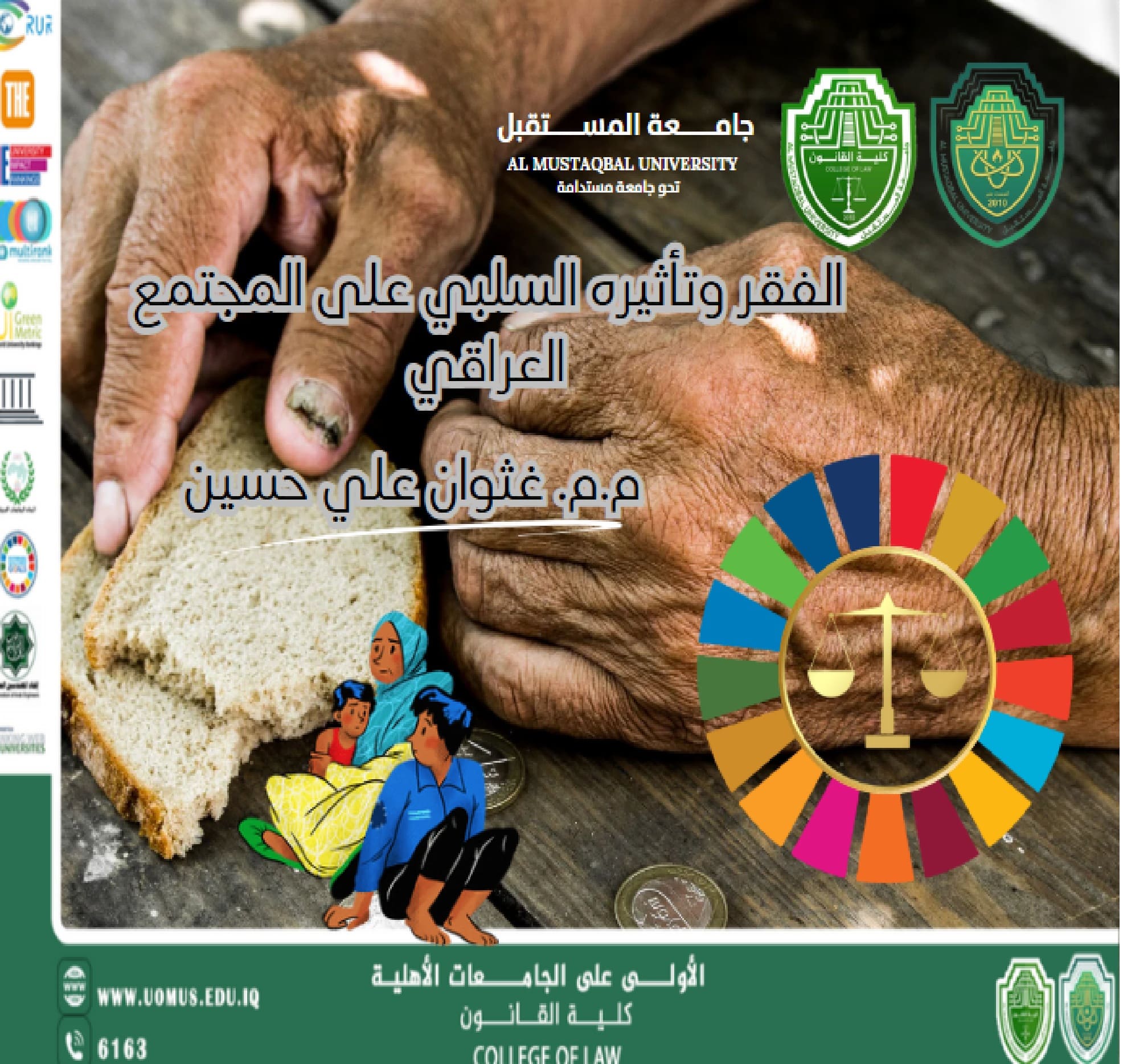
Poverty and Its Negative Impact on Iraqi Society
Poverty is a prevalent phenomenon across most societies worldwide, with its impact varying depending on social traditions, religious norms, and prevailing legal frameworks. Islamic societies, including Iraq, have historically adopted both religious and secular approaches to mitigate the negative consequences of poverty, reflecting deeply rooted ethical and humanitarian values.<br /><br />Throughout its long history, Iraq has experienced periods of economic prosperity and social progress, as well as phases of decline marked by the spread of poverty. The imposition of international economic sanctions following Iraq’s invasion of Kuwait in 1990, coupled with the aftermath of the U.S. occupation in 2003, has significantly shaped the country’s political, economic, and social landscape. One of the most profound consequences of these events has been the widespread prevalence of poverty.<br /><br />A striking paradox in Iraq’s economic and social structure is the persistence of poverty despite the country’s vast wealth in human and natural resources, particularly crude oil and natural gas. One of the primary causes of this phenomenon is the lack of effective governmental policies over the past two decades, which has hindered the establishment of comprehensive strategies to curb poverty’s adverse effects. Consequently, poverty has evolved into a pressing crisis that poses a significant challenge to political and economic decision-makers in Iraq.<br /><br />M.M. Ghathwan Ali Hussein<br />Al-Mustaqbal The leading university among private colleges in Iraq