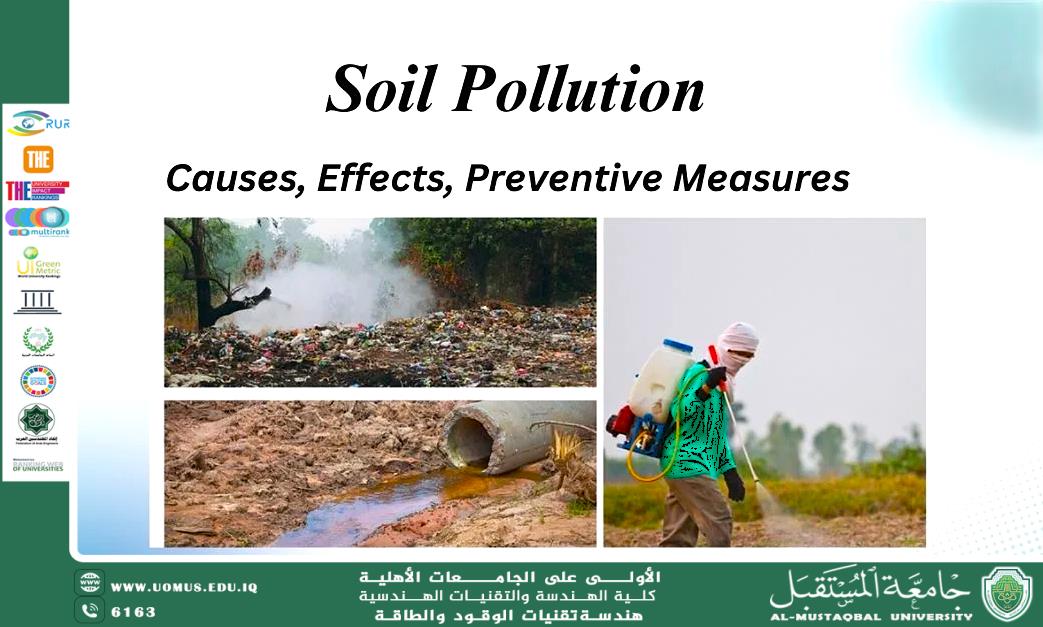
Soil Pollution: Causes, Effects, and Solutions
<br />Soil Pollution: Causes, Effects, and Solutions<br />Dr. Malik Mustafa Mohammed <br />Introduction<br />Soil pollution is a significant environmental issue that arises from human activities, leading to the degradation of soil quality. It involves the introduction of harmful substances into the soil, which can harm plant life, human health, and the broader ecosystem. This article delves into the causes, impacts, and potential solutions for soil pollution.<br /><br />What is Soil Pollution?<br />Soil pollution refers to soil contamination with anomalous concentrations of toxic substances. These pollutants can be chemical, biological, or physical agents that alter soil's natural composition and properties. The primary sources of soil pollution include industrial activities, agricultural practices, improper waste disposal, and mining operations.<br /> Causes of Soil Pollution<br />1. Industrial Activities:<br /> - Mining Operations: Mining processes release heavy metals and other toxic substances into the soil. For example, the extraction of minerals often leads to the dispersion of dust and coal particles, contributing to soil contamination.<br /> - Industrial Waste: Factories and manufacturing units discharge large amounts of chemicals and hazardous waste into the environment. In particular, petroleum refineries release hydrocarbons and other chemicals that pollute the soil and cause land degradation.<br />2. Agricultural Practices:<br /> - Pesticides and Fertilizers: The excessive use of chemical fertilizers and pesticides to enhance crop yield results in the accumulation of harmful substances in the soil. These chemicals can persist in the soil for long periods, affecting its fertility and structure.<br /> - Improper Irrigation: Poor irrigation practices can lead to waterlogging and salinization, further degrading soil quality.<br />3. Improper Waste Disposal:<br /> - Landfills: Improperly managed landfills are a significant source of soil pollution. Leachate from these sites can seep into the ground, contaminating the soil with harmful substances.<br /> - Plastic Waste: Non-biodegradable materials like plastics take hundreds of years to decompose, leading to long-term soil pollution.<br />4. Urbanization and Construction:<br /> - Urban development activities such as construction and road building can lead to soil compaction and erosion, reducing its ability to support vegetation.<br /><br /> Effects of Soil Pollution<br />1. Health Impacts:<br /> - Contaminated soil can lead to the uptake of toxic substances by plants, which eventually enter the food chain. Consuming these contaminated crops can cause serious health issues, including cancer, neurological disorders, and developmental problems in children.<br />2. Environmental Degradation:<br /> - Soil pollution disrupts ecosystems, affecting the flora and fauna dependent on healthy soil. It can lead to reduced biodiversity and altered nutrient cycles.<br /> - Polluted soil contributes to water pollution when contaminants leach into groundwater or are carried away by runoff, affecting aquatic life.<br />3. Economic Consequences:<br /> - Degraded soil reduces agricultural productivity, leading to economic losses for farmers and increased consumer food prices.<br /> - Cleanup and remediation of polluted soil can be costly, burdening governments and communities financially.<br /><br />Solutions for Soil Pollution<br />1. Sustainable Agricultural Practices:<br /> - Encouraging organic farming and using natural fertilizers and pest control methods can reduce the reliance on chemical inputs, thus minimizing soil contamination.<br /> - Implementing crop rotation and cover cropping helps maintain soil health and prevents erosion.<br />2. Proper Waste Management:<br /> - Establishing effective waste management systems, including recycling and proper landfill management, can significantly reduce soil pollution.<br /> - Promoting the reduction, reuse, and recycling of materials minimizes waste generation and the associated pollution.<br />3. Regulation and Policy Implementation:<br /> - Governments should enforce stringent industrial emissions and waste disposal regulations to prevent soil contamination.<br /> - Regular monitoring and assessment of soil quality can help identify pollution sources and implement timely interventions.<br />4. Rehabilitation and Remediation:<br /> - Techniques such as phytoremediation (using plants to remove contaminants) and bioremediation (using microorganisms to degrade pollutants) can be employed to clean up polluted soils.<br /> - Restoring degraded lands through afforestation and reforestation efforts can improve soil quality and promote ecological balance.<br />5. Public Awareness and Education:<br /> - Educating the public about the causes and effects of soil pollution can foster community involvement in conservation efforts.<br /> - Encouraging responsible consumer behaviour, such as reducing plastic use and supporting sustainable products, can collectively contribute to reducing soil pollution.<br /><br /> Conclusion<br />Soil pollution is a pressing environmental challenge that requires immediate attention and action. By understanding its causes and effects, we can develop and implement effective strategies to mitigate this issue. Sustainable practices, proper waste management, regulatory enforcement, and public awareness are crucial to preserving soil health and ensuring a sustainable future for future generations.<br /><br />Al-Mustaqbal University – The First University in Iraq