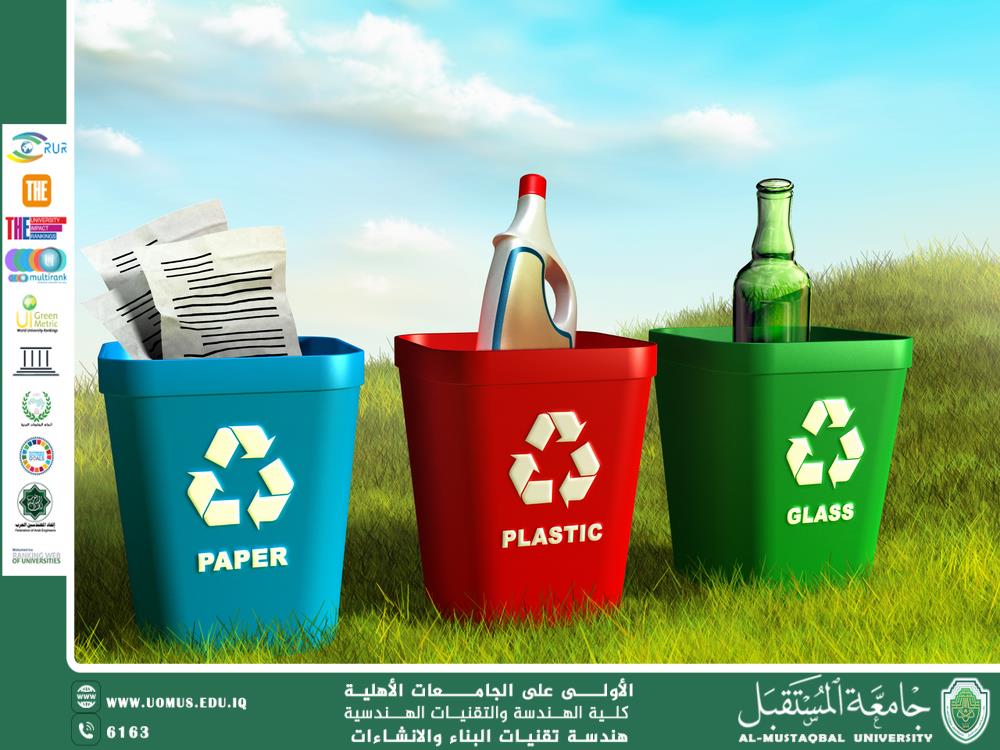
Waste Recycling
Introduction<br />Waste recycling is a process aimed at converting waste materials into usable products instead of disposing of them in ways that negatively impact the environment. Recycling is an essential part of environmental sustainability, helping reduce pollution and protect natural resources.<br /><br />Importance of Waste Recycling<br /><br />Environmental Protection: Recycling reduces the amount of waste that accumulates in landfills and oceans.<br /><br />Resource Conservation: It helps reuse raw materials such as plastics, metals, and glass.<br /><br />Energy Reduction: Recycling processes reduce the energy required to produce new materials.<br /><br />Pollution Reduction: Recycling helps lower greenhouse gas emissions and toxic waste.<br /><br />Types of Recyclable Waste<br /><br />Paper Waste: Such as newspapers, magazines, and cardboard.<br /><br />Plastic Waste: Such as bottles and plastic bags.<br /><br />Metals: Such as aluminum cans and iron pieces.<br /><br />Glass: Such as bottles and glass containers.<br /><br />Electronic Waste: Such as old phones and computers.<br /><br />Recycling Process Stages<br /><br />Waste Collection: Recyclable materials are collected from homes and factories.<br /><br />Waste Sorting: Waste is categorized based on its type to ensure proper recycling.<br /><br />Processing and Manufacturing: Recycled materials are turned into new products.<br /><br />Marketing and Use: Recycled products are sold and reused in daily life.<br /><br />Challenges of Waste Recycling<br /><br />High Costs: Recycling processes require significant investments in infrastructure.<br /><br />Lack of Awareness: A lack of awareness about the importance of recycling affects the success of environmental programs.<br /><br />Pollution Issues: Some materials require advanced technologies to be recycled without polluting the environment.<br />