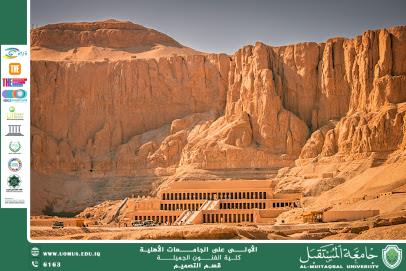

An Article "Mortuary Temple of Hatshepsut: History, Architecture and Location" By Assistant Teacher Dr. Ali Attiya Mousa Al-Saadi
The Mortuary Temple of Hatshepsut, also known as the Temple of Queen Hatshepsut, is an iconic architectural monument located in Deir el-Bahari on the western bank of the Nile in Luxor, Egypt. It was constructed during the reign of Queen Hatshepsut (approximately 1473 – 1458 BCE) and is one of the most significant mortuary temples in ancient Egypt. The temple is believed to have been designed and overseen by the architect Senenmut. It features a unique architectural design with three terraces, each of which contains a row of columns at the end.<br /><br />At the upper level of the temple, an open courtyard is found behind a row of columns, with statues of Queen Hatshepsut in Osirian form, symbolizing the god of death. The temple also contains reliefs depicting her famous trade expedition to the Land of Punt.<br /><br />The temple's location in Deir el-Bahari, on the western bank of the Nile, places it within the broader context of the Deir el-Bahari temple complex, which also includes other temples, such as the Temple of Mentuhotep II. The temple is a symbol of ancient Egyptian civilization, reflecting Queen Hatshepsut's economic and political power.<br /><br />Furthermore, the Mortuary Temple of Hatshepsut contributes to the achievement of Sustainable Development Goal 11, "Sustainable Cities and Communities." By preserving cultural and architectural heritage, the temple supports sustainable tourism and provides economic opportunities for local communities who depend on tourism in the region. This contributes to the sustainable development of the cultural and economic environment.<br /><br />Almustaqbal university , The number one university in Iraq