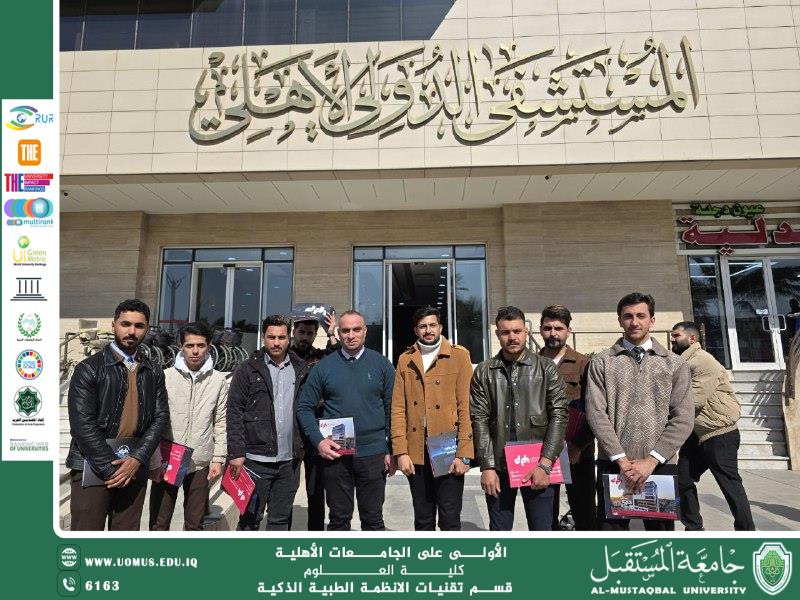

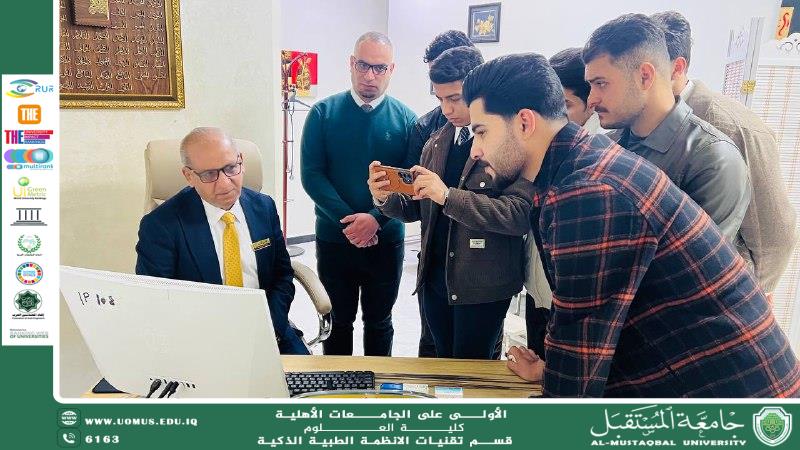
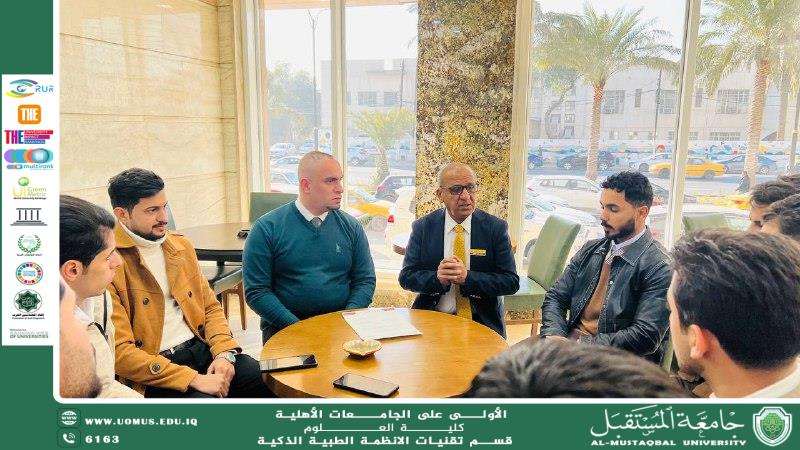
Sustainability Ambassadors Visit International Medical Hospital to Learn About Smart Healthcare Systems.
The Sustainability Ambassadors from the Smart Medical Systems Department organized an educational visit to the International Medical Hospital in Baghdad, supervised by the department chair, Dr. Maitham Nabeel Muqaddad, and teaching assistant Aheeb Hashem Kareem. During the visit, the students had the opportunity to learn about a variety of smart medical systems used in the hospital. Several advanced technologies were showcased, reflecting the hospital’s progress in implementing smart systems across various healthcare domains.<br /><br />The Systems Presented:<br /><br />Smart Hospital System: An integrated system that helps improve hospital management and increase efficiency, enhancing the experience for both patients and staff.<br />Smart Capsule for Transporting Samples and Emergency Medications: These capsules help speed up the safe and effective transport of medical samples and materials across various hospital departments.<br />Smart System for Medical Waste Management: This system focuses on minimizing the risks associated with handling medical waste, contributing to its environmental and health-safe management.<br />Smart Water Filtration System: This system includes advanced technologies to ensure the safe purification and use of water within the hospital.<br />Smart System for Treating Heavy Water: This system is used to treat contaminated water from various hospital processes, helping preserve the environment.<br />Centralized Smart Oxygen Supply System: This system provides oxygen efficiently and safely to all hospital departments continuously.<br />The students were also welcomed by Mr. Abbas Maala, the Director of the International Medical Hospital, who provided them with a detailed explanation of how these systems are applied within the hospital and their impact on improving healthcare quality.<br /><br />This visit offered students an excellent opportunity to understand how smart systems are integrated into the medical sector and how these modern technologies can be applied to enhance healthcare services.<br /><br />The educational visit to the Smart Medical Systems Department at the International Medical Hospital in Baghdad is a clear example of how Sustainable Development Goals (SDGs) are being applied in the healthcare sector. The smart systems that students learned about are closely aligned with three main SDGs:<br /><br />Goal 3: Good Health and Well-Being<br />The smart systems in the hospital represent a significant step forward in improving healthcare quality. Through the use of smart capsules for transporting medical samples and emergency medications, as well as systems for water and medical waste management, a safe and healthy medical environment is fostered. This directly contributes to providing high-quality healthcare and improving treatment outcomes.<br /><br /><br />Goal 6: Clean Water and Sanitation<br />The smart water filtration and heavy water treatment systems in the hospital use innovative technologies to conserve water and ensure its safe use. This contributes to sustainability in water resource management, ensuring the availability of clean water and safe sanitation, enhancing overall health and reducing environmental impact.<br /><br />Goal 12: Responsible Consumption and Production<br />The smart medical waste management and heavy water treatment systems serve as examples of improving the sustainability of hospital operations. Through effective management of medical waste and contaminated water, these systems help reduce the environmental impact of medical activities and ensure responsible and efficient use of resources. This contributes to environmental sustainability in healthcare and promotes green practices within hospitals.<br /><br />By utilizing these smart systems, the hospital is contributing to achieving the Sustainable Development Goals, enhancing public health, and protecting the environment.<br /><br />AL Mustaqbal University is the first university at Iraq.