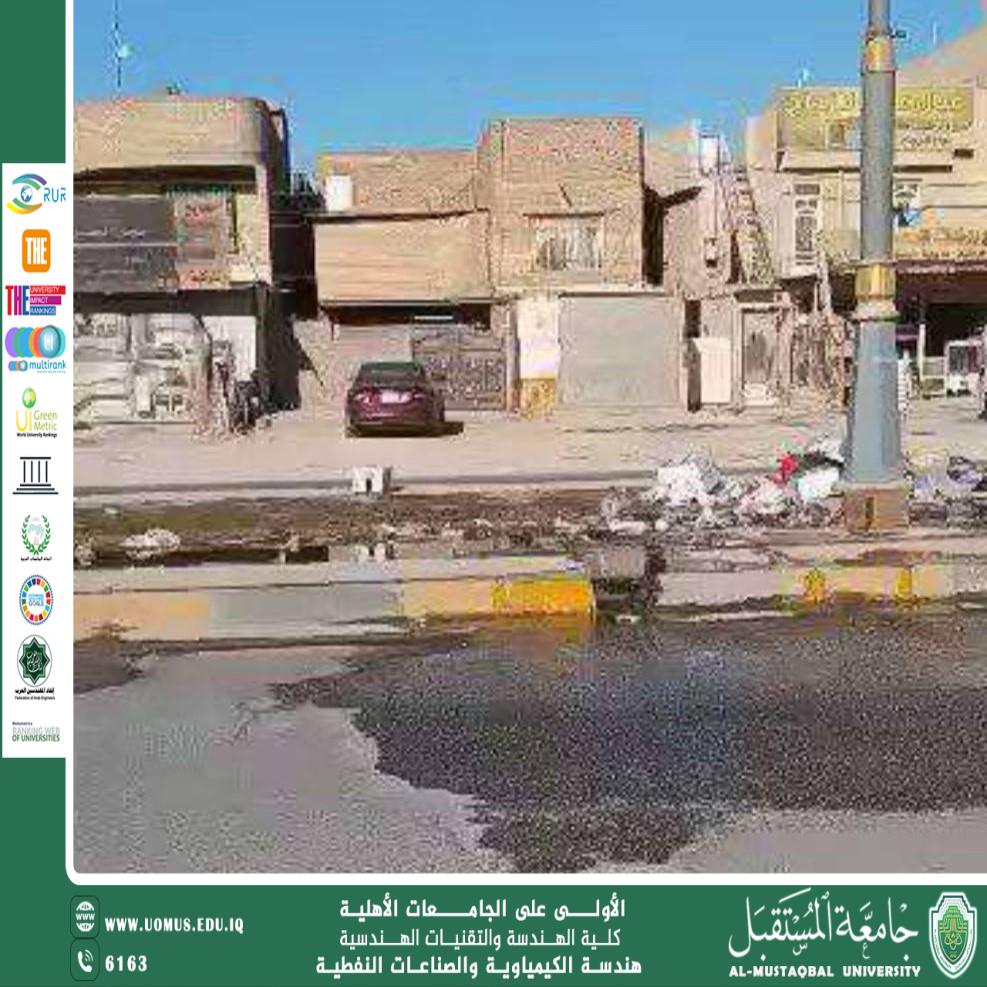
"Waste Accumulation and Improper Burning on the Side of Street 80"
<br />Department of Chemical Engineering, University of Almustaqbal, Babil, Iraq<br />[email protected]<br />The research on the issue of the following Sustainable Development Goals (SDGs): Goal 11: Sustainable Cities and <br />Communities, Goal 12: Responsible Consumption and Production, and Goal 13: Climate Action.<br />Abstract. The problem of waste accumulation and improper burning on the sides of streets is a significant environmental <br />concern that affects both public health and the environment. On Street 80, this issue is particularly evident, with waste <br />often left scattered on the sides of the road, and in some cases, it is burned illegally. This not only contributes to air <br />pollution but also leads to the contamination of soil and water sources. This research explores the causes of this problem, <br />its effects on the environment and public health, and proposes potential solutions to mitigate the issue. Through improved <br />infrastructure, better waste management, public awareness, and legal enforcement, this problem can be addressed <br />effectively to improve the overall quality of life for local residents and visitors.<br />Keywords:. Street 80 , waste accumulation.<br /> <br />INTRODUCTION<br /> The accumulation of waste and its improper disposal, particularly through burning, is a growing environmental <br />issue that has a profound impact on public health and the surrounding ecosystem. Waste management has become <br />one of the greatest challenges in urban areas, where streets are often overwhelmed by improperly disposed of waste, <br />leading to significant environmental and health risks. This is especially true for Street 80, where the accumulation of <br />waste along the roadside, coupled with illegal burning, poses serious threats to the environment and the well-being <br />of those who live in and pass through the area. This research aims to explore the underlying causes of this issue, its <br />environmental and health impacts, and propose practical solutions for resolving it.<br />PROBLEM DESCRIPTION<br />On Street 80, waste regularly accumulates along the sides of the road, especially in areas with heavy traffic. This <br />waste is often discarded by individuals who lack proper facilities for disposal. In addition, the burning of waste is <br />commonly observed, especially in areas where no designated waste collection system exists. The burning of these <br />waste materials, particularly plastics and other harmful substances, contributes to severe air pollution, posing a <br />health hazard to nearby residents and wildlife. Furthermore, the lack of waste management infrastructure <br />exacerbates the issue, as waste piles up and causes further environmental degradation. The problem is compounded <br />by the rapid population growth and expansion of urban areas, which leads to an increase in waste production and an <br />overburdened waste disposal system CAUSES<br />1. Lack of Effective Waste Management Infrastructure One of the primary causes of waste accumulation <br />along Street 80 is the lack of adequate waste collection facilities. In many areas along the street, there <br />are insufficient waste bins, and the existing bins are often not emptied regularly. This leads to residents <br />and passersby disposing of their waste along the roadside, contributing to the pollution problem. <br />Additionally, some regions lack proper maintenance of waste collection points, which causes bins to <br />overflow and waste to spill onto the streets.<br />2. Poor Waste Management by Local Authorities In some cases, the local authorities responsible for waste <br />collection fail to provide regular and effective services. In the case of Street 80, there may be a lack of <br />coordination among relevant authorities responsible for waste management. This results in delays in <br />waste collection and a backlog that leads to further accumulation of waste along the roadside.<br />3. Illegal Waste Burning Illegal burning of waste is another major contributor to environmental pollution. <br />In the absence of proper waste disposal facilities or due to a lack of awareness about the consequences<br />of burning waste, some individuals resort to setting fire to the trash. This releases toxic fumes, including <br />dioxins and furans, into the atmosphere, causing severe air pollution and posing long-term health risks <br />to people in the vicinity.<br />4. Increase in Waste Volume Due to Population Growth and Urbanization The rapid growth of the <br />population and expansion of urban areas has led to a significant increase in the volume of waste <br />generated. As more people settle in the area, the waste produced by households, businesses, and <br />industries also increases. This puts a strain on existing waste management systems, which often cannot <br />keep up with the rising demand for waste collection and disposal services.<br />5. Lack of Environmental Awareness many individuals are not fully aware of the environmental and <br />health risks associated with improper waste disposal and burning. Some people still see burning waste <br />as a quick and easy solution to waste disposal, without understanding the long-term harm it causes to <br />both human health and the environment.<br />EFFECTS AND SOLUTIONS TO THE PROBLEM<br />Environmental Pollution The accumulation of waste leads to soil and water contamination. Hazardous chemicals <br />from improperly disposed of waste can leach into the ground, affecting soil fertility and water quality. This <br />contamination can spread to nearby agricultural land, affecting crops and local ecosystems. The toxins released from <br />burning waste further contribute to environmental degradation.<br />Air Pollution Burning waste releases toxic gases, such as carbon monoxide, dioxins, and furans, which severely <br />affect air quality. This results in respiratory issues, especially for individuals with pre-existing health conditions, <br />such as asthma. Over time, prolonged exposure to these pollutants can increase the risk of chronic diseases and even <br />cancer.<br />Traffic Disruption Waste accumulation on the roadside can obstruct traffic flow and pose a safety risk. Piles of <br />trash can reduce visibility for drivers, potentially leading to accidents. Furthermore, the accumulation of waste on <br />roadsides can cause congestion and disrupt the normal flow of traffic, especially during peak hours.<br />Degradation of Aesthetic Appeal The presence of waste along the sides of the road negatively impacts the visual <br />appeal of the area. It detracts from the beauty of the natural landscape and the overall ambiance of the area. For <br />residents, this degrades the quality of their living environment, and for visitors, it creates an unattractive first <br />impression of the area.<br />Negative Health Impacts Improper waste disposal and burning also pose direct health risks. Accumulated waste <br />often attracts pests, including rats and insects, which can carry diseases. Additionally, the smoke from burning waste <br />can cause or exacerbate respiratory problems, particularly for vulnerable populations such as children, the elderly, <br />and people with compromised immune systems. So Solutions to the Problems :<br />Improvement of Waste Management Infrastructure The first step in addressing the issue is to improve the waste <br />collection system along Street 80. This includes providing more waste bins along the road, ensuring that these bins <br />are emptied regularly, and establishing designated collection points. The maintenance of these facilities must also be <br />prioritized to ensure they are functioning effectively.<br />Increasing Environmental Awareness and Education A key solution to this problem is educating the public about <br />the harmful effects of improper waste disposal and burning. Public awareness campaigns can be conducted through <br />social media, local schools, and community centers to inform residents about the importance of proper waste <br />disposal methods. These campaigns should also address the risks of burning waste and encourage people to adopt <br />environmentally friendly practices.<br />Strengthening Legal Enforcement and Regulations Stronger enforcement of laws against illegal waste burning is <br />essential. Local authorities must ensure that those who engage in illegal burning are fined or penalized. Regular<br />monitoring of waste disposal practices in the area can also help deter individuals from engaging in such harmful <br />activities.<br />Encouraging Recycling Programs Promoting recycling and waste sorting is another important solution. The <br />community should be encouraged to separate recyclable materials from non-recyclable waste, making it easier to <br />manage waste more efficiently. Setting up recycling stations and offering incentives for recycling can motivate <br />people to participate.<br />Community Involvement and Participation Local communities should be actively involved in keeping their <br />surroundings clean. Organizing volunteer clean-up campaigns and encouraging people to take responsibility for their <br />local environment can make a significant difference. Collaborative efforts between the community and local <br />authorities can lead to cleaner streets and a better-managed waste disposal system.<br />RESULTS<br /> by implementing these solutions, we can expect a noticeable reduction in the accumulation of waste and illegal <br />burning along street 80. improved waste collection systems will result in cleaner streets, better air quality, and <br />healthier living conditions for residents. increased awareness and education will likely change behaviors regarding <br />waste disposal and reduce the need for harmful practices such as burning. furthermore, recycling efforts will help <br />divert waste from landfills, contributing to a more sustainable environment.<br />CONCLUSION<br />The issue of waste accumulation and improper burning on Street 80 is a pressing environmental concern that <br />requires immediate attention. Through better waste management infrastructure, public awareness campaigns, stricter <br />enforcement of environmental regulations, and community participation, this problem can be effectively addressed. <br />By working together, we can ensure a cleaner, healthier environment for current and future generations. A <br />cooperative approach involving both local authorities and the public is crucial in achieving long-term solutions to <br />waste management and environmental sustainability