Air Pollution and Your Health
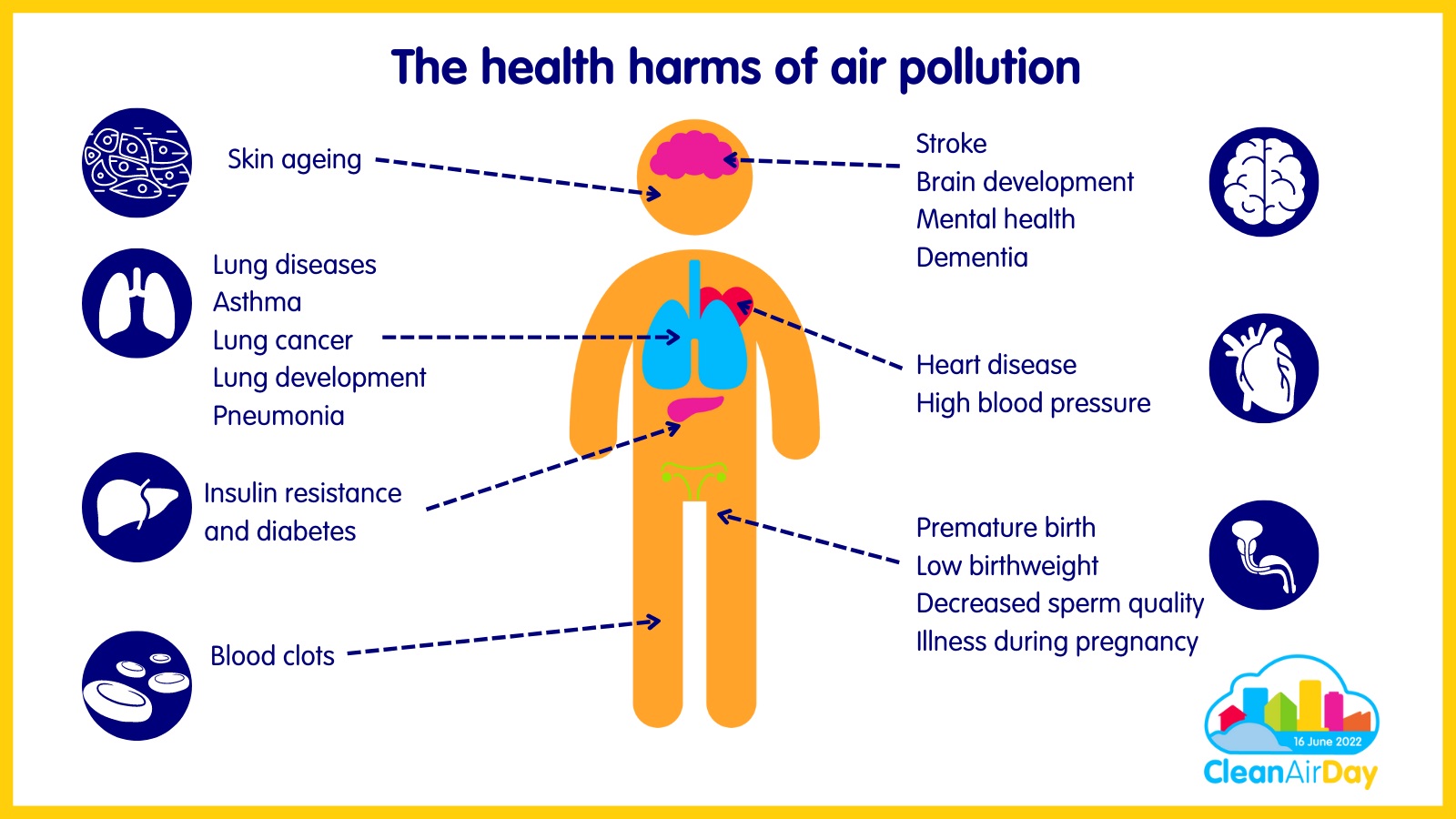
<br />Air Pollution and Your Health<br />Dr. Malik Mustafa Mohammed<br /><br /> For nearly 60 years, the National Institute of Environmental Health Sciences (NIEHS) has been a leader in expanding our understanding of air pollution through funding and research into its effects on health and at-risk population groups. NIEHS continues<br />to fund air pollution research gaps, particularly among individuals who may be disproportionately exposed, statistical methods to model exposures and health outcomes, as well as methods to reduce and prevent exposures across the lifespan.<br />What is air pollution?<br />Air pollution can be immediately recognizable, in a brown haze over a city, exhaust across a busy highway, a plume rising from a smokestack, or wildfire smoke. Other air pollution is unseen,<br />but its pungent smell alerts you to its presence.<br />Air pollution is a mix of hazardous substances of both human and natural origins. Some are released naturally, such as ash and gases from volcanic eruptions or wildfire smoke. Others can have both natural and human causes, such as smoke from wildfires, or methane from decomposing organic matter in soils or animal feedlots which contributes to the formation of harmful ground-level ozone.<br />The primary sources of human-made air pollution are vehicle exhaust, fuel oils and natural gas to heat homes, by-products of manufacturing and power generation, and fumes from chemical production.<br />Why improving air quality matters to health<br />Air pollution was initially regarded primarily as a threat to respiratory health. However, this concern now includes a spectrum of health challenges, including cancers, cognitive function, adverse pregnancy outcomes, Parkinson’s disease, diabetes, and even depression.<br />Health damage from air pollution can take many years to become evident. For example, researchers found that air pollution exposures from as many as 10 years prior to detection increases the odds of developing Alzheimer’s disease.<br />Unseen traffic-related air pollution (TRAP) may cause lung injury and other disorders, and long-term TRAP exposure is associated with lower cognitive function in older adults. Adoption of zero-emission vehicles,5 the introduction of electric school buses, and other emission reduction efforts can reduce the amount of air pollution we breathe.<br />Health effects<br />Women’s health and birth outcomes — Research reveals that exposure to air pollution poses risks to women’s health, specifically the risk of developing breast cancer. NIEHS researchers found evidence of increased breast cancer risk from long-term<br />exposure to fine particulate matter (PM2.5), which is found in emissions and smoke. The association<br />was similar across racial and ethnic groups. There is also evidence of an association between<br />nitrogen dioxide, a common element of TRAP, and incidence of breast cancer. Air pollution can also diminish chances of recovery from breast cancer.<br /> Health damage from air pollution can take many years to become evident. For example, researchers found that air pollution exposures from as many as 10 years prior to detection increases the odds of developing Alzheimer’s disease.<br />Unseen traffic-related air pollution (TRAP) may cause lung injury and other disorders, and long-term TRAP exposure is associated with lower cognitive function in older adults. Adoption of zero-emission vehicles, the introduction of electric school buses, and other emission reduction efforts can reduce the amount of air pollution we breathe.<br />Health effects<br />Women’s health and birth outcomes — Research reveals that exposure to air pollution poses risks to women’s health, specifically the risk of developing breast cancer. NIEHS researchers found evidence of increased breast cancer risk from long-term<br />exposure to fine particulate matter (PM2.5), which is found in emissions and smoke. The association was similar across racial and ethnic groups. There is also evidence of an association between nitrogen dioxide, a common element of TRAP, and the incidence of breast cancer. Air pollution can also diminish the chances of recovery from breast cancer.<br /><br />Early-life exposure to air pollution also increases the risk of diminished lung function later in life and increases the incidence of asthma, especially among disadvantaged families living in urban neighborhoods.<br />Lead exposure presents a long-standing threat to childhood cognitive development, with the main sources of exposure being lead paints and industrial pollution. The burden of this exposure is most pronounced in those born from 1966 through 1986<br /><br />Alzheimer’s disease and dementia: Dementia refers to a class of symptoms, while Alzheimer’s is a specific type of dementia characterized by<br />cognitive decline and memory loss. Recent studies have found associations between exposure to<br />PM2.5 and other pollutants, such as DDT, with the progression of Alzheimer’s disease.One study showed a decline in a certain brain and spinal column fluid, a marker for the plaque buildup in the brain that can lead to Alzheimer’s.<br /><br />Cardiovascular disease: Long-term exposure to PM2.5 and other TRAP emissions have been associated with increased incidence of cardiovascular diseases, even at moderate concentrations. Black people and people with diabetes were found to be particularly vulnerable. TRAP exposure has also been shown to trigger myocardial infarction, a type of heart attack, within a few hours of exposure.Diabetes: Long-term exposure to PM2.5 and nitrogen dioxide have been associated with increased diabetes risk.<br />Lung cancer: Studies have shown an association between air pollution and lung cancer among older Americans as well as in a large multiethnic population.<br />Parkinson’s disease: There is growing evidence for the influence of air pollution on the development of Parkinson’s disease. For example, data from the ongoing NIEHS Sister Study showed that high levels of exposure to nitrogen dioxide was associated with greater risk of contracting Parkinson’s disease in women.<br />Stroke: Studies of exposure to TRAP emissions by older Americans have also shown an increased risk of stroke.<br />Health disparities<br />People living in low-income neighborhoods have a greater burden of disease associated with air pollution. For example, children in predominantly low-income communities near the Salton Sea in Southern California experience respiratory health problems from dust that arises from the shrinking seabed and then enters their homes.<br />Climate change and wildfires<br />Hotter temperatures and longer dry seasons are leading to more frequent and intense wildfires, raising concerns about the range of adverse effects from wildfire smoke on public health. Under the National Institutes of Health Climate Change and Health Initiative, NIEHS-funded researchers are studying chronic and acute health conditions resulting from short- and long-term wildfire smoke exposure. One study suggests that PM2.5 from wildfires is a greater risk factor for dementia<br />compared to PM2.5 from other sources, and this risk is particularly pronounced among socially and economically disadvantaged groups.<br /><br />Al-Mustaqbal University – The First University in Iraq<br />