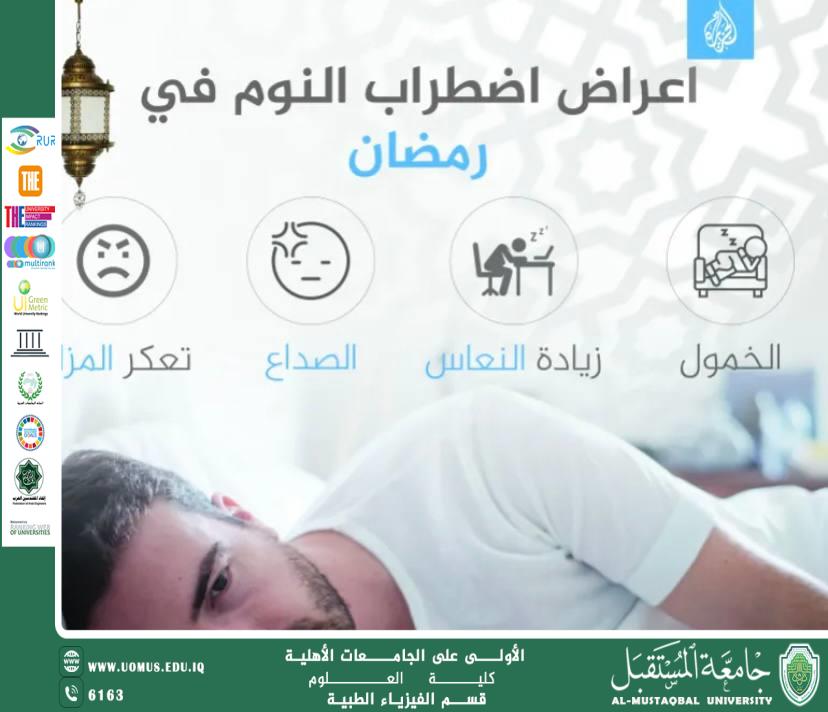
Scientific Article by Assistant Lecturer Iftikhar Thamer Kamel Title: The Effect of Staying Up Late on Fasting Individuals
Introduction:<br /><br />Fasting is one of the essential pillars of worship in Islam, where a Muslim refrains from food and drink from dawn until sunset. However, fasting often coincides with changes in daily routines, including staying up late for extended periods. This article will explore the impact of staying up late on the health of a fasting individual and how it can affect energy levels, concentration, and physical and mental performance.<br /><br />Staying Up Late and Its Connection to Fasting:<br /><br />Staying up late during Ramadan is often associated with religious and social practices such as performing night prayers or attending family gatherings. On the other hand, staying up late may lead to unhealthy changes in the body’s biological system, affecting the fasting individual’s ability to perform their worship effectively.<br /><br />Effects of Staying Up Late on the Body During Fasting:<br /> 1. Impact on Sleep:<br /> • The body requires adequate hours of sleep to restore energy and maintain focus throughout the day. Staying up late can significantly reduce sleep duration, leading to feelings of fatigue and exhaustion during the day. Additionally, insufficient sleep may result in diminished mental performance and concentration.<br /> 2. Impact on the Nervous System:<br /> • Good sleep promotes brain function and helps regenerate the cells of the nervous system. Continuous staying up late may lead to mental and psychological stress, increasing anxiety and pressure, which negatively affects the fasting individual’s ability to perform worship peacefully and comfortably.<br /> 3. Impact on the Digestive System:<br /> • Fasting increases the body’s need for energy throughout the day, and when staying up late is added to this, digestion can become slower and more difficult due to the lack of rest. A fasting person may experience issues such as indigestion, bloating, or heartburn, especially if heavy meals are consumed late at night.<br /> 4. Impact on Energy Levels:<br /> • Lack of sleep leads to decreased energy levels, making the fasting person feel tired and less able to perform daily tasks effectively. Insufficient sleep can also lower physical and mental responsiveness, making it harder to engage in prayer or other physical activities.<br /><br />Strategies for Managing Staying Up Late During Fasting:<br /> 1. Time Management:<br /> • It is important for the fasting individual to manage their time effectively to ensure adequate sleep. This can be achieved by taking naps during the day or going to bed early to avoid staying up too late.<br /> 2. Healthy Meal Choices:<br /> • The fasting individual can choose light and healthy meals during Suhoor (pre-dawn meal) to avoid excessive thirst or hunger during the day, which helps them handle the fasting hours more comfortably.<br /> 3. Avoiding Stimulants:<br /> • It is advisable for the fasting individual to avoid stimulants such as coffee or tea before bed, as they can negatively impact sleep quality.<br /> 4. Engaging in Light Exercise:<br /> • Light physical exercise before Iftar (breaking the fast) can help energize the body and boost energy levels without significantly affecting sleep.<br /><br />Conclusion:<br /><br />While staying up late is a part of some social and religious traditions during Ramadan, fasting individuals should be mindful of its negative effects on health. By managing time effectively and following healthy habits, a fasting person can minimize the adverse effects of staying up late and maintain their energy and vitality throughout the fasting period.م<br /><br />"AL_mustaqbal University is the first university in Iraq"