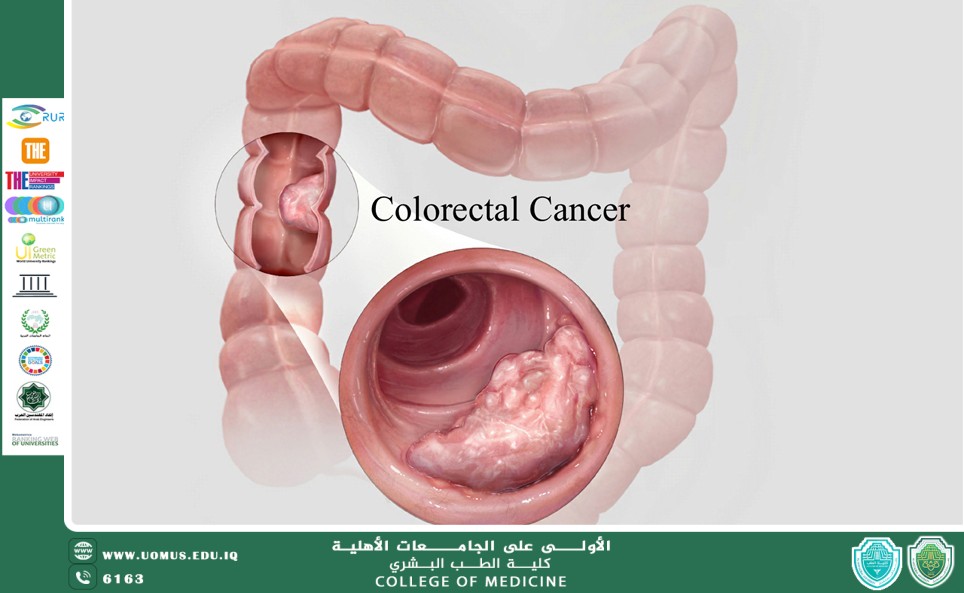
Colorectal cancer
Introduction:<br /><br />Colon cancer, also known as cancer of the large intestine, is one of the most common cancers in the world. This cancer originates in the colon or rectum, and is one of the leading causes of cancer-related deaths. However, early detection of colon cancer can lead to successful treatment and improve the chances of survival.<br /><br />Causes and risk factors:<br /><br />The exact cause of colon cancer is still unknown, but there are several factors that increase the risk of developing it, including:<br /><br />Age: the likelihood of colon cancer increases with age, especially after the age of fifty.<br />Family history: having a family history of colon cancer or colon polyps increases the risk of infection.<br />Inflammatory intestinal diseases: people with diseases such as ulcerative colitis or Crohn's disease are more likely to develop colon cancer.<br />Diet: a diet high in red and processed meat and low in fiber increases the risk of infection.<br />Lifestyle: lack of physical activity, obesity, smoking, heavy alcohol consumption increase the risk of injury.<br />Genetic disorders: some genetic disorders such as familial adenomatous polyposis (FAP) and Lynch syndrome significantly increase the risk of colon cancer.<br /><br />Symptoms:<br /><br />In the early stages, colon cancer may not show any symptoms. As the disease progresses, the following symptoms may appear:<br /><br /> Changes in bowel habits (diarrhea or persistent constipation)<br />Bleeding from the rectum or blood in the stool<br />Abdominal pain or cramps<br />General weakness and fatigue<br />Unexplained weight loss<br />Feeling of incomplete discharge after defecation<br /><br />Diagnosis:<br /><br />Early detection of colon cancer is critical to improving treatment outcomes. Diagnostic methods include:<br /><br />Stool occult blood test (FOBT): to detect the presence of blood in the stool.<br />Colonoscopy: examination of the colon using a flexible tube equipped with a camera.<br />Biopsy: taking a tissue sample for examination under a microscope.<br />Computed tomography (CT) or magnetic resonance imaging (MRI): to determine the extent of the spread of cancer.<br /><br />Treatment:<br /><br />Treatment of colon cancer depends on the stage of the disease, the location of the tumor and the patient's general health. Treatment options include:<br /><br />Surgery: to remove the tumor and surrounding tissues.<br />Chemotherapy: to kill cancer cells.<br />Radiation therapy: to destroy cancer cells using X-rays.<br />Targeted therapy: to target specific cancer cells.<br />Immunotherapy: to strengthen the immune system to fight cancer.<br /><br />Prevention:<br /><br />The risk of colon cancer can be reduced by:<br /><br />Follow a healthy diet rich in fiber, fruits and vegetables.<br />Limit the intake of red and processed meat.<br />Practice regular physical activity.<br />Maintain a healthy weight.<br />Quit smoking.<br />Limit alcohol consumption.<br />Regular check-ups for early detection of colon cancer, especially for people over 50 years of age or with other risk factors.<br /><br />Conclusion:<br /><br />Colon cancer is a serious disease, but it can be prevented and cured if detected early. By leading a healthy lifestyle and having regular check-ups, the risk of colon cancer can be reduced and the chances of recovery improved.<br /><br />Dr. Ahmed Turki Hani<br />MBChB. MSc. PhD. Pathology<br /><br />