Total intravenous anaesthesia and target controlled infusions
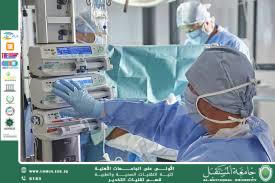
Total intravenous anaesthesia (TIVA) refers to the practice of administering<br />anaesthesia via a continuous intravenous infusion, commonly either as fixed<br />rate or via a computer-controlled pump. TI VA algorithms are designed to<br />achieve and maintain a steady-state plasma or effect site concentration, by<br />administering an initial bolus followed by an infusion (see Fig. 1.11B–D).<br />Target controlled infusions deliver the drug according to pharmacokinetic<br />models to give a predicted plasma or effect site concentration based on<br />assumptions about compartment size, clearance and the effects of<br />redistribution based on equations 1.13–1.16 below.<br />Pharmacokinetic models are drug specific and tailored to<br />adults or children. Models in common use include include Marsh, Schnider<br />and Paedfusor (propofol), and Minto (remifentanil). Models exist for adult<br />and for paediatric practice to take into account the differences in<br />compartment size and physiology. These allow targeting to effect site (Ce) or<br />plasma (Cp) concentration.<br />The Schnider model is used for propofol infusions and uses a fixed central<br />compartment volume of 4.7 l. Volumes of the other compartments, the rate<br />constants and elimination rate constant are determined by age, weight and<br />lean body mass as calculated by the pump's algorithm. When running in C<br /><br />mode a small initial bolus is given, followed by an infusion,whereas in Ce mode , the bolus is larger to account for<br />equilibration with the effect site. I n both modes there is a lag between the<br />increase in plasma concentration and effect site concentration because of the<br />time taken for equilibration. The time to peak effect is related to the half-life.<br />Context-sensitive half-time<br />Following administration by an infusion, the drug will have redistributed<br />into more peripheral compartments to a variable extent, depending on its VD,<br />clearance and the duration of the infusion. When the infusion is stopped, the<br />drug redistributes along concentration gradients, back into the plasma and<br />effect sites. Hence the offset of clinical effect can be unpredictable, as it<br />depends on the dose, duration of infusion, intrinsic properties of the drug<br />and factors such as metabolism and organ function. Predictably, a drug with<br />high VD and high intrinsic clearance should have a similar half-life to a drug<br />with low VD and clearance – however, this is not the case. Therefore the<br />context-sensitive half-time (CSHT) gives a realistic model for drug behaviour<br />after prolonged infusion.<br />Context-sensitive half-time is defined as the time taken for the plasma<br />concentration to decrease by half after stopping an infusion designed to<br />maintain a steady-state concentration; CSHT allows some prediction of how<br />long drug effects persist after an infusion is stopped.<br />Comparing the opioids fentanyl, remifentanil, alfentanil and morphine<br />(Fig. 1.12) illustrates some aspects of their clinical pharmacology in practice.<br />The CSHTs for fentanyl and morphine increase steadily with infusion<br />duration, whereas the increase for alfentanil is shallower and plateaus.<br />Remifentanil has a fixed, flat CSHT irrespective of infusion duration. Remifentanil is rapidly broken down by non-specific esterases, resulting in<br />a short CSHT independent of infusion duration. Fentanyl is highly lipid<br />soluble and has high intrinsic clearance. However, the very large VD at steady<br />state results in significant accumulation after infusion or repeated boluses.<br />Therefore, prolonged infusion of fentanyl can result in delayed offset. The<br />pKa and relative insolubility of alfentanil result in a smaller VD and a lower<br />CSHT, although there is some accumulation and delayed offset after an<br />infusion because intrinsic clearance of the drug is low. Morphine<br />accumulates, and offset is further delayed after a sustained infusion because<br />of a large VD, which is not overcome by a relatively high clearance.<br />Rectal<br />The rectal route negates first-pass metabolism and may be used where the<br />enteral route is unavailable. I t is used in children and adults (e.g. for delivery<br />of paracetamol, diclofenac or ibuprofen) for postoperative analgesia. The<br />proportion of drug absorbed via this route is highly variable.<br />Transdermal<br />Drugs with a high lipid solubility and potency may be given transdermally.<br />Drug effects locally or systemically depend on the drug crossing the dermis<br />in sufficient quantities. The drug is either embedded in a patch with a<br />reservoir and membrane to control delivery or in a matrix that promotes slow<br />continuous release. <br />د. ميعاد عدنان عبدالسلام <br /><br />AL_mustaqbal University, the first university in Iraq<br />