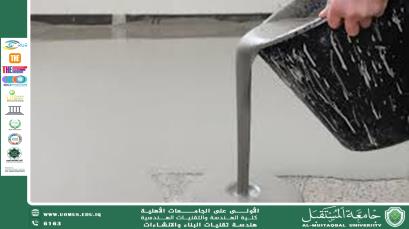
Self-Leveling: The Perfect Solution for Smooth and Flawless Surfaces
Introduction<br /><br />In the world of construction and finishing, floor leveling is a crucial factor in the success of any project, whether residential, commercial, or industrial. With the advent of self-leveling cement, engineers and workers can now achieve perfectly leveled surfaces without the need for extensive manual effort. This type of cement has unique properties that allow it to flow automatically, helping to correct imperfections in concrete floors and prepare them for final coverings such as tiles, wood, or vinyl.<br /><br />What is Self-Leveling Cement?<br />Self-leveling cement is a cementitious material composed of Portland cement, chemical additives, and some fillers that give it low viscosity and the ability to spread on its own when mixed with water. This cement has an exceptional ability to distribute evenly over the floor without requiring extensive leveling tools, making it ideal for creating smooth and durable surfaces in a short time.<br /><br />Difference Between Self-Leveling Cement and Traditional Concrete<br />Although self-leveling cement and traditional concrete share some properties, there are fundamental differences between them:<br /><br />Self-leveling cement has a more fluid consistency, allowing it to spread easily without the need for excessive pressure or leveling.<br />It does not contain coarse aggregates like traditional concrete, making it smoother and easier to distribute.<br />It dries much faster, allowing foot traffic within a few hours, compared to concrete, which takes days to cure.<br />It is mainly used as a subfloor preparation layer, while traditional concrete is typically used as a structural base.<br />Properties of Self-Leveling Cement<br />High self-spreading capability without the need for precise manual leveling.<br />Fast drying time, allowing foot traffic within 4 to 6 hours and requiring at least 24 hours before installing the final flooring.<br />Flexible thickness control, with application ranging from 1 mm to 50 mm as needed.<br />High mechanical strength, making it suitable for industrial environments and warehouses.<br />Excellent resistance to cracking and shrinkage, ensuring long-term surface durability.<br />Application Method of Self-Leveling Cement<br />Surface Preparation: Cleaning the floor, repairing cracks, and applying a special primer.<br />Mixing the Cement: Combining cement with water according to the specified mixing ratio.<br />Pouring and Distributing: Pouring the mixture and allowing it to flow naturally, using distribution tools if needed.<br />Drying and Curing: Allowing the cement to dry for 4 to 6 hours before foot traffic and 24 hours before installing the final flooring.<br />Conclusion<br />Self-leveling cement has become one of the leading solutions in the construction industry, offering fast application, precise leveling, and high durability, making it an ideal choice for a wide range of applications. With the advancement of construction technologies, the use of this type of cement is expected to increase, especially in projects that demand high quality and flawless surfaces.<br /><br /><br /><br />