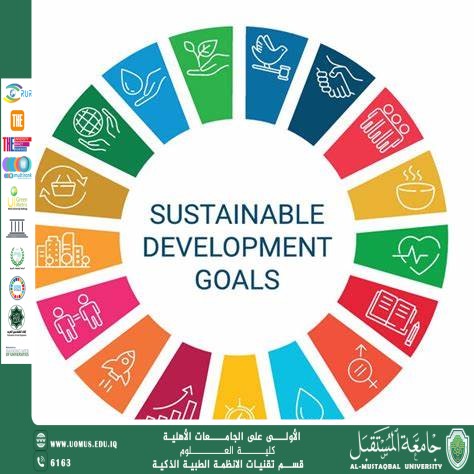
Achieving Educational Equity Through Sustainable Technology: Vision and Goals(Huda khudair hani).
Education is a fundamental factor in the advancement of societies, yet there are still many challenges that hinder the achievement of educational justice. Sustainable technology is a crucial tool in overcoming these challenges, such as the digital divide that prevents certain groups from accessing quality education. By using sustainable technologies, an equal educational environment can be achieved, allowing individuals from all backgrounds—regardless of their social or geographical standing—to access high-quality educational opportunities.<br />The vision aims to achieve educational justice through the use of sustainable technology as a means to empower everyone to access education, irrespective of their social or economic status. This technology serves as a tool to bridge the gap between students in urban and rural areas, as well as between those with access to traditional education and those without. By employing sustainable technology, access to educational resources and content can be facilitated, enabling students to learn flexibly and in an advanced manner.<br />Among the main objectives that sustainable technology aims to achieve is reducing the digital divide by providing access to the internet and digital educational tools in remote areas. By improving the digital infrastructure, students in these areas can more easily access education, giving them the opportunity to learn like their peers in major cities. Additionally, digital educational platforms offer diverse content, making learning more flexible and helping students interact with study materials in an innovative way.<br />Interactive technologies such as augmented reality and virtual reality provide new educational tools that allow students to interact with advanced content. These technologies help students understand complex concepts through practical experience and simulations, making learning more engaging and effective. Moreover, sustainable technology contributes to making education more inclusive, as it can provide special educational tools for students with disabilities, allowing them to learn in ways that meet their individual needs.<br />On another front, sustainable technology provides opportunities for continuous education and vocational training, enhancing the development of skills throughout life. Through this technology, individuals can access vocational training remotely and improve their skills anytime and anywhere. This type of education enables interaction with learning materials that align with the evolving job market.<br />Technology also improves the quality of education by equipping teachers with the tools necessary to continuously monitor student progress. Teachers can use smart applications to provide real-time feedback, which enhances the effectiveness of the teaching process and increases teaching efficiency.<br />In conclusion, sustainable technology represents the optimal solution for achieving educational justice by providing equal educational opportunities for all individuals worldwide. By implementing this technology, a flexible, interactive, and inclusive learning environment can be created that meets the needs of various social and geographical groups.<br />Al-Mustaqbal University is the first one university in Iraq.<br />