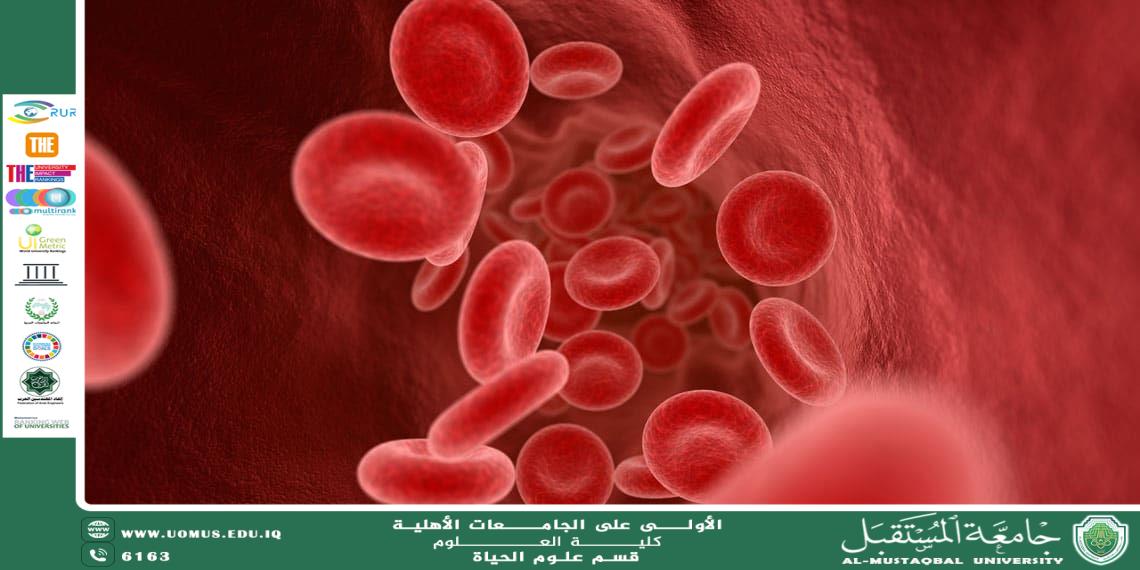
A scientific article by the lecturer (M.M. Zahraa Jawad Kazim) entitled "Sickle Cell Anemia"
Sickle cell anemia is a genetic disease that affects red blood cells, changing their shape from a spherical circle to a crescent moon shape. Red blood cells become fragile and weak and break easily as a result of sickle cell anemia. Red blood cells also stick to each other and to the walls of small blood vessels, preventing them from passing to the body's various tissues to transport oxygen to them, causing the apparent symptoms of the disease, which are shortness of breath and pale skin.<br /><br />What are the symptoms of sickle cell anemia?<br />The severity and frequency of symptoms of sickle cell anemia differ in adults than in children, but they generally include:<br />• Severe pain: This is the most common symptom, as the patient feels severe pain in the bones, joints, chest and abdomen; As a result of the blockage of small blood vessels by sickle cells.<br />• General fatigue and constant exhaustion: Due to the lack of oxygen carried by the blood to the body.<br />• Recurrent infections: Due to a weak immune system, which makes the patient with sickle cell anemia more susceptible to infection.<br />• Jaundice: Yellowing of the skin and whites of the eyes; Due to red blood cells breaking down faster than usual.<br />• Swelling in the hands and feet: As a result of blocked blood vessels.<br />• Lung and kidney problems: These problems develop over time due to damage to the blood vessels in these organs.<br />• Vision disorders: Due to damage to the blood vessels in the eye.<br />• Pulmonary embolism: This is a medical emergency that requires immediate attention.<br />• Stroke: As a result of blockage of blood vessels in the brain.<br /><br />Causes of sickle cell anemia<br />Sickle cell disease is basically a genetic disease, resulting from a defect in the hemoglobin gene responsible for carrying oxygen in the blood, which changes the normal circular shape of red blood cells, and they take on a sickle-like shape, which affects the functions of the cells.<br />The reason for this genetic defect is the transmission of the disease from parents to children. If a child inherits one affected gene from each parent, he will not show symptoms of the disease and will only be a carrier of it, but if he inherits two affected genes, he will develop sickle cell anemia and show symptoms.<br />It is worth noting that the sickle cell gene is transmitted from one parent only to the child, giving the child the sickle cell trait, which means the presence of a normal hemoglobin gene with the sickle cell gene, and the child's blood contains some sickle cells, without feeling any symptoms, but the child is considered a carrier of the disease, which means that he can pass the gene on to his children.<br /><br />Is it possible to completely recover from sickle cell anemia?<br /><br />In fact, at the present time, there is no treatment that completely cures sickle cell anemia, as it is a chronic genetic disease, but there are many treatments available that help manage symptoms and improve the patient's quality of life.<br /><br />Sickle cell patients can live on the use of penicillin since childhood, and there is a difference in the extent to which those affected by the disease are affected and it is not possible to predict the extent to which the affected child will be affected, but there are factors that may determine the extent of the effect:<br />1) Type of sickle cell anemia.<br />2) Quality of home care.<br />3) The patient's behavior and those around him with the disease.<br /><br />What foods help alleviate the symptoms of sickle cell anemia?<br /><br />The diet for sickle cell anemia patients aims to provide the body with the necessary nutrients, which helps in managing the disease and alleviating the severity of symptoms.<br />The list of recommended foods for sickle cell patients includes the following:<br />• Iron-rich foods: such as red meat, chicken, eggs, fish, dark leafy vegetables such as spinach and kale, legumes such as lentils and chickpeas, nuts and seeds.<br />• Vitamin C-rich foods: because it helps in better absorption of iron, such as oranges, lemons, strawberries, tomatoes, and colored peppers.<br />• Vitamin B12-rich foods: such as red meat, chicken, fish, and eggs.<br />• Folic acid-rich foods: such as dark leafy vegetables, whole grains, dried fruits, and bananas.<br />• Calcium-rich foods: such as dairy products, dark leafy vegetables, and canned salmon.<br /><br />Al-Mustaqbal University is the first university in Iraq