


Absences
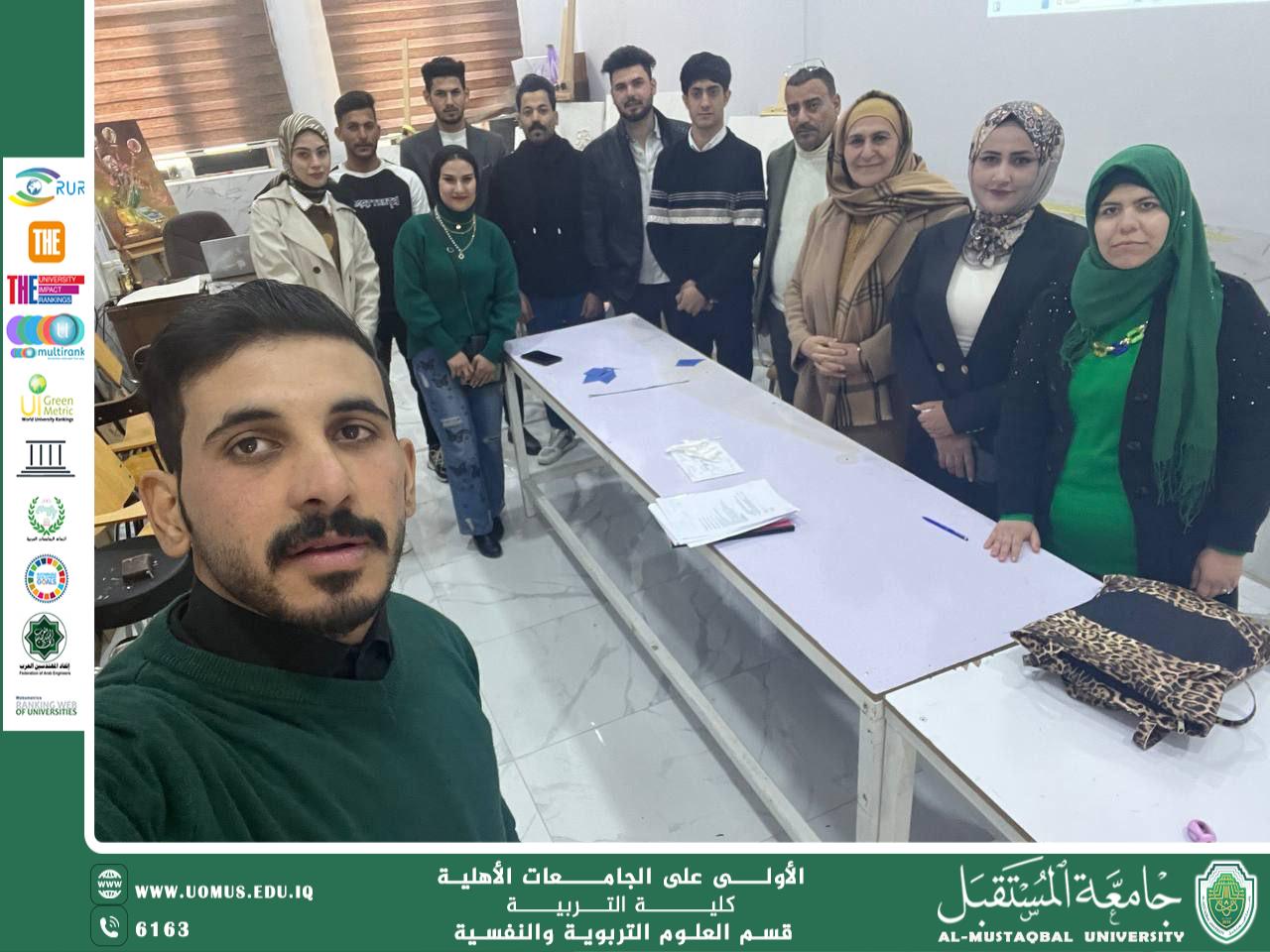
The College of Education organized (an educational guidance workshop on university students’ absence from lectures: causes, solutions, and treatments) for students of the College of Education with the advisors of the departments and academic divisions, in order to achieve the goals of sustainable development, which include the fourth goal (quality education). The workshop was held on Thursday, February 27, 2025, at eleven o’clock in the morning in the Humanitarian Building, Hall 501. The workshop was delivered by (Professor Dr. Thanaa Baha El-Din Abdullah), Head of the Psychological Guidance Unit at the College, where she addressed the problem of absence from lectures, which is one of the challenges that affect the future of the university student and the level of the educational institution in which he studies. University attendance is not just an administrative obligation, but rather a bridge to academic and professional success. In this lecture, the reasons for students’ absence from lectures were discussed: 1. Personal reasons: such as health and psychological reasons: such as chronic diseases, anxiety, depression, or life pressures. And family obligations: such as the student’s responsibilities in caring for his family Or his brothers or sons, in addition to the financial situation: such as the need to work part-time to cover expenses. 2. Academic reasons: such as weak motivation: including the lack of clarity of academic objectives or the feeling that the academic material is useless. And the difficulty of the curriculum: such as the inability to keep up with the scientific content, in addition to traditional teaching methods: such as relying on indoctrination without interaction. 3. Social reasons: which are the influence of peers: bad companions or encouragement to be absent. And preoccupation with non-academic activities: such as hobbies, travel, or excessive social communication. 4. Institutional reasons: such as weak infrastructure: such as crowded or uncomfortable halls, in addition to the absence of incentives: such as not rewarding attendance or activating penalties. Then, the possible solutions and the role of both the student and the university in addressing them were discussed: * At the student level: 1. Time management: Using planning tools (such as timetables and productivity applications) as well as setting priorities and avoiding procrastination. 2. Enhancing self-motivation: Linking attendance to personal goals (such as graduating with honors or achieving a professional ambition) as well as benefiting from inspiring success stories. 3. Seeking support: Communicating with an academic advisor or psychologist when facing difficulties. * At the university level: 1. Improving the quality of education: Such as using interactive teaching methods (discussions, group projects, practical applications). Providing recordings of lectures for students who suffer from exceptional circumstances. 2. Activating attendance systems: Such as rewarding committed students (granting certificates of appreciation, material incentives) as well as applying gradual penalties for absences. 3. Enhancing an attractive educational environment: Such as integrating technology into education: Such as using interactive educational platforms (such as Moodle or Google Classroom) to facilitate access to lectures and study materials. And employing virtual reality (VR) or simulation technologies in practical subjects to make education more interesting as well as Collaborative learning: such as applying the “Flipped Classroom” model, where the student studies the theoretical material at home and discusses it with the professor in the lecture. Encouraging teamwork through applied projects related to the labor market, in addition to taking into account individual differences: such as providing flexible education options (such as choosing the timing of lectures or elective subjects). Supporting students with special needs with modified study plans. Student leaders and community initiatives have an important role: such as activating the role of student officials at the university, and organizing awareness campaigns about the importance of attendance (such as the “Awarely Present” week), in addition to focusing on the appreciative aspects and stimulating positive participation: and appreciating individual and institutional efforts: including: 1. Appreciating the committed student: such as the public thanks model: allocating an honor board in the college or the website for the names of the most committed students. In addition to giving symbolic grants: such as the “Commitment Medal” or the “Perfect Attendance Award” at the end of each semester. 2. Appreciating faculty members: such as honoring teachers who innovate methods of attracting students (such as the “Inspiring Lecturer” awards). Publishing their successful experiences in university bulletins or communication platforms. 3. Appreciating the family and community: such as sending letters of thanks to the families of committed students to express their role in supporting their children. And organizing a party Annually in partnership with the local community to honor efforts supporting education. As well as promoting a culture of self-learningShared responsibility: This includes: 1. The principle of "lifelong learning": reminding students that attendance is not for restriction, but to build the habit of continuous learning that accompanies them in all stages of life. 2. Shared responsibility: - The student: is responsible for investing in opportunities. - The professor: is responsible for inspiring students and stimulating their scientific curiosity. - The administration: is responsible for providing a supportive environment as well as innovative roles to enhance belonging to the university: 1. Integrative activities: such as organizing field visits to institutions related to the academic specialization, so that attendance is a condition for participation. And involving students in scientific research with their professors to enhance their sense of the importance of their presence. 2. The university as a creative platform: such as transforming student ideas into realistic projects (such as awareness campaigns or technological innovations) with the support of the university, in addition to linking attendance to university representation opportunities in local and international conferences. In addition to focusing on the culture of gratitude and appreciation as a tool to enhance commitment and attendance: Scientific gratitude as a driving force for change: Studies have shown that feeling grateful stimulates productivity and reduces stress, as a student who feels appreciated becomes more Commitment as well as practical applications: such as using digital thank you messages. The workshop was attended by: Assistant Professor Dr. Salam Hassan Makki, Head of the English Department and Head of the Guidance Committee in the Department, who gave some educational guidance to the students, citing some illustrative examples from real life as a role model for them. The Guidance Divisions in the English Department, M. M. Tafat Aliwi Muhammad and M. M. Tabarak Alaa Fouad, as well as M. M. Saeed Murad Jawad and M. M. Nour Saad Musahb from the Department of Quranic Sciences, also participated. At the end of the workshop, a questionnaire was administered to the students that included open questions to identify the reasons for absences and the proposed solutions from their point of view to this problem.