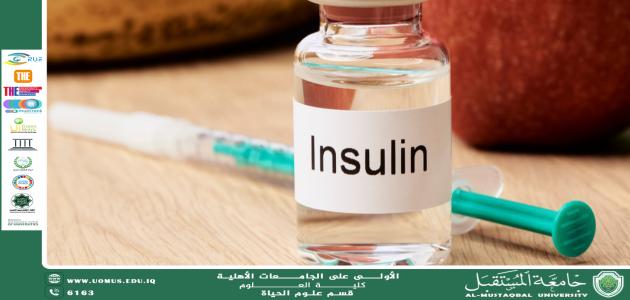
A scientific article by the lecturer (M.M. Duha Abdul Amir Muhammad) entitled “Insulin”
Insulin is a hormone that helps the body use glucose for energy, and is produced by beta cells in the pancreas. Insulin brings blood sugar (glucose) into cells.<br />The pancreas is an organ located between the stomach and the spine. The pancreas secretes insulin into the bloodstream after a person eats food, in response to high blood sugar.<br />Glucose<br />Glucose is the energy that the food a person eats turns into, and is secreted into the blood, so the body's cells take it and burn it to give them the energy needed for their vital processes. To do this, they need the hormone insulin, which makes glucose move from the bloodstream to the cells.<br />The higher the blood glucose level, the pancreas secretes more insulin to lower it. If the glucose level drops, the pancreas reduces or stops secreting insulin.<br />The body secretes four other hormones to raise the blood glucose level, which are glucagon, cortisol, adrenaline, and growth hormone, which make the liver release glucose into the bloodstream.<br />Under normal conditions, the body maintains the level of glucose in the blood within a range of 90 to 120 milligrams per deciliter, through a mechanism that ensures maintaining its level even if the person fasts for a long time from food, or on the contrary, consumes a large amount of it. Glucagon<br />Glucagon<br />is a hormone secreted by alpha cells in the pancreas, and it works in the opposite way to insulin and raises blood sugar<br /><br />AL_mustaqbal University is the first university in Iraq