
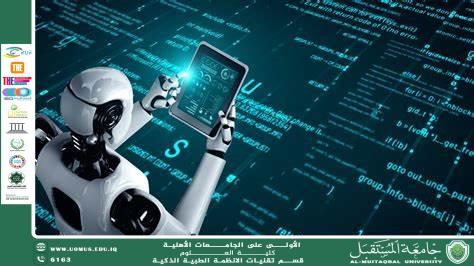
The Impact of Big Data and Analytics in Developing Sustainable Education Systems(Prof. Dr. Mehdi Ebady Manaa) .
Big data and advanced analytics play a pivotal role in developing sustainable education systems by providing deep insights that enhance the quality and effectiveness of education. With the increasing volume of data generated daily from various sources such as e-learning systems, learning management platforms, and student performance records, it has become possible to analyze this data to identify patterns that support more accurate and sustainable educational decision-making.<br />The use of big data in sustainable education enhances personalized learning experiences, as artificial intelligence and machine learning systems can analyze student behaviors and identify their educational needs. This allows for the customization of curricula based on each learner's abilities, providing personalized recommendations that improve engagement, academic achievement, and reduce dropout rates.<br />At the institutional level, big data can offer precise insights into teacher performance and curriculum effectiveness, helping improve teaching quality and develop more comprehensive assessment methods. Analytics also assist in identifying educational gaps and directing resources toward areas that require improvement, ensuring greater sustainability in the education process.<br />Big data also plays a crucial role in shaping sustainable education policies. Decision-makers can leverage predictive analytics to anticipate future challenges and take proactive measures to enhance the education system. For instance, demographic and economic data analysis can help forecast future educational needs, guiding investments toward building new schools or improving digital infrastructure.<br />Additionally, big data contributes to environmental sustainability in education by analyzing resource consumption and minimizing waste in educational institutions. Through smart analytics, energy and water usage in schools and universities can be optimized, reducing the carbon footprint and promoting sustainable practices.<br />Despite its many benefits, the use of big data presents challenges related to data security and privacy protection. Strict policies must be established to ensure ethical and secure data usage. Furthermore, integrating various educational systems and unifying data sources remains a challenge that requires the development of advanced technological solutions.<br />In conclusion, leveraging big data and analytics in sustainable education is a necessary step toward building smarter and more effective educational systems. By utilizing these technologies, education quality can be improved, learning opportunities can be made more equitable, and sustainable development goals can be achieved more efficiently. As technological advancements continue, big data will play an increasingly vital role in transforming the future of education.<br /><br />AL-Mustaqbal University the First University in Iraq.