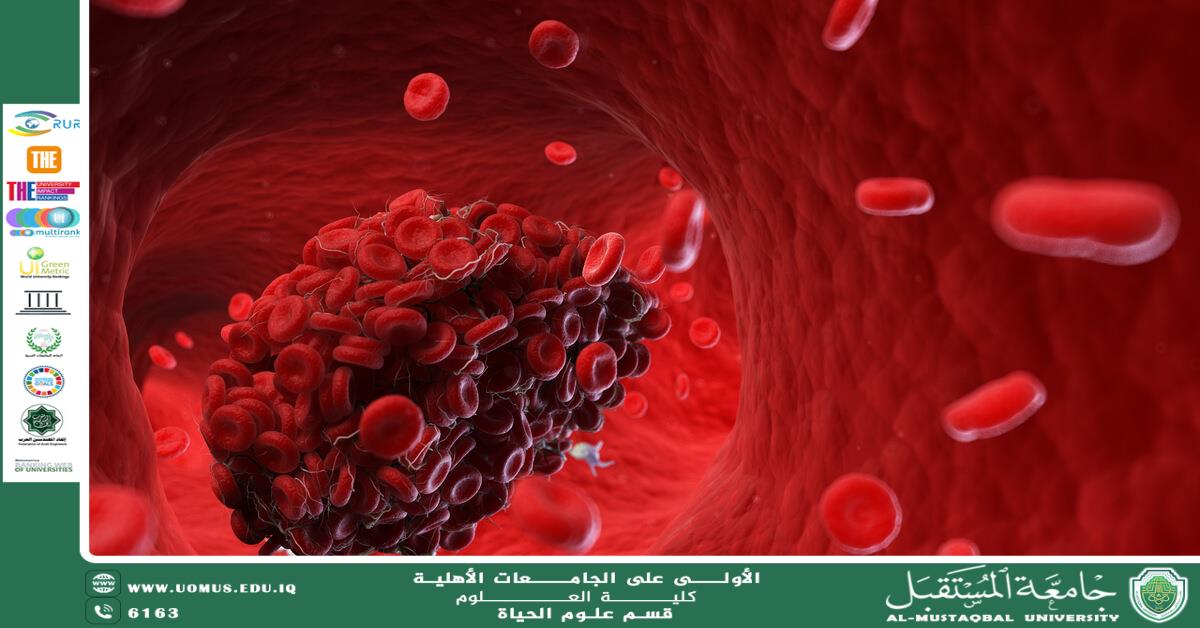
A scientific article by the teaching assistant (Ala Adel Rasmi) entitled "Blood Sensitivity"
Blood allergy<br /><br />It is an abnormal reaction of the immune system to a certain substance in the blood, which may be blood components or blood products that are transfused to patients in the context of their treatment. Allergy is a rare reaction, but it can be life-threatening to patients if it is not quickly recognized and treated appropriately.<br /><br />Types of blood allergy:<br />1. Blood allergy resulting from blood transfusion:<br />It occurs when the immune system recognizes the components of the transfused blood as foreign bodies, leading to an allergic reaction. Symptoms may include itching, rash, difficulty breathing, or even a serious reaction such as anaphylactic shock.<br /><br />2. Blood allergy due to medications:<br />Allergic reactions may occur as a result of using certain medications that contain components taken from blood, such as some treatments using proteins or antibodies.<br /><br />3. Blood allergy due to vitamin or mineral deficiency:<br />In some cases, deficiencies of certain vitamins and minerals in the blood may lead to unwanted effects on the immune system, making the body sensitive to certain components in the blood.<br /><br />Symptoms:<br />- Skin rash.<br />- Itching.<br />- Swelling of the face or hands.<br />- Difficulty breathing.<br />- Chest pain or low blood pressure.<br /><br />Causes:<br />- Blood type differences: If blood is transfused that is not compatible with the patient's type, an allergic reaction may occur.<br />- Use of medications that contain blood components.<br />- Medical history of patients with previous allergies.<br /><br />For treatment:<br />- Stopping the blood transfusion or the medication that causes the allergy.<br />- Using antihistamines to relieve symptoms.<br />- In severe cases, treatment may require the use of corticosteroids or strong anti-allergy medications.<br />- Continuous monitoring of the patient's health condition after treatment to avoid any complications.<br /><br />Prevention:<br />- Ensure blood type compatibility when transfusing blood.<br />- Conduct tests before blood transfusion to detect the presence of allergies in the patient.<br />- Careful analysis of components that may cause allergic reactions, especially in blood-based medications.<br /><br />Conclusion:<br />Blood allergy is a condition that must be handled with extreme caution, as allergic reactions may vary in severity and may lead to serious complications in some cases. It is essential for doctors and specialists to take preventive measures and ensure that<br /><br />Al-Mustaqbal University is the first university in Iraq