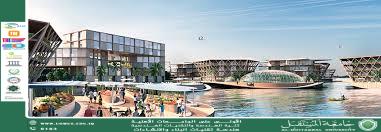
Floating Cities: Engineering Solutions to Rising Sea Levels
In the mid of increasing climate challenges and rising sea levels, the concept of<br />floating cities has emerged as an innovative solution aimed at ensuring a sustainable<br />urban future. The Oceanix project in South Korea serves as a pioneering example in<br />this field, offering integrated designs that enable the creation of water-based<br />communities. These designs rely on advanced buoyancy techniques, particularly the<br />use of hollow concrete structures that provide the necessary structural support and<br />stability even in the face of turbulent waves. The infrastructure is meticulously<br />planned to incorporate state-of-the-art systems for electricity, water supply, and<br />sewage management, ensuring that essential services are delivered efficiently to<br />residents. Embracing renewable energy sources further reduces dependency on fossil<br />fuels and helps protect the environment. Successful Dutch experiences in water-<br />based construction have set global benchmarks, proving that precise design and<br />modern technology can effectively overcome natural challenges. These models not<br />only meet current urban needs but also open up new horizons for sustainable urban<br />development. Therefore, applying such models to Arab coastal cities represents a<br />strategic step in addressing the impacts of climate change. Local engineers can<br />leverage international expertise by integrating it with traditional methods suited to<br />local conditions, thereby enhancing both design efficiency and adaptability. This<br />approach promises to develop safe, resilient, and sustainable urban environments<br />capable of responding to future environmental challenges. The blend of<br />technological innovation with the preservation of cultural identity contributes to<br />creating comprehensive urban models. Floating cities emerge as a revolutionary idea<br />that could redefine urban living in the face of climate change. As Arab cities seek<br />innovative solutions to cope with rising sea levels, these global experiences offer<br />valuable benchmarks for adaptation and development. Ultimately, this futuristic<br />vision combines advanced engineering with local capabilities, opening new avenues<br />for sustainable development and transforming coastal cities into models of resilience<br />and innovation