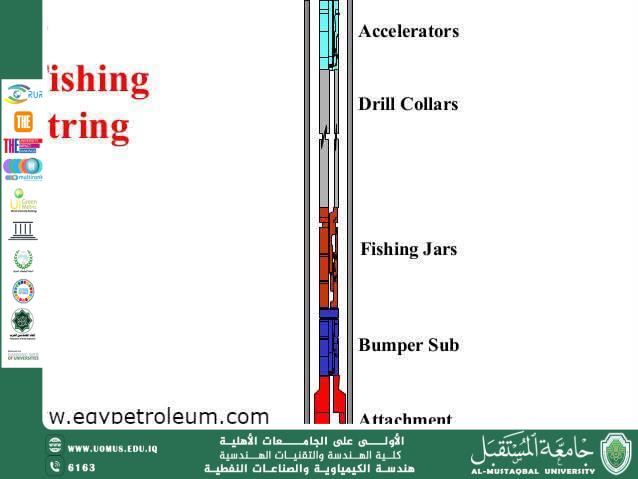

Damage to Wells Due to Fishing Operations
The lecturer in the Department of Chemical Engineering and Petroleum Industries, Ms. Rasul Ahmed Hashem, wrote a scientific article entitled:<br />Damage to Wells Due to Fishing Operations in Oil Wells and Their Environmental Impact<br /><br />Introduction<br /><br />Fishing operations in oil wells are a common challenge in drilling and production activities. These operations occur when equipment or tools are lost inside the well, requiring specialized techniques for retrieval. If not handled properly, fishing can cause significant damage to the well, increasing operational costs and reducing production efficiency. Additionally, fishing operations can have serious environmental consequences if mishandled.<br />Damage to Wells Due to Fishing Operations<br /><br />1. Impact on Production Efficiency<br /> • Stuck equipment can partially or completely block the wellbore, reducing the flow of oil or gas.<br /> • This leads to lower production rates and increased maintenance costs.<br /><br />2. Increased Operational Costs<br /> • Fishing requires specialized tools such as overshots, magnets, and rotating systems, which add to operational expenses.<br /> • Fishing operations can be time-consuming, leading to production downtime and financial losses.<br /> • If retrieval attempts fail, drilling a new well may be necessary, significantly increasing costs.<br /><br />3. Wellbore and Equipment Damage<br /> • Excessive mechanical force during fishing can damage drill pipes or the well’s casing.<br /> • This can lead to partial or complete wellbore collapse, making production operations more challenging.<br /><br />4. Risk of Well Abandonment<br /> • If fishing fails and the obstruction cannot be removed, abandoning the well may be the only option.<br /> • Well abandonment is costly and can have negative environmental implications if not done properly.<br />Environmental Impact of Fishing Operations in Oil Wells<br /><br />1. Oil Spills and Chemical Leaks<br /> • Stuck equipment or damaged drill pipes may cause oil or drilling chemicals to leak into the surrounding soil or groundwater.<br /> • This can result in severe environmental contamination, affecting local ecosystems and wildlife.<br /><br />2. Increased Greenhouse Gas Emissions<br /> • In some cases, failed fishing operations can lead to natural gas leaks, increasing methane emissions.<br /> • Methane is a potent greenhouse gas that contributes to climate change and air pollution.<br /><br />3. Impact on Water Resources<br /> • If the well’s cement casing is damaged during fishing, hydrocarbons can seep into underground water sources.<br /> • This contamination poses serious risks to drinking water supplies and aquatic ecosystems<br />Conclusion<br /><br />Fishing operations in oil wells present significant risks to both well integrity and the environment. While advanced retrieval technologies can help mitigate these risks, prevention remains the best strategy. Proper equipment handling, regular inspections, and advanced monitoring techniques can minimize fishing incidents, ensuring safer and more environmentally responsible well operations.