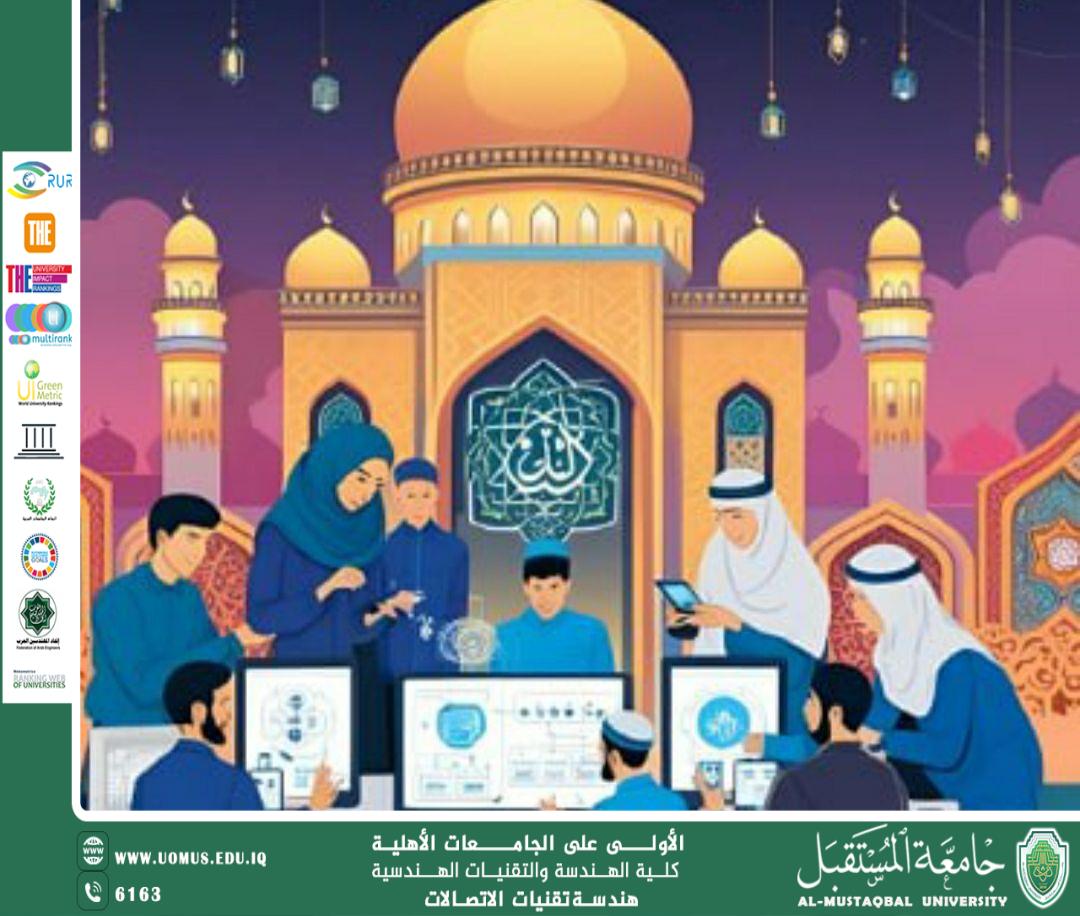
Telecommunications Engineering in Ramadan: How Technology Contributes to Managing Digital Peaks and Enhancing Spiritual Values" M.M. Tamam Ali Al-Abadi
Telecommunications engineering is one of the most prominent technological fields that is constantly evolving, and it has become pivotal in our daily lives, especially during religious occasions such as the blessed month of Ramadan. In this holy month, which is characterized by a significant increase in digital communication traffic, the need for advanced technologies to manage digital peaks and ensure uninterrupted communication becomes crucial. This is provided by modern systems like 5G and other advanced technological solutions.<br /><br />During Ramadan, reliance on technology increases for social communication, live streaming of prayers, and attending online religious lessons. Thanks to the advanced telecommunications infrastructure, Muslims are able to easily follow spiritual activities. These technologies offer a tremendous capability to handle usage pressure during peak hours, such as Iftar and Suhoor times, when there is a noticeable rise in calls and participation in digital activities.<br /><br />The importance of this technology is not limited to facilitating social communication, but extends to enhancing the spiritual values of the community. Through live streaming platforms and religious apps, Muslims can participate in their worship remotely and benefit from lectures and religious fatwas. This type of communication contributes to building a cohesive spiritual community that strengthens the values of social solidarity and cooperation among individuals.<br /><br />On the other hand, managing digital peaks during Ramadan requires careful planning by engineers and telecommunications specialists, who ensure the continuity and efficiency of services, reflecting the fruitful interaction between technology and society. In the end, telecommunications engineering stands out as an essential element in facilitating the lives of Muslims during Ramadan, providing solutions that support the continuity of spiritual and social values in this blessed month.<br /><br />