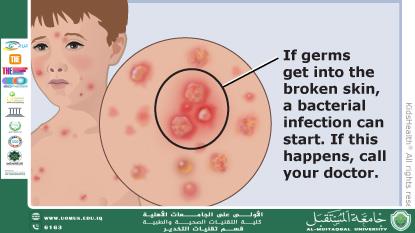
Chickenpox
Chickenpox is an illness caused by the varicella-zoster virus. It brings on an itchy rash with small, fluid-filled blisters. Chickenpox spreads very easily to people who haven't had the disease or haven't gotten the chickenpox vaccine. Chickenpox used to be a widespread problem, but today the vaccine protects children from it.<br />The chickenpox vaccine is a safe way to prevent this illness and the other health problems that can happen during it. <br />Symptoms<br />The rash caused by chickenpox appears 10 to 21 days after you're exposed to the varicella-zoster virus. The rash often lasts about 5 to 10 days. Other symptoms that may appear 1 to 2 days before the rash include:<br /> • Fever.<br /> • Loss of appetite.<br /> • Headache.<br /> • Tiredness and a general feeling of being unwell.<br />Once the chickenpox rash appears, it goes through three phases:<br /> • Raised bumps called papules, which break out over a few days.<br /> • Small fluid-filled blisters called vesicles, which form in about one day and then break and leak.<br /> • Crusts and scabs, which cover the broken blisters and take a few more days to heal.<br />New bumps keep showing up for several days. So you may have bumps, blisters and scabs at the same time. You can spread the virus to other people for up to 48 hours before the rash appears. And the virus stays contagious until all broken blisters have crusted over.<br />The disease is by and large mild in healthy children. But sometimes, the rash can cover the whole body. Blisters may form in the throat and eyes. They also may form in tissue that lines the inside of the urethra, anus and vagina.<br />When to see a doctor<br />If you think you or your child might have chickenpox, call your health care provider. Often, chickenpox can be diagnosed with an exam of the rash and other symptoms. You may need medicines that can help fight off the virus or treat other health problems that can happen because of chickenpox. To avoid infecting others in the waiting room, call ahead for an appointment. Mention that you think you or your child may have chickenpox.<br />Also, let your provider know if:<br /> • The rash spreads to one or both eyes.<br /> • The rash gets very warm or tender. This might be a sign that the skin is infected with bacteria.<br /> • You have more serious symptoms along with the rash. Watch for dizziness, new confusion, fast heartbeat, shortness of breath, shakiness, loss of the ability to use muscles together, a cough that becomes worse, vomiting, stiff neck or a fever higher than 102 F (38.9 C).<br /> • You live with people who've never had chickenpox and haven't gotten the chickenpox vaccine yet.<br /> • Someone in your household is pregnant.<br /> • You live with someone who has a disease or takes medicines that affect the immune system.<br /><br /><br /> د.فرقد صالح<br /><br />Al-Mustaqbal University is the first university in Iraq